Go Grab Your LIFE! "You Can Make More Money, But You Can’t Make More Time"
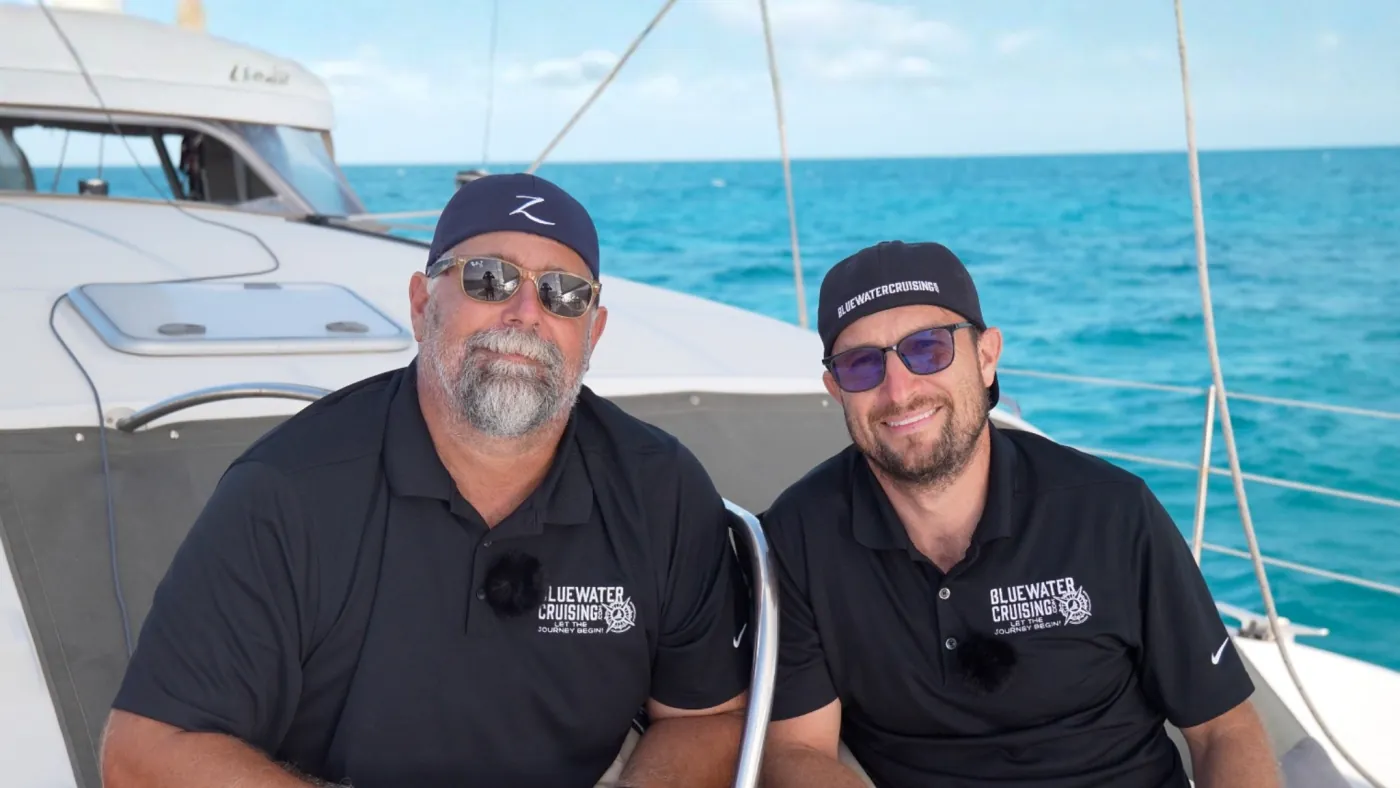
Brent and Shelby Warren, a family of five from Florida, sold everything for life at sea. They talk through boat buying, two lightning strikes, and becoming more present parents along the way.
In this episode
The moment they decided to change their life
Selling it all for life on the water
Struck by lightning, twice
Becoming more present parents
Read the full episode transcript
Chris: Hey, guys, and welcome to the Blue Water Cruising Podcast. This is the number one place on the Internet for you to map out your vision, equip yourself with the right tools in the right boat and train yourself in the right skills to get out there on the water and start traveling the world by sail. If you want our entire system on this, check out our workshop, the Blue Water Cruising Plan. How to start traveling the world by sail. It's going to give you everything you need to know to start putting your plan together to get out there on the water. You can check that out and get free access to watch it via the link in the description down below. All right, guys, let's get into it and get started with this week's episode. Welcome to this month's version of the Blue Water Cruising Podcast. My name's Chris. Again today I am here with Brent and Shelby. We met them, man, it was probably almost, almost two years ago now. I think you were in one of the very first versions of.
Guest: The very first of.
Chris: Yeah, you were in the very first one. All right. Of that was at that time, I think, known as confused to captain into what has turned into this whole program that we run with Blue Water Cruising. And, and you guys have been out now cruising for, for two. This is your second season, I think that I think you said yes. So super excited to hop on with you. I know that when we're just even just chatting here beforehand, you, you've said that it's been, it's been. There's been some ups and downs, I guess. Well, that's probably a bit of an understatement. Yeah. And, and just again, for the audience checking in, guys, you know, the reason we're doing this, the reason I wanted to hop on with, with Brent and Shelby is I think a lot of people, when they, when they're thinking about going cruising, especially the clients that we have, there's this tendency to watch YouTube or see, you know, social media and see all the amazing stuff that you can experience. And there's a bit of rose colored glasses that can be put on the lifestyle. And we tend to overlook the realities and practicalities is what we like to call it, of what the lifestyle entails as well as the lifestyle demands. And once again, the reason we're running this podcast is to share more of the behind the scenes, I suppose, to maybe peel the curtain back a little bit, get into some of the nitty gritty of, you know, what's it really like, Lessons learned, mistakes made, challenges stepped into and overcome and get A sense of both sides. Because, you know, as we. We've said a whole bunch that this lifestyle is an adventure. It's choosing to completely change the way you live your life and step into an adventure. It's an adventure that comes with highs and lows, and maybe it would be fair to say some high highs and low lows. But if you get through them, I think, at least in my experience, it's. It's worth it. You know, you learn something, you come together as a family and a team. So, once again, that's why, you know, I wanted to talk to you guys, because I don't know too much about your story other than when you left. I know we went through our confused the captain, and it was 12 weeks we were doing at that time, you went out and bought a boat. We've touched base once or twice since then, and I don't know too much other than what I've heard through some other people. So I'll stop talking, and I want to hear from you guys if maybe. Maybe just to start off, like, was there a moment that you decided, okay, hey, I want to change my life and do something different? Like, what was it like before? And then what was the catalyst to step into this crazy adventure?
Guest: So what actually started it for us is we went on a vacation to the Keys, and we took a seaplane to the Dry Tortugas, and we were only there for, like, four hours. And that was just the most amazing place. And we left, like, wanting to spend so much more time there. Like, you just can't see that whole place in four hours. So. And what we noticed were the sailboats everywhere. So I suggested to Brent, like, next summer, let's charter a boat instead of, you know, renting a house somewhere. So he did his research, and he came back with, do you know how expensive charters are? We might as well just buy our own boat. And so that kind of slowly evolved into, let's just sell everything and go live on a boat. I guess we were kind of weren't bored. We lived on a lake, and we just kind of got bored driving in the same circle all day, every day, looking at the same houses all day, every day. So, yeah, we're like, why not? We're young. We might as well. We'd rather do it now than wait until we were old and, you know, life takes over.
Guest: Basically, we were at a point where it was. It was the right time for us. I had a history of sailing and not on boats, and my parents had a boat, and they took us To Cuba. And we were on a trip and that boat sunk when I was probably 12. The boat sunk? Yes, on a reef outside of Havana. It's a long story in itself.
Chris: Okay. Were you on board?
Guest: Yeah, I was on board. I was probably one of the only Americans I've ever met that swam to Cuba when the boat hit the reef. And we were on the reef. And that's. Yeah, but so I'd had a history of it and I. I'd had that taste, so I really wanted my family to experience that taste. And then we went to the Keys, like she said, and from there it morphed and, you know, I took the opportunity. My dad had owned 1976, 36 foot Morgan for the last 15 years, and it never really left the dock. You know, it was always a labor of love. It was gonna be one day. One day, One day.
Guest: And then, like, he fell and broke his leg. And then, you know, he healed and then he broke his back. And it was like, you know, constantly, one thing after another. And we just kind of didn't want to be in that position. We wanted to be able to do it.
Guest: And like, so we. We learned from his. His life, you know, and he's still alive and I actually is able to enjoy it with us. So he's kind of like fulfilling his dream and our dream and it's all worked out.
Chris: He's. He's come out and been able to sail with you guys?
Guest: Yes.
Chris: Yeah.
Guest: That's so cool. The first, like six weeks, we were out for six weeks. His parents were with us.
Chris: That's so cool. That is so cool. And I forgot to say at the beginning, so you guys are on a. You're on a leopard. 58. That. Is that right?
Guest: Yes. Catamaran.
Chris: Catamaran. And you've got how many kids?
Guest: Three.
Chris: Three kids. And their ages are.
Guest: Our oldest is 20, and then our little boy is 7 and the baby is almost 4.
Chris: Okay. Okay. So that's. That's like a wide. It's a wide age range there. I'm curious on a bunch of those things. I'm curious to dive down that rabbit hole a little bit. But maybe not now, but I want to come back to that just because I know we get a lot of questions from people around what it's like with kids of different ages. And you have almost every age range in there, except. Except for maybe this. Like, there's a gap missing maybe in the. In the, like the teenage years. But. So, yeah, I want, I want to come back to that. So all Right. So this thing started for you in the Dry Tortugas, I think you said, and you were like, should we go charter? Oh my God, that's crazy expensive. Which it is, it's like unbelievably expensive. And then that turned into, okay, let's buy our own boat and, and, and do it that way. So, so that, that was kind of like the, the, the catalyst of it. How did you go about making it happen? Like, from where were you, lifestyle wise at the time you said you're living on a lake. Are you guys business owners, career professionals? What's the, what was the, the jive? Like, were you working 50, 60 hours a week or were you like kind of sort of not like, can you give me a sense of the lifestyle at the time?
Guest: At the time I owned my own company and I was working 80100 hour weeks traveling on the road.
Guest: Gone more than he was home.
Guest: Yeah, you know, my first year in business, I was gone like 320 days. Staying in hotels, town to town, work, work, work, work, work. And then we had kids. And as the kids got older, I wanted to be around more. I didn't want to miss it on round two. And you know, at a certain point, the drive to get money didn't do it for me anymore. You know, I hit a point where I was happy with our success and things were working good and it seemed to be more important to family and in that life. So that was where we were at. And we ended up taking that vacation. And how we proceeded from there is. We ended up, it was about a three year process. Three years.
Guest: It was like two. Yeah, two years. But from the time that we. Two and a half. I guess between the time that we actually took the vacation and like moved onto the boat, it was about two and a half years. And basically we were back and forth about if we were gonna buy like a smaller boat and do like part time or if we were going to try and keep our house. We finally were like, let's just sell everything. You know, there were, you know, some other factors kind of involved, like personal factors that we were kind of like, you know what, let's just go, you know, like, why not? And you know, I wanted to homeschool my kids anyway, so we already kind of had that mindset that we didn't like. We don't like to be confined by schedules any longer. So being able to kind of travel and you know, go and see family or go whenever, you know, when he was working, like we would fly up to New York, or we'd fly to Puerto Rico. Like, wherever he was working, we would go to and go visit him. So we kind of enjoyed that flexibility. And I have no desire to put my kids in public school, so we were already kind of going in that, like, sort of like nomad route, I guess.
Guest: And it inspires the adventure of the soul. You know, we want that. We want that sparked in our children. You know, it's. There's more to life than what we're taught.
Chris: Yeah, yeah, yeah. I mean, it's super cool that you had that realization. We've. We've talked about that. Keith talks about that a lot, too. This idea of there's nothing on the other side of money is the way that Keith likes to put it. And it's like, you get. And I mean, we've seen. We see people that. They don't get there. You know, some people that are just. They stay on that path forever, and that is a forever path. There's no end.
Guest: So, you know, we have friends like that we totally understand. And, you know, my. One of our personal friends is a lawyer, and he's in the 70s, and it's like, you know, he has the resources to be done.
Guest: One thing Brent says that kind of sticks out and that I really like a lot is that you can make more money, but you can't make more time.
Chris: Yes. I love that. I love that.
Guest: And that's. If we have to go, like, work at Walmart when we're like, 60, like, okay, whatever, that's fine. We'd rather have this time when our kids are young then, you know.
Chris: Yeah. And the reality is you won't.
Guest: Like, it's.
Chris: That's. You will. I mean, that's. We. We. I talk. We have so many people that I talk to. I mean, I'm so grateful that to have the, like, the business that we're in and stuff now, mostly because the people I get to meet, you know, and I meet people like you guys, and the one thing that I've really come to realize. Realize through this is, like, people that are in a position to choose this, that really. They get to the place that you. You. You did, and they're like, okay, I'm in this position where I can choose something else. They're successful people. You know, they've been. They know how to create. They know how to live a life that's successful in some fashion or form, and you don't lose that. So. Yeah, and. And I've seen it so many times now, right. I've seen People come into this life and then go into something else and just whether it's financially, not financially, whatever it is, just crush it in the next thing they're doing because that's just what they do. So.
Guest: But you. There's opportunity everywhere, especially out here on the marine.
Guest: Oh my gosh. That's one thing that we make. He's like, if we ever like move off the boat, I could just be like a marine, like electric electrician and just you know, make a ton of money.
Chris: Yeah, anything.
Guest: Yeah, anything, anything. It's all.
Chris: Yeah.
Guest: Trying to get any work done on your boat by qualified people is, is a task in itself. So there's opportunity there, you know, and then the, the labor and. Yeah, on and on and on. Yeah, opportunity everywhere if you're looking.
Chris: So did you, did you, did you end up, did you end up selling the business or do you still have the business or what's, what happened with that?
Guest: So at the start of this process, I ended up finding a really good employee out of, you know, the hundreds that I've had one stuck out. And basically he, he reminded me of myself. He had the hunger, the drive and the motivation to be something. And basically, long story short is he took a, a majority stake in the company. My sister does the accounting, so that's good to go. So basically I take a small percentage for life and they, they do everything. And it's, it's taken years. You know, the first year he took over, you know, they were calling me all the time, all types of questions. I was still managing lots of aspects. And then two years in.
Guest: Yeah, they just kind of slowly slip step back from his.
Guest: Yeah.
Guest: Leadership.
Guest: By the time we left, I was never getting calls. They ran it perfectly, you know, so.
Guest: It just, yeah, it just runs in the background. And then we just collect a little bit from that. Enough to kind of.
Guest: And my sister keeps me apprised and then everybody, everybody keeps me up to date when I talk to them a couple times a year and.
Chris: Perfect.
Guest: And then we, we sold our house. We sold, we had boats. We sold all of our boats and all of our toys. Golf carts and four wheelers and that kind of stuff. We kind of sold pretty much everything. We built like a little garage apartment. We turned his parents garage into like a little apartment so we would have somewhere to stay when we came back to visit. Yeah, so we kept some of our personal belongings and stuff. You know, we have some of that stuff.
Guest: But we sold our house furnished. So that was.
Guest: Yeah, we didn't have to worry about furniture and stuff.
Guest: 90 of the things.
Chris: Yeah. That's a smart way to go about it.
Guest: As far as bulkness, we kept, you know, sentimentals, you know, and that, that was understood. Understood, yeah.
Chris: That's a smart way to go about it though, because then you don't have to deal with. That's a big headache for a lot of people. All the stuff they've collected over the years.
Guest: Yeah. Just, you know, in our situation, you know, it just end up in a bin. It's all replaceable.
Guest: Just things.
Guest: Things where you have to deal with it and they'll just get molded and.
Guest: Yeah.
Guest: Destroyed just by not being used or whatever.
Chris: Yeah, yeah.
Guest: And we had to have different properties and as you know, we condensed at one point we owned like 12.
Guest: 12 properties.
Guest: 12 properties. A couple VRBOs. We sold all those off and we condensed all those things. So, you know, when at our final house we had like four houses worth of crap. So we were just constantly trying to get rid of things. And by the, by the end we were like, we just, we don't want.
Guest: Any of this, like giving things away. Take this. Do you want this couch? You can have it.
Chris: I love this thing that you said you, that you can always make more money, but you can't make more time. And I think that particularly rings true for me anyway in the sense of my kids. You know, it's like, yes, for me too, but it's also the time that I get to spend with my, my children. You know, you can't, you can't make that. I know. That's for Keith too. He says that to me a lot. When my youngest is seven now. And he just, he said to me the other day too, you know, we were on a call and she came and wanted to have a little snuggle and things like that. And he just said, he was like, he's like, Chris, like, like, I hope you are really like in the moment for that and appreciating that and acknowledging that because it's not going to be there forever, you know, it's gonna go. And you can't make that again. Right.
Guest: You can't.
Chris: So.
Guest: And that's part of us having a 20 year old. We, we see that, you know, we've seen all the steps, we see how fast it goes.
Chris: Yeah.
Guest: The blink of an eye.
Chris: Yeah, yeah. So in, in that, like, in that sense. And I'll get back to kind of the transition phase, but have you going from where you were at. You said you were working 80, 100 hours a week, which is absolutely insane. I've been there before too. And then to now, living the way you're living with your family and the kids, would you find, like, what is the. Do you find that, that, that you have that, like, you find that you're more present with that time? Is that a change that has happened or what's the. What do you notice as the biggest change going from that lifestyle to the life you're living now?
Guest: So when I went from that lifestyle and I was on land, I was still 100%. Even though I was home, I was still in that mind frame of go, go, go, go, go, go. I just couldn't get it out of it, you know. And then coming to the ocean, you can't help but not be in the moment. You just can't help not be right in the moment. So it was like, like, it was like soul saving. You know, for me personally, it got me to where I wanted to be.
Guest: Instead of thinking about like the future and like, what's coming next and what's happening tomorrow and the next go, go, go. You know, you're worried about right now. You're worried about like the weather and, you know, which direction the wind coming from.
Guest: And on land, there's no con. You know, we didn't have a connection to any of this. You know, we. Unless it was a hurricane, cat 4 or 5, like, or our phone alerted us, it didn't matter whether, matter if it's raining or, or the winds are blowing 40 miles an hour, you just. Oh, just close the windows.
Chris: Yeah. So you.
Guest: So it's a different.
Chris: Would you say that you're more present?
Guest: 100%. You're more present in the moment and it's just, it's naturally, if you're more present in the moment and you're attuned to nature and the stars and just looking around and the ocean waves and the currents and that's what you spend your time doing. You can't help. And as you observe all this, you know, and your kids, if you have small kids, you know, they're observing so like everything that they see for the first time, it brings you back to the first time, you know, and some of the things, a lot of things we have never personally seen.
Guest: So like, we're like watching our kids, like learn these things and watching our kids kind of like line up when they realize they make connections, you know, which, like seeing their, their little light bulbs go off is just tremendous for me.
Guest: So it all brings us, all of those things bring us to the moment.
Chris: Yeah.
Guest: You know, and it's just. It's a good place to be, you know? And hopefully, even if we leave this place, we can still maintain that.
Chris: Yeah, Keep. Keep a piece of that. Keep some of it.
Guest: Yeah.
Chris: That's. Again, that reminds me of. We did a. We did a workshop recently for. For Asa around this, and I think there's, like, To. To me, there's. There's two types of people in broad baskets that. That do this. There's people that. They want to go cruising. They want to go buy a boat and go sailing, go cruising. Almost like they're checking a box in a way. It's like, hey, I want to go see what that's, like. Checkbox. Go back to what life was like before. And then there's people that legitimately want to change their life. They want to change the way they relate to the world. And you. I mean, you said something there that. That stood out for me. That was like. It was soul saving in a way, which, you know, what I hear in that is. Is like, you were in a place where your soul needed some sort of saving to begin with. You know, you were. It was being. You're being sucked dry in some way. And this is. This has been this. This new way of living, you know, of being present and. And my experience of that, because that's what happened to me. You know, that's what happened to me. That's what happened to Keith. And once you have that, you can't go back. You know, you. You don't. It's not possible, because it's too. It's too painful for me, in my personal experience, you know, to be like, hey, I'm gonna go live the way that I lived now seven years ago, it's just like, no, it's not. I can't do it.
Guest: So, like, the thought of that, even though we've only been kind of doing this for a year or so, like, the thought of going back to that life right now, it, like, turns my stomach. Like, I would not. Like, we just spent, you know, six months basically back on land, not by choice. And, like, that was the most miserable. Six months. Like, not miserable. It wasn't miserable because we were together and everyone was okay, but just, you know, getting a taste of this and then having to kind of be stuck on land for so long, it was, like, just very disheartening, I guess, you know?
Chris: Yeah, no, I totally know. I mean, I've been. I've been. I've been. Yeah, I've been through that. So tell me a bit about. In the transition process. What are some of the. The hard lessons or the difficult things that came up as a part of that process? Because I think the one side of it is it's great to be. To have this kind of hindsight of, hey, I was put in this position where I'm forced to slow down, forced to do this, forced to do that. But there's things that come up that force you to do that that are not necessarily so pleasant at the time, maybe. Do you know what I mean?
Guest: Yeah. Yeah. You know, I was running a company, being all over the place, having employees in four. Four different states at a time, problems everywhere. And I tried to manage my family like the company, you know, and basically, that doesn't work.
Chris: Well, that's an understatement.
Guest: I think we call it work mode. You're like, okay, you're not. No work mode. You need to step out of work mode. You know?
Guest: Yeah. So, you know, that. And. And just, like, even in the transition process, Shelby's like, I want to charter a boat, blah, blah. And I come back with, no, we're buying a boat, and we're gonna sell everything.
Chris: Yeah.
Guest: And that was a. You know, that alone, because she was.
Guest: Like, no, I just wanted a vacation. It did take me a little while to get on board with, like, the whole idea of, like, let's just sell everything and, you know, leave our family behind and leave. There's. There's security there. It's easy. You know, there's a lot of security. So that transition, there were. There were some bumps in the road there, but at the end of the day, it's. I think that we absolutely made the best decision.
Guest: And then she. You know, Shelby's slow to change, so after. She doesn't like change. So after six months, she absorbed it, and now she's all in.
Guest: Yeah.
Chris: Yeah.
Guest: You know, probably as much or more so than me.
Chris: Yeah. Yeah.
Guest: So that's a beautiful thing. And I just had to give her her time, and that's all it was. And. And.
Chris: Yep.
Guest: And, you know, other transition issues was selling our house. You know, we had a massive property.
Guest: Like, we built that house. We love our place. Like, we had a beautiful place on the lake, like, and kind of giving up that. Like, that sense of community, you know, that we had kind of built there. So that was hard, too, you know.
Guest: And just, you know, it took our house a year to sell. That was. That was an issue. You know, it was a luxury property, so it basically needed a special. Special buyer. You're not looking. You're looking for the 1%, you know?
Chris: Yeah.
Guest: Top 5%.
Chris: Yeah.
Guest: And.
Chris: Yeah, I think, I think, I mean, the theme I pick up in that is, is in order to change, in order to fully step into this new way of living in this lifestyle cruising, you, you had to give up stuff. You know, you had to give up. You had to give up the house, Shelby. You had to give up, you know, this, the security, in a sense, and that it really is. You need to give up the security. I really think that freedom and security are a trade off. You can't have both.
Guest: Yeah.
Chris: And, and then, and then, Brent, it sounds like you, you had to give up almost like you had to give up a part of yourself which was like this work mode, you know?
Guest: Work mode, Brent, that's like, hey, consumerism, you know?
Guest: Yes.
Guest: You know, the consumerism is, is part of that. That's part, that's. When I say soul sucking, it's that more, more, more, bigger, better, faster, newer. It's just holy. Like you can work till you're in the grave and you'll just never, you'll.
Guest: Never keep up with the next door neighbors, you know, Or.
Guest: Yeah, there's just never enough. Yeah, there's never enough.
Chris: That's something that's come up for me a lot recently too, is that, that consumerism. And I, I've come to this place where I think. Let me know if you think you resonate with this, though. But I think like, consumerism in a way is like, it's the new religion of the West. Like, it's, you know, people are like a religion in the sense that, like, people are devoted to it. They devote everything towards this idea.
Guest: And, and it's, it's, it's what we're taught.
Guest: Yeah, you're fed or you're fed it from every angle. So when we first moved into our house at the lake, we didn't have Internet at the beginning and so but we did have like DirecTV. And so our kids would watch TV for the very first time with commercials and they're like, oh, mom, I want this. Whatever the hell it was that they were selling on tv. And it was like every other minute he's coming up to me telling me these things that he wants from tv. So they're fed that from a very young age, you know, and then their friend has this toy and I want that toy. And, you know, it's just kind of a constant. It never ends. Never ends. Yeah, it's kind of like lawn, you know.
Guest: My parents grew up playing with three toys. I grew up playing with 30. My kids play with 300.
Guest: Yeah.
Guest: You know, it's.
Chris: Yeah, it's a good way to play.
Guest: And I don't want to be playing with 3,000.
Chris: Yeah, yeah. I mean, the decision you've made is really to choose experiences over things. Yeah. And I think that's cool. I mean, but it's hard to break free of that consumerism. It really is. I think it's.
Guest: Listen, we still have things, don't get me wrong, like our boat's full of toys. I'm sure. But it's not the constant, you know, the constant ness of it.
Chris: Yeah, yeah, no, I. I get. I mean, we all need things to some extent. The. Yeah, the need is maybe somewhere on a spectrum, but. No, but I mean, it goes back to me. It goes back to the. It's like that perspective shift again, though, that. It's like, what's driving that. Right. Yeah, we all need things and we need stuff. But this idea of, again, the presence in the moment is the experience. And I think you said something there earlier, which was choosing this lifestyle is choosing to put yourself in a position where you have no choice but to experience that. You know, you. And. And I. And I know there's like. I think it's so cool. I'm loving talking to you guys about this because there's some people. I know there's some people I said that, you know, that. That go into this life, that they never get to a place where they can do that and they just go back and they go back to living the same way they were, and they don't ever really experience that change. And I think it's cool that. That you've experienced it or are experiencing it. You know, you're in the middle of it, which is rad. So. So tell me a little bit about. So you bought the boat, I'm assuming, because for everybody that I've ever talked to about this, you know, there's this idea of, hey, this is what it's going to be like. We're going to buy a boat, we're going to do this, we're going to do that. And it never really works out exactly like that. There tends to be more challenges and roadblocks than anticipated and lower moments. What did you call them? I missed that. There.
Guest: Mitigating circumstances.
Chris: Yeah, that's a good way to put it. So. So tell me a little bit about that. Like what the. You know, what you thought, what you were like, hey, this is what we think. And then. And then maybe also a little Bit and then. Yeah, and then what was the reality and how have you dealt with the realities?
Guest: Well, I guess the first thing, the first kind of thing that came up is I get seasick and I get seasick bad. Like I throw my guts up seasick. So that's been, that's been a challenge. Like I've kind of learned like how and when to take seasick medicine and like what conditions I need to take the medicine in, those kinds of things. Keeping a full stomach, like I'm kind of learning how to work around that. But that's actually debilitating and that can be quite dangerous because. Because we have kids, you know.
Chris: Yeah.
Guest: So that's kind of something that, like I'd been on deep sea boats before and I guess I'd either taken something or, I don't know, like, it just never. Just didn't like click in my head that this was going to be such a, such a big thing, you know. So that kind of put a damp on our first few weeks. But I mean, you know, I mean.
Chris: I thank you for sharing that because I think that that's. It's something that a lot of people have questions around is this idea of seasickness. And I don't think you can ever really know as you just said you'd been on deep sea boats before and it hadn't been really that big of a problem. I don't think you can ever really know until you are living the lifestyle. Yeah. And just a couple questions around it. Like one is, so are you seasick like all the time at anchor or is it like just on passage?
Guest: So I have gotten seasick on anchor. Not throwing up with just that, like, just deep, like that deep seated, like nausea feeling on anchor. It's the rolling. It's the rolling. And so certain conditions you do better or I do better in certain conditions. So we've been in the Bahamas now for like a month now and since our crossing, our crossing, when we crossed over from Fort Lauderdale to Bimini was the probably the worst day of my life. It was horrible. Um, and then it was even rolly. So it was the day before Christmas Eve. So we spent Christmas Eve and Christmas in Bimini in a rolly Anchorage. And like, I never fully like recovered from being like seasick from that first time. So I was like dehydrated. And so for like the first five days it was just awful. It didn't matter where we were. But after I kind of got back and I was rehydrated and like started to feel better. Like I haven't gotten sick since. Like I haven't even taken medicine since then. But again, we're in the Bahamas, we're in the right season, we're in the Exuma chain now. And so, you know, we can stay kind of on the bayside and not, you know, experience five foot waves, you know, so it's a little. Makes a difference. There's some anchors that you do feel. I'm like, maybe I don't feel great, but not to the point that it's debilitating. So it really depends for me it depends on like circumstance, which way the waves.
Guest: Other than when we were in Bimini, we've had the opportunity to find shelter, sheltered spots.
Chris: Yeah.
Guest: Where good anchorages. But Bimini, it's a tough, it's a tough little spot right off the. So tiny. There's not a lot of protection. And you're right off the Gulf Stream.
Chris: Yeah.
Guest: It's not.
Chris: Yeah, it's not ideal. No, I mean I think that's. Again, this comes back to these realities and practicalities. Right. Like it's, I think that seasickness is just a reality of the lifestyle. I think in my experience everybody gets seas sick at some point. It's not, it just depends, you know, people have different thresholds of what they're able to tolerate or not. And once it happens, you're like, there's very. You're done.
Guest: And if I had this experience at the very beginning, I might have been done too. Because that like four, that three, four days was awful. Yeah, it was awful.
Chris: Yeah. It's not a lot of fun. I've. I've been seized. I've been sick like that before and it's, it's terrible. It is truly debilitating. Can be.
Guest: So our 20 year old gets seasick and our seven year old does not and our three and a half year old does not. And I don't.
Chris: Random, eh? This is so random. Yeah.
Guest: We haven't hit that, that you know, that all of us have gotten seasick but Anna and Shelby are definitely sensitive to.
Chris: Right. I think so. So this is my experience of it. I'd be curious to know how it goes for you. Is because Sio, my, my wife gets seasick and she, you know, we, we were full time cruising for almost four years. By the end of it she was, I think the body adapts. I really do because she was in, in, in an environment in the beginning where she would have been not in a good spot. Was totally fine by the end. And so I don't have any. I mean, it's completely anecdotal. There's no like science or anything behind that. But I think that the body adapts. I also think that. I think you. You nailed it. Which is something like that is. Goes down to these realities and practicalities. And it's like, how do you choose conditions that are conducive to what you need to be to be in? Like, we did. We did this thing with Keith the other day, this weather. He was crossing the Atlantic and you know, there's some people that are like, yeah, I want to go in the wind and I want to sail fast, you know, and. And he's like, he's like, you know that route for me, I'm gonna go this route down here that is downwind the whole way. Pretty chill. Not too big of seas. Because. And he's like, you know that route up there that roots the divorce lawyer route. That. That's. I'm not going that route.
Guest: Yeah.
Chris: And. And it's like, because Renee gets seasick too, you know, and. And so he knows, like, I'm not doing that. And it's. It's. Again, it's just this whole. It's a team. Right.
Guest: So you have to work as a team.
Chris: Yeah. You have to work.
Guest: That means we might motor a little more than the average sailor.
Chris: Yeah.
Guest: And I'm okay with that.
Chris: Yeah, totally.
Guest: That's what I told. Tell Shelby. She's like, this boat can't sail. I was like, no, it can sail. You don't want to go out on the days it can sail.
Chris: Yeah. That reminds me of a time here in Indonesia when we first came here. We were in this place called the Banda Banda island groups. And then it was during COVID and we had to go somewhere else. And it was like a four day trip or three and a half day trip. And we motored the whole thing. And it was like a lake. We. It was like this weather window at. At the shoulder season. And so. And normally it's gnarly seas there. And so I was like, this is amazing. Like she's having. Having a ball.
Guest: So that's me.
Chris: Yeah. Yeah. No, that's cool. That's. That's that's amazing. Okay. So the seasickness thing was a. Was a bit of a surprise. Anything else that's. That's come up for you guys buying the boat.
Guest: That was an event. That was a story by itself. That was. Yeah.
Guest: Basically we. We put an offering on. On this boat. Well, after we saw. We knew this is one we wanted. We Kind of zoned in on Leopard 50 around that range. And this one came up and the extra eight feet, you know, and I was like, yeah, I'll take it. And we put an offer in, a low ball offer, because that's what we could afford to do.
Guest: You know, it was out of our price range. And we were kind of like, why is she showing us this boat? We can't afford this boat. And so then she came back to us, and she's like, they've already turned down one offer and they're kicking themselves for. For it. You know, it would be worth it just to throw out an offer. And so we did. We throw out a super, super low ball offer. And they jumped immediately, right? And they signed the contract. Sea trial day comes and they fly in from California. The owners do. Well, first of all, they're late getting. They're late getting there. And so, like, their.
Guest: Their agent left them on the dock.
Guest: Them on the dock because they were like, well, so we have draft. Like, we have draft, and we can only be hauled out at high tide.
Guest: So they're gonna take the boat out.
Guest: And back in with water. So there's time constraints. So we left the dock without them.
Guest: So they met us at haul out, and they. They got on the boat, and the wife was immediately trashing the boat.
Guest: Like, this is wrong.
Guest: This is.
Guest: That's broken. This has never worked. Like, all these things.
Guest: Crap.
Guest: Like all of these things.
Guest: And the husband was kind of, like, looking at her like, like, stop. Come on, Are you serious? Like, but. And then she. She just kept going on and on and on. And our broker pulled us to the side and was like, listen, you know, if you kick back on anything, they're gonna drop. Drop the sale.
Guest: They had another offer that was higher than ours, and significantly, they wanted to back out of our deal and sell it to the other person. Like, obviously. Yeah, but. So. But it was still a good enough deal for us that we didn't. We just took it how it was. And anything that came up on the survey. Yeah, like, it wasn't anything significant, anything big. Um, but she ended up, like, contacting us after the fact was like, you know, if you guys want to back out, like, it's okay. We know you have young kids. This and that. And then, like, wouldn't drop it. She called back again and offered us a hundred thousand dollars to back out of this deal.
Guest: Of this deal.
Guest: Brent's like, we have money. We don't vote. Yeah, we need a vote.
Guest: You know, in my other 99% of life. I would have backed out of the deal, took the cash, and called myself a winner. But in this inst. I was already all in.
Guest: We had already sold our house. Like, we were.
Guest: We were ready to go. We had already. Everything had timed up, and it timed up perfectly for us. And. Yeah. So I wasn't backing away, and I basically said, no, I'm following through. And out of an act of sheer vengeance, she kind of came and stripped the linen, silverware, plates, and, you know, all the things that weren't listed on. But it was common courtesy, you know, who's going to take the linen?
Guest: Yeah. And, like, we even asked them, like, we want, like, everything for the sea trial. Like, everything that's supposed to be here. Like, we want it here if it's be gone. Like, we want. We want to see what we're getting, right?
Chris: Yeah.
Guest: And then they took, like, the throw, like, the little, like, man overboard, like, ring, throw, ring, you know, that had the name of the boat on it. Like, they took all this stupid stuff. So.
Guest: But they also left tons of other things that, you know, that she probably.
Guest: Didn'T even know about.
Guest: Like, 20 PFDs, floatable, plus 20 other ones that are, like, the Coast Guard ones.
Guest: Yeah.
Guest: Just. They left so much. You know, at the end of the day, I just said, let it be, and, you know, farmer will get them.
Guest: Yeah. So.
Chris: Yeah.
Guest: Yeah, you got a good deal.
Chris: You got a boat go cruising.
Guest: Yep.
Guest: It was water under the bridge. So, I mean, that.
Chris: That.
Guest: That cool.
Guest: You know, we thought that was, like, the beginning of. That was, like, the very beginning.
Guest: It got to the point where the last conversation I had with the owners, I was like, listen, man, I'm not a bad guy. I just wanted to buy a boat for cash. Like, I thought it's supposed to be the happiest day. The day you buy a boat, the day you sell a boat. I don't.
Chris: Yeah.
Guest: You know, and then they were like.
Guest: And they were like, yeah, you know, it's not you. It's. It's the brokers.
Guest: It's this, like, so we have the GO security system, and they would not, like, give us, like, the login. Like, they wouldn't.
Guest: So there's cameras all over the boat.
Guest: There's cameras. And they were telling us, even that day, they're like, yeah, we were watching you guys on the cameras all over our boat.
Guest: So we took possession of the boat.
Guest: And they were still watching us on their cameras.
Guest: So, yeah, they wouldn't give us the logins for the cameras for, like, a week. Until I literally, like, blew a gasket and I was like, listen, I'm gonna.
Guest: Get my attorney involved.
Chris: Yeah.
Guest: I started emailing my attorney and CC and all the brokers and like, literally within 24 hours.
Guest: Yeah.
Guest: Oh, here. Yeah, I'm sorry. I. Yeah, it was on another email account that I didn't see.
Chris: Yeah, right.
Guest: It was. So that was.
Guest: We didn't get keys to the boat. We didn't. I had to fight to get the keys. I had to fight to get the ghost. I had to fight.
Guest: It was just. Yeah.
Guest: Other than handing, you know, the boat to me.
Chris: So is it the boat buying process was a bit of an emotional roller coaster?
Guest: Yes. You know, that was a. That was a step we had to get past. And. And then also, you know, just selling all your things. That's an emotional roller coaster. Getting rid of everything. You know, I'm not a materialistic person in general, but letting all that go.
Chris: Yeah.
Guest: You know, that's. You shed a tear there.
Chris: Yeah, yeah, yeah, yeah.
Guest: So. And then buying the boat and then transitioning to the boat, you know, now all. All the things that we kept.
Chris: Yeah.
Guest: Like trying to find a place for everything. Trying to put.
Chris: Put them on the boat.
Guest: Yeah, yeah.
Chris: Where does it all go?
Guest: And, you know, we had this idea of what we were gonna bring. So I bring trucks, loads of crap to the boat, and then once it gets here, we're like, we don't need this. Yeah, we don't need that. So I ended up taking truckloads away from the boat.
Chris: Yeah. You know, and do you think that in the boat. I just. I'm curious about this whole. What you went through in the boat buying process. Do you think that there was anything, in hindsight now, having gone through that, anything that you could have done differently in the process to mitigate the emotional up and down of it or some of the fallout or what happened or is it. Yeah. Knowing now what you know, is there anything you would have done differently?
Guest: Well, number one, I wouldn't have given the owner my phone number. I would let the broker deal with it all, you know, But I was also under the impression, you know, I'm going to want to be friends with this person. I'm going to want to be able to communicate. How does the toilet. Where's the this?
Guest: Yeah.
Guest: But literally, after that deer deal soured, like, there's been no contact other than anything, you know, So I never really got that tour from the owner. I never really got that.
Guest: So, yeah, that was the other thing is that when, like, the Paperwork was signed, and the boat's ours. Like, okay, the boat's yours. Like, we had the sea trial, the survey and the sea trial, and then we were, like, on our own. And so the boats that we have experience with are like lake boats. You know, we had a wake boat, ski boat, pontoon boat, jet skis. You know, like, those were the type of boats that we didn't have experience on.
Guest: This huge water valves and.
Guest: Oh, my gosh, you know, like this whole huge, like, panel system and having to, like, turn your.
Guest: Where everything's located.
Guest: Yeah, yeah, that was a. That was the issue. We ran out of water our first. Our first trip because we couldn't figure.
Guest: Out how to get water from tank to tank to re. Prime the system. And.
Guest: Yeah, we had to get, like, the. The whole logistics of, like, the water.
Guest: Then we got the water maker working, and the problem with that was the valves were closed, so it was like blowing lines.
Guest: Yeah.
Guest: You know, and just not knowing all those simple things. Turning the generator on it. You had to hold the glow plugs.
Chris: Yeah.
Guest: Three seconds, five seconds after. You know, just simple things. Some of them I was able to pick up from the manual. Some of them I was able to pick up from Google, and some of them I was able to pick up just banging my head against the wall until I figured it out.
Chris: Yeah. And so, yeah, no support from the owner on that. No support from the brokers on that.
Guest: Yeah, no, for sure. Yeah. It was basically. They were deals done. Brokerage deal.
Chris: Yeah, deals done.
Guest: And they got paid and on they went.
Chris: Yeah. Yeah, that's a bummer.
Guest: And we hired.
Guest: We did, like, a captain's training, like, thing.
Guest: Yeah.
Guest: And so we had two captains, like, come on board and, like, kind of open the hatches and, like, kind of, okay, there's your water maker, but, I mean, water tank. But, like, I wouldn't.
Guest: Honestly, I wouldn't do it differently because. So when I took possession of the boat, me, my dad, and three other guys, we did. We just took the boat.
Chris: Yeah.
Guest: You know, took it right off the dock. It's in our possession. And we went on a trip to the Keys for seven days. And that's when I. That's when I had all these problems. So by the time Shelby came, I knew things.
Chris: Yeah.
Guest: I knew I. I wasn't banging my head and fighting myself, learning with him, her, and the kids under stressful situations. You know, it's five guys. If we don't have water, we've got beer, you know, we made.
Chris: Yeah, that's the way to figure it out. So that's.
Guest: Yeah. So. And. And then we took possession and Shelby came, and we still had problems from then on, but we had the basics down, you know, so I wouldn't do it differently in that aspect, you know, I like the way it was. Yeah, you're gonna have problems learning things. You just have to push through them.
Chris: Yeah, you're going to constantly be learning things. I think the smartest thing you did, though, was to do that trip with the guys, not with the family. Because I've seen that the first trip off the dock with the whole family on board, and that never ends well because you run into all those problems you have, plus then you've got, you know, your family, that you've got to deal with that stress.
Guest: So. Yeah, so. So we did that and then we. 20 days, we loaded the boat with all of our stuff, perfect provision, and we took off after five days with a captain, never leaving, hardly leaving the. The canal.
Guest: Yeah, we used to kind of in the canal.
Guest: And then we basically took off to the Dry Tortugas, which was our destination. And we made it to there, and we spent a week there. We did six or eight weeks, not in the Tortugas, but up the whole Keys. And we had a scheduled refit. And that was awesome that we did those eight weeks, plus I did a week with the guys.
Guest: Yeah. Because that way we knew, like, what we needed. So we went down the Keys, like Key West, Marathon, Dry Tortugas, and then we came up, and then we hit Bimini, and then we went back to Fort Lauderdale for our refit. So we kind of knew, like, what we needed, like, you know, different things that we needed to add things that we didn't.
Guest: We knew we had power problems. We knew the. The gel batteries were at the end of their life or had been abused. We knew we needed some solar for the amount of systems. Systems that are on that we would want to keep running. So you keep it safe. Like when on our first trip, I had a hard time keeping the chart plotters on for anchor alarms and different things just because I didn't have the power.
Guest: Yeah, yeah.
Guest: Everything was minimal. And the generator wouldn't charge the batteries above 70%.
Chris: Yeah.
Guest: And their gel, I couldn't go below 50.
Chris: Yeah.
Guest: You know.
Chris: Yeah.
Guest: Running the generator.
Guest: So, you know, lithium was a game changer for us.
Guest: Solar.
Guest: Solar, yeah. That basically, I don't worry about power except on three or four cloudy days.
Chris: Yep. Yep. That makes sense.
Guest: And we still save power. We still, you know, conserve power and that. That. That'll that, that alone is another thing going through from land, bringing kids and family and wife. Water consumption, power consumption, you just can't. It's no longer an electric bill. We're not. That's my favorite thing to say is we're not connected to land anymore.
Guest: Yeah. We're not connected to the grid.
Guest: There's no power line running here.
Chris: Self sustaining. Yeah.
Guest: Water is gold.
Chris: Yeah, yeah, yeah, it is. Cost a bit of money to make.
Guest: Yes.
Chris: Okay. And then so you went into Fort Lauderdale for this refit and is that where you had the second incident or the incident?
Guest: No, no, no, that's. That's further down the line. So we did the refit, which took four or five weeks.
Guest: Yep.
Guest: All told. Added all the. Mainly solar and customized the boat. Like pulled a little dishwasher out that we were never going to use. Added more cabinets, small little custom things for us.
Chris: Yeah.
Guest: To make the boat more ours. And we left.
Guest: Yep. And then we left again for the Bahamas.
Guest: We.
Guest: We made it through. And so our timeline was we bought the boat at the end of January of last year. We sailed until April 1st. April 1st. We did our refit at Just Cats, just Catamarans in Fort Lauderdale. So we did the month of April was there, so April to May. We left right around May 1st, 2nd, 3rd, something like that. And so we left the beginning of May. So we were kind of behind right. For the season. We hit the Bahamas, we did Nassau, we picked up. We had a friend fly in from Ecuador. So our buddy Tom that was with us like the first time on his guys trip, he came with us and his girlfriend is from Ecuador, so she flew out and like met us in the Bahamas. So we were there. Like we did Nassau and Eleuthera. And then I actually, my grandmother passed away and I had to fly back home and I flew out of Eleuthera and they did the Exuma chain.
Chris: Okay.
Guest: They picked me back up a week later in Georgetown. And then. So that's like the middle of May, towards the end of May.
Guest: Yeah. So we got a good three, three and a half weeks.
Guest: Yeah.
Guest: From our refit.
Guest: From our refit, we were on our.
Guest: Way from Georgetown to Turks and Caicos. Because we were behind the schedule, we kind of skipped Crooked Island. Crooked Island.
Guest: We were trying to go, you know, we were trying to get make up some ground.
Guest: Picked a good weather window. Smooth sailing.
Guest: It was beautiful. I had taken no seasick medication. I was feeling fine. Like I was at the helm. Like we were up on the flybridge. It was a beautiful, like it was just Beautiful days of sailing. Yeah, it was a two day sail. It was our longest sail that we had had. And the second night, about 10 o' clock at night, we could see the lights of the Turks and Caicos like glowing in the distance. And out of nowhere we got hit by lightning.
Guest: A small squall, tiny, tiny squall. Five lightning bolts. Lasted like three minutes.
Guest: And literally it hit us immediately. We knew what happened. Brent was on the flybridge and I was actually in bed trying to put Aria, the little one, to sleep. And it just hit and then basically the boat went.
Guest: We had one engine on. We were motor sailing. We had one engine on. We had actually dropped a sail just for the little squall that was incoming. We had one engine on and all the electronics, that engine died immediately. The chart plotter, all the lights went black. We're in the middle of the ocean, 10 miles off the Turks and Cakes and the pitch black. So I come, I'm on the fly bridge when this occurs. I come downstairs and everybody's okay, but we have black smoke pouring out of.
Guest: Our front, the starboard hole.
Guest: Front, starboard hole, there's smoke pouring out. So plus there's this loud.
Guest: You could just hear it like, it.
Guest: Like an electric motor running, which I immediately thought was bilges. So I start slamming open bilges, seeing where water ingress is coming. This is 10 o' clock at night, pitch black. None of our lights work. We're using flashlights.
Guest: It's smoky. And so it hit the mass and it went down and went out the bow thruster. And the bow thruster is in my son's bathroom floor. Like, thank God he was not in his bathroom. But. So that's what was making all that noise. And he ended up having to disconnect it from the battery. It wouldn't turn off.
Guest: So once I realized the bilges, we weren't sinking. Now where's the smoke coming from? And I realized it was a bow thruster. It was on autopilot. It was just going crazy.
Chris: Yeah.
Guest: And spinning us in circles. And I literally. Luckily, you know, in that nine weeks prior, I had learned where all the batteries were all. So I ran up there, opened the battery cases, yanked the cords right off the batteries and blam. The bow thruster dies stopped.
Guest: And so once, once we realized that we were not on fire and we were not sinking, it was like during.
Guest: This process, Shelby has all the kids strapping up like jackets.
Guest: I thought we were fixing to have to like bail out in our life for a half. Like, that's what I'm thinking. It was like, it was traumatic. It was traumatic for a little bit. My kids were freaked out. Everyone was freaked out. Obviously they ended up getting the dinghy off and they were trying to tow the dinghy because we wanted to have something in the water just in case, like, you know, if we needed to go to shore. Who knows? Like there's, we don't know. Like we were just in this like kind of state of shock. Kind of like you don't really. And you feel like you have to do something. Right. Like you've got to do something. You can't just. Eventually we realized there was nothing we could do and we just had to float.
Chris: You couldn't start the engines again?
Guest: No. So we have 20, 20 ANMARS with all the electronic sensors. They're electronic controlled. There's all the electronic sensors which make them fuel efficient, which is a good thing, you know, but with an older engine it can get struck by lightning. Keep chugging right along. We're not there.
Chris: Yeah, yeah.
Guest: We have electronic throttles, electronic engines. Everything, everything, everything's, you know, electronic 2020.
Guest: Yeah.
Guest: With the fuel emission standards and all that, that go along with.
Chris: So how did you move.
Guest: So that night. This happened at 10 o' clock at night. You know, we were in panic mode. Our, you know, it was 11 o' clock and we were like, you know, we need to just. We're not sinking, we're not on fire. We need to just stop.
Guest: Yeah.
Guest: Because everything is just like happening.
Chris: Yeah.
Guest: Yeah. Like your emotions, like your adrenaline, like everything is just lake full on.
Guest: So we tried, we dropped the dinghy because the, as soon as the five minute squall passed, there was no wind because that was the window we picked.
Chris: Yeah.
Guest: To make it a smooth passage. So we couldn't sail.
Guest: We sailed a little bit like the next morning from like 5 to 7, like sailed very slowly.
Guest: Yeah. We got hit 10 miles off and then we drifted 15 to 17 miles off overnight because we just basically stopped. We got the dinghy in the water, which was a task in itself because the motors that control that were the, the platform. So we had to figure out a way to get that down.
Chris: Yeah.
Guest: And once we got that down, we tried to pull with the dinghy a little bit and we weren't having any, we weren't having any success. It's now we're pushing midnight, you know, and I was like, we just said, no, we just gotta stop.
Chris: Yeah.
Guest: And so we were gonna make this problem worse.
Guest: Yeah. And so one of our, one of the things that we had just had done at just Cats was we had a second inverter installed. So we have originally a 5k inverter. And just turning that thing on burns so much power by itself that we often.
Guest: It's 240 volt 5k.
Chris: Yeah.
Guest: So we opted for this, a second smaller 1 to 120 just to run.
Guest: The fridges, outlets and stuff. Not even the fridges. They're all 12.
Guest: Yeah.
Guest: But yeah, all the TV, the outlets, whatever.
Guest: Yeah, all the 120. So the 5k inverter was turned off.
Chris: Okay.
Guest: So that actually was still good. And so we were able to connect.
Guest: After we decided not to stop, everybody went to sleep. I spent all night. I couldn't go to sleep. You know, they. They were at least in their bedrooms pretending to sleep.
Guest: No one got a lot of sleep that night.
Guest: I was up all night long, you know, just thinking, you know, trying to get the engines working, you know, and that was hours, you know, and then trying and then blam. I got Starlink working on the inverter that was off and started figuring out what was actually fried, what wasn't fried, what worked, what halfway worked.
Guest: And kind of. We sent our coordinates to like his parents and like let them know like, what this is what happened. Like contact this marina in the morning if you haven't heard from us. Like, these are our coordinates and just to kind of let someone on land, like know they knew our path and.
Guest: They knew when we should be there. But I just wanted to give them up to date because, you know, just it's better to people to know. So that was all night long.
Chris: Yeah.
Guest: And then the sun rose. We sailed for a couple hours. We made it from 18 miles to like 9 miles off the coast. The wind died again and we ended up.
Guest: We towed with the dinghy then. And we made progress that time.
Guest: Yeah.
Guest: But we could not tow with the dinghy into like the cut because there's reefs and stuff. And we were like real zigzaggy with the dinghy, so.
Guest: And we learned if you're towing with your dinghy, you need a couple hundred feet of lines to give yourself some maneuverability as opposed. We couldn't hip tie because the waves were too big. It would just smash the dinghy. A short line. Just the catamarans ripping me around.
Guest: And so that next morning, I wake up seasick. Like I wake up and I don't know if it was the adrenaline. We had some. There was.
Guest: It was. We weren't moving. And now the sea state had picked up a little bit. We were supposed to already be in and this wouldn't affected us.
Guest: Yeah. So yeah, I was feeling sick that next day. I took medicine and then I eventually got over it. But.
Guest: But we towed ourselves all the way to the Turks and Caicos. We had made contact with the marina. The marina agreed to tow us through the. The reef system.
Guest: Yeah.
Guest: Because they, because they're more familiar with it. We had no, we had an iPad with navionics on it and no engines and we were just towing ourselves with a 60 horsepower dinghy, a 58 foot catamaran.
Chris: Yeah.
Guest: So I was like having been with my parents putting a boat on a reef. Sinking boat. I was, I was fully aware that problems escalate.
Chris: Yes.
Guest: So you know, I was fully aware of that situation and I was like, you know, just tow me into, through the reef to the marina. You know, if I, I can do this myself but you know, this is a time to get some help.
Guest: Yeah.
Guest: So. Because I didn't want to end up on either side of the reefer in a bad situation, you know, we, we had timed it. You know, we had paused outside the channel and we were at the right time. We could have pushed through with the currents. It's just. It wasn't worth it. We got our toad right into the marina. Once we got into the marina, well we were there.
Guest: Well so.
Guest: And also touching land, that felt like the greatest accomplishment of our life.
Guest: Yeah. Like stuff on that, it was like, oh, you want to kiss the ground. You know. But what's even scarier is so when we were floating that whole next day because they didn't basically the, the marina didn't get out there and until like three or four in the afternoon and it was still a long tow to get us in through the reef and into their marina. We didn't get there till like 11 o' clock at night. So during the day, the next day there's squalls all around us. Right. We start seeing water spouts. Like there's water spouts forming and we're like, I have pictures of it. We're looking and I'm like if this.
Guest: A mile away there's a water spout.
Guest: There's there was several. Like it wasn't just like one, it was like three. Three different water spouts were like oh my God. Like what can we do? Like there is absolutely nothing that we could do. You know, you're just sitting dumb.
Guest: We tow away. We to.
Guest: Away from was that was just to add fuel to the fire. Like Just wow.
Guest: So we make it to the Turks and Caicos and the, the marina there was super nice. They were like, we're seafaring people. You know, don't worry about this. Here's some beer. Tell us the story.
Guest: They're like feeding us wine. Like they gave me a box of wine. They're like, you need this. Drinking like boxed wine and beer at like 11 o' clock at night.
Guest: And these are people we've never met and you know, they're, they're friends now. You know, we're, we're definitely going back.
Guest: To the Turks and Cake these people.
Guest: On our own terms.
Chris: Yeah.
Guest: I was like, I'm never going back there. Brent's like, yes, we are. We're going on our own terms. We're not going to let that define our, our time there. And I was like, like, okay, you're okay, cool.
Chris: Okay, cool.
Guest: We're going.
Chris: So you got in there and then I'm assuming you got the boat, like you got the boat running or did they.
Guest: So we ordered engine parts and we put all the engine parts on ourselves to get the engines operating again. We called our people that we had been dealing with at just catamarans and they helped us, you know, once all the components were installed, stuff still wasn't working. So they helped us troubleshoot that and get past that little hurdle of it. And once we got past that, we had the engines running, but we had no throttles because the throttles were discontinued. So we couldn't ship those. We had to have. That was going to be a big workaround, which later it ended up being. Yeah, basically replace the throttles with zfs.
Chris: Yeah, yeah.
Guest: So we stayed at Turks and Caicos about two weeks and then I flew home with the kids because we didn't really want the kids to be on that, you know, journey.
Chris: Yeah.
Guest: Home.
Guest: Brent and then his dad and his buddy Tom, they flew out and they sailed the boat back. They had to hand steer the boat back from the Turks and Caicos to Fort Lauderdale.
Guest: Cuz too many systems were out 4.
Chris: Days.
Guest: 24 hours a day hand steer in the boat. We had no anchor. I mean, we could emergency drop it. The windlass wasn't working, the valve thruster wasn't working. But literally the. None of the chart plotters. Radars.
Guest: Yeah, they got back iPad and iPhones.
Guest: IPad for 4 and a half days. To Lauderdale. Yep.
Chris: Oh, that.
Guest: And that was a, you know, deciding where to go. We could have went to Puerto Rico. Do we go back to Lauderdale? Do we go to the Virgin Islands. We can make all of those places and try to get repairs which where go.
Chris: Yeah. Why did you decide on Lauderdale?
Guest: Just the complexity of the systems and I knew the people that I was working with, I wasn't going to pay their learning curve and I didn't know what I didn't know about all the other places, so.
Guest: But we were confident with just cats.
Guest: I wasn't going to pay for their learning curve. I might pay their premium price for.
Guest: Their labor, but we didn't want to pay somebody else, you know, in Puerto Rico to be the to learn on my boat.
Chris: Did you have insurance?
Guest: No, just. No. No, we were self insured so we took this as a man. A literal hit.
Chris: Yeah.
Guest: And that was not something that we had planned on. That was not part of our financial plan. But honestly if we'd had insurance, it was like we were looking at different insurance plans and it was going to be like a hundred thousand dollar deductible for a lightning strike. So we were about even Anyway.
Guest: Honestly, that's after the fact ended up working out once you figured it all out. And you know I'm. I'm personally averse to insurance. The whole premise of it, you know, everything I've done that I didn't have to have insurance. I mean obviously we have health insurance, the mandatory. But you can insure everything in your life if you want to, you know.
Guest: And you can still get hit by lightning.
Guest: Yeah. And they'll still not pay out because your fire extinguisher was out of danger.
Chris: Yeah, that's true. Yeah. Okay.
Guest: But that was. So that was us. We took the hit. We get back to Lauderdale, three weeks later, we're all back on the boat, family, everything. It's kind of like our come back to the boat. It's here in Lauderdale. We made it back.
Chris: Yep.
Guest: We're gonna, we're gonna tough this out and you know, we were gonna stick it out on the dock and we were gonna.
Guest: Because I'm gonna be there, help fixing the boat, learning things as things are fixed.
Guest: Yeah.
Guest: And I want the family there as much as possible because I don't want. It's. This is what we decided.
Guest: Yeah.
Guest: You know, it's not fair for me to just be there for the whole process.
Guest: We were gonna like do it together. So you know, he. We were at his parents house and so we're from like the Gainesville area which is like a five hour drive from Fort Lauderdale. So we were close enough to drive. But it's still. Let's drive. It's not just a, you know, let's go down to the boat real quick, you know.
Guest: So anyway, this is like three weeks. Two weeks into Turks and Caico, a week to get back, and a couple days to just relax. And then now we're back at the boat.
Guest: We come back to the boat.
Guest: Three weeks after we got struck, we got struck again at the marina. What?
Guest: Right at the marina, At Harbor Town Marina.
Guest: While we were on the boat.
Guest: While we were on the boat, we were on the boat. We spent one night the next day, and there was lightning that time. I was scared. There was lightning popping off everywhere to the point I have a little bit of PTSD from lightning. Like, it freaks me out.
Guest: Right, yeah, fair enough.
Guest: Just like, hiding in my cabin, and I'm like, okay, well, I have to make lunch. So I came up and I was just starting to make, like, to make lunch for everyone, and it hit us again. And I'm like. Like, this did not just happen.
Chris: Unreal.
Guest: This did not. So everything that had been fixed got fried.
Guest: Luckily. Luckily, the only thing we had fixed at that point in time was. Was the engines. So now it was just all the ECU's, fuel centers, all that stuff again, alternators on the engines.
Chris: And then.
Guest: But. But on top of that, the thing. So we weren't hooked to shore power our first strike. Yeah, we didn't have our 240 volt system online. Well, it was active. We had the ACs on. We had. So all the things that didn't get fried the first time that we were like, oh, man, this is nice. We still have X, Y, and Z. It's all gone. It's all fried. All the electrical components on that. So it's. You know, it might not have doubled the damage, but it definitely added to it significantly.
Guest: And not just that, but, like, the first time it was like, okay, it is what it is. Like, this kind of thing happens. Like, the second time that we got hit, we were like that, like, hit our heart. Like, it hit us in our soul. You know what I mean? Like, it was just, like, so disheartening. Like, the whole circle. Like, I don't even think we'd speak, spoke a word to each other, like, the whole ride home. And it's like, what do you do? Like, we're getting hot. You know, we're sitting here. We're like, we're either gonna go home.
Guest: Yeah. We're either gonna get a hotel. And.
Guest: And it was just like the. Just saddest, like, most disheartening experience. Like, the second Time. The first time, it was like, okay, this thing happened, and this is horrible. But, like, the second time, it just. Man, it just really hit you, you know.
Chris: Oh.
Guest: And so then it was like. And it took so long. We were. Our boat. It was seven months. Like, we just got our boat back.
Chris: You know, seven months to fix everything.
Guest: We got hit May 24, and then we left Harbor Town Marina, December 23.
Guest: Yeah.
Guest: To come back over, to cross back over. So seven months. Yeah.
Chris: And were you. And so you were. During those seven months, you were back and forth to the boat, fixing it and. Or did you move back onto it at one point?
Guest: Brett was back and forth mostly. Like, I would come sometimes, but, like, the boat was torn apart. Like, the ceilings were down. Like, everything is. There's stuff everywhere. We can't have our kids here. Like, it wasn't a safe environment for.
Guest: Them to be in at that point.
Chris: Did you basically have to rewire the.
Guest: Whole boat so all the wiring ended up being fine? It was all the devices that the wire was connected to. It was all the electrical components. This. Every single circuit board, every. Everywhere. Ah, that was. Yeah. So the wire ended up being okay. There was. Even. So there was. Our lithium batteries survived. There's still our solar panels. Five out of the six big ones, one of them had a fault and had to be replaced. Lightning's weird. You know, a lot of our lights came back on. I was able to fix into Turks and Caicos just by fuses. Bilge pumps. We were able to bring back online by fuses. Most of the things that were fused seemed to. And we had things plugged into surge protectors, you know, different, you know, components under the tv we actually had.
Guest: Our starlink was plugged into a surge protector, which is, we think, the reason that the starling didn't blow.
Chris: Yeah.
Guest: So it's weird, the things that may get into things that don't. There's no pattern to it. I will say everything that the breakers were off, 99 of it didn't get affected.
Chris: Yeah.
Guest: It's anything that was turned on and active.
Chris: Yeah.
Guest: So I think if you get struck, you're gonna lose your chart, plotters and all the things connected to your mask. But you can really mitigate that, your loss by turning everything off.
Chris: Yeah. Well, I gotta. You. You guys are the only person I've ever talked to that's been hit by lightning twice.
Guest: Twice within. Within 33 weeks.
Chris: Yeah. Maybe I've talked to somebody who's been hit by lighting twice before. Twice within 30 days is like, that's a record. That's unreal, man.
Guest: And so we really stressed to our kids that, you know, we were having a tough time with it, and we didn't want them to look back at this as a traumatizing moment. So, you know, we told them that they got superpowers out of it and they ran with it.
Chris: Yeah.
Guest: So my son told me he's got lightning power.
Guest: Instead of making it a negative aspect.
Chris: Yeah.
Guest: We made it a positive aspect.
Guest: Like you could run faster and.
Guest: And they truly, to this day, all this stuff.
Chris: Yeah.
Guest: They'll tell you he's got lightning powers.
Chris: That's right.
Guest: Yeah.
Guest: Like, he's talking about, like, he's Zeus and he's gonna like, whoa, whoa, whoa. Whole, like, hold it with the lightning. Okay. Keep lightning powers. Keep them down now.
Guest: It's funny, like, even passing through the exumas, we hit one of the spots where you're supposed to make an offering to Poseidon. And everybody wrote a note, and he wrote his note, poseidon, please give me your powers.
Guest: So, yeah, that was. Yeah, that was the one positive of it is, you know, when this happened, like that night, I was like, shelby, we can't let this. We can't let this, like, defining moment for them or traumatizing in any way. We need to spin this to.
Guest: Yeah.
Guest: Out of that realm, you know? And then the second time we got hit, they didn't. They were like, oh, yeah, we got hit again.
Chris: Yeah. Level. They need to level up the lightning powers.
Guest: Yeah. We're rushed, but they're like. They don't even. It doesn't even face them.
Guest: Yeah. They're like, okay, well, it's just something.
Guest: That happens, you know, that's the power of what you tell your kids and how you respond, how you handle things, how you respond.
Chris: Yeah.
Guest: I mean, but they do still have. They did. I feel like they're fine now, but like, there was like a. There was like a car accident down the road and like somebody hit a telephone pole or a power pole or something, and it knocked the electricity out at his parents house where we were staying. And so my kids are immediately like, did we get hit by lightning? You know, the house because we're on land. Did we get hit by lightning?
Guest: Hey, Coral. No power by lightning.
Chris: Yeah.
Guest: And so then, you know, we're back. It's like the beginning of June. My cousin came down. We'd rented, like, a little condo at the beach. For a weekend and it's pushing towards like the fourth of July. So someone shooting like fireworks outside on the beach. And then my kids are like, did we get hit by lightning? Like, I heard that so many times. Every little thing that would have. Did we get hit by lightning? So they're kind of over that now. I feel like they've kind of gotten past that.
Chris: But. Cool, cool. I get that. I mean, we hit a reef when we were sailing and that was a, you know, same sort of deal, right? I mean, it happens to everybody. Like these other. Something like this happens to everybody, I think. And I think the cool thing is that it is, is that you push through it. You know that you push through it. Now you're out sailing again, you know.
Guest: That'S when you came back for more. You keep coming back for more. And then people are like, don't. Didn't you get, you didn't get the sign the first time? Like, you didn't get the hint the first time? No, but no, we, we got a taste of it. Like we, we got just enough to know, like, yeah, this is what we want to do. Like, this is the life for us. And then just how quickly it can be taken from you, you know, like just so that. And another thing that we learned out there, something that I learned that was a huge kind of eye opening moment is that like no one's coming to help you. Like, you're out there, you're on your own, you're by yourself, you're. You are like responsible for your own solutions. And if not, you're fucked. I don't know if I can say that, but like, you're just, that's. You're responsible.
Guest: I knew that going into this.
Guest: I knew that too. But it really brought it to reality.
Chris: Yeah, there's a difference between knowing it and experiencing it for sure. I think that's that to me that goes back. That's, that's, that's this whole freedom versus security trade off. You know, that's what you give up, right? You, you, you're taking risk. Freedom is the choice to be responsible for yourself. And nobody's, nobody's coming, so no one's coming. That said, though, I think on the flip side of that, yes, when you're out there and you're on your own, you make these decisions to do these passage and things, passages and things. Nobody's coming. But like you said, when you got somewhere and there's other people around, people want to help, you know, so it's, it's, it's like, yeah, my experience of it is it's like this community of people that have all collectively made that decision to some degree. And so when somebody does need help, we all want to help because we all understand what it's like to be in that situation. At least, that's my. That's my experience of it. I remember, like, we were in. I was in Fiji on this island called Malolo, and a guy drove his boat onto the reef, and middle of the night, like, at, like, not middle of the night, but, like, dark. It was like 10pm and gusted, like, blowing. Blowing 25 knots onshore. And he drove his boat onto the reef, and there was like, five or six of us that came out of the anchorage in our dinghy, and we were out there for probably five hours to drag his boat off the reef, you know, And. And it's. Yeah, like, I don't know. I don't think people in that. That's special to me about the cruising community. It's like, yes, you're on your own. And. And he. He really probably had that feeling, too, like, because the next day, he's like, oh, man, I gotta deal with this mess now. You know, like, his boat was off the reef, but he. He'd wrecked it pretty bad. But there are people that will help, so.
Guest: Absolutely, man. We could have asked for assistance out on the high sea, but there was.
Guest: A tanker out there. We kind of, like, we were trying to radio him, and we didn't know if our radio was working. Like, we could hear, but, like, no one was really responding. And so. But he. They flashed their lights at us, and we flashed back, and that was kind of all it happened. I feel like.
Guest: You know, stay away from me. I'm a vessel that's lost for both. Olson, just drifting out here.
Chris: Yeah.
Guest: And I wasn't really asking for their help.
Guest: We weren't in a mayday situation. Like, luckily, you know, we weren't there, and.
Guest: Yeah, and. But you're absolutely right. As far as the cruising community, there's not a better group of people, and that's hindsight. One of the things was when we bought our boat, how we did it and doing the refit, you know, hindsight. I should have just took off in January, took off to the Bahamas, and had more time. You know, the way we did it with the refit, it cut our time down.
Guest: So we were in the wrong place at the wrong time.
Guest: And not only that, we didn't have buddy boats. We didn't wear this trip. We're not in any hurry. We've got all the time in the world to reach our destination. And lo and behold, we've got. In the anchorage we're at, we've got five buddy boats and 10 kids, eight and under, like, right here.
Chris: And.
Guest: And three of them are heading down to Granada with us. You know, we'll jump and connect at different spots, and that's awesome. And that's just. We're only a month in, and I'm sure as we go further, we'll meet other people.
Guest: Yeah.
Guest: So. And having that like, that.
Guest: It's different connection. Yeah, it's completely different than doing it.
Guest: Solo the first time.
Chris: Completely different.
Guest: We didn't really have. Yeah, we didn't have buddy boats. That's what I was like.
Guest: This is because we were late in the season, because we. Everybody else that was going that direction, they were already gone.
Chris: Yeah.
Guest: The smart ones.
Chris: Yeah. No, that's. It makes all the difference in the world. Makes all. Especially with kids on board sailing with other people. It's like, really? I did the same thing when I started. We sailed the first, like, whatever, six months or whatever on. Mostly on our own. And then did. Had the same realization. You know, this is. What. Why. Why am I doing this? It's way better. It's way better as a group.
Guest: It was like that, you know, we didn't realize it. So the first people that we met, we actually met at Harbor Town before we left. Like, we're getting ready, they came in and we see where we were parked. We were right, like, parked up against the haul out. So that's what we did, is we just watched the boats going up and down, up and down, in and out all day. And we see this boat pull up. And the first thing that caught my attention was the netting around the front. And I was like. And then they have this big solar array. And I was like, that looks like that could be a kid boat, you know? So then, lo and behold, we see two kids, and we're like, this is the first kids we've seen in a month since we've been here. So we actually moved back onto the boat about Thanksgiving. Around Thanksgiving. So we spent a month, like, at Harbor Town, like, actually living on the boat. And we're like, there's. There's some kids. So they are like our best boat buddies now. Like, they spent our son's birthday with us, and, like, we've kind of. They're going to Granada. We're heading to Granada.
Chris: So.
Guest: So it's been really nice, like, having them. And they already had a Connection. Like they had this whole like, group that they were a part of and.
Guest: So their third season in the Bahamas.
Guest: So, so they kind of like, they know spots that like, that we hadn't been to before and they're like, this place is amazing. So it's really nice to kind of get, you know, not just playmates for our kids, but some like, insider information. You know, it's really nice to kind of have to have that, you know.
Guest: Support in the community.
Chris: That's so cool.
Guest: It's been great.
Chris: That's so cool. Yeah, that's amazing. Awesome. What would you say, I mean, that's like the story is amazing. That I'm just blown away. You got hit by lightning twice and then you're still going. It's, it's so cool. What, like, what would you say if you had to sum everything up kind of based on what you've been through to get to where you're at now and you had to share with people? You know, people watching the podcast are often people that are just thinking about getting out, cruising. You know, they haven't necessarily taken any steps to do it yet. They're thinking, hey, maybe this is what I want to do with my life. I want to make this decision, make this change. What's something that you'd. One piece of advice or wisdom that you've learned going through it and having lived it that you'd want to share with them.
Guest: So one of the things I will say is there's people, you know, I, I was under the impression you needed X amount to do this. And having been out here, there's people on twenty five thousand dollar boats with no water makers, no anything or they, they have the bare minimum of the things and you know, they're some of the happiest people in Anchorage. They're sharing the same Anchorage, the same.
Guest: Sunset, same views, same beach that we're on. And for a fraction of the cost. You know, it absolutely can be done on very small budget. You absolutely.
Guest: All the way up to, you know, there's super yachts parked out there.
Chris: Yeah.
Guest: At whatever amount they cost. So there's people on all spectrums out here. And my, my advice would be to go now, you know, make it work now because you're not getting any younger and life. There's a lot of people that die with dreams deferred.
Chris: Yeah. Yeah.
Guest: And, and that's okay, you know, but just be prepared, you know, I, I couldn't defer the dream to a point where I wanted to at least do it, you know, Maybe I started off with just the idea of check marking it.
Chris: Yeah.
Guest: But it's evolved to where I wouldn't want to do it any other way.
Chris: Yeah, yeah, yeah.
Guest: And you know, also, this isn't like this lifestyle is not for everyone. Like, this is not a. There's, you know, a lot of people. It sounds great and it sounds like, you know, luxurious and like we're on beautiful beaches every day. But like, you know, like we've just described. There's a whole lot of drawbacks to that. And some people can't handle that. Some people are like, are you crazy? Like, why? You know. Yeah, there's. There's drawbacks and there's, there's, you know, constraints and there's days that we're cooped up on the boat all day because it's rainy and nasty and yucky and I've got two small kids running around on a boat. You know what I mean? Like, there's, there's times that it gets cramped and there's times that like, people need, like, the social interaction and they need the convenience of being able to go to Publix and get what they want. You know, like we ran out of like fresh fruits and vegetables and like we've been eating canned green beans for weeks now. You know, like, that's.
Chris: I love it.
Guest: Some people are like, I just can't do that. So it's, it's not for everyone. It really isn't.
Chris: I'm with you on that. I think it's like, it's. The lifestyle itself is there's. How would you call them? Mitigating circumstances or there's like, there's stressful challenges that come up and it's. You're either, you either, you either find out that you're a person that can be. Deal and adapt to that and, or your, and, and, and the cost, like going through those is. Going through the situations is worth what you get out of it. And there's other people that. It's just the trade off's not worth it for them. They're like, I don't, you know, I don't want that. I'd rather have the security and the comfort and the convenience of being able to, you know, walk down the street to the corner store and get my beer or whatever it is, you know.
Guest: Yeah. And there's no, there's no wrong way either way. I just feel that people that have the dream and think of they want something different, I think that they should do it and I think they should do it sooner rather than later on what level they can afford to do it.
Guest: You can work out here.
Guest: Like Sterling, one of the things I tell my 20 year old daughter is, you know, don't let life pass you by. You know, you go grab it. Go grab your life. Make your life a reality, whatever. Whatever it may be. And you know, and we want our kids to see that sense of adventure and we want them to another thing.
Guest: Like we want our kids to see us like solving problems. Like we come across something and like, you know, whatever's broken and like it's.
Guest: On us to fix it.
Guest: We have to fix it.
Guest: Makes them more resilient and it kind of. Yeah, they learn things and, and they.
Guest: See like mom and dad don't give up, they push through it. They, you know, take the right steps and make the right choices to solve the. The problem, whatever it means.
Guest: And that would definitely be another piece of advice is, you know, mechanical aptitude on. On. You don't have to be a rocket scientist. You know, these things are not complicated. But you, you at least need to know how pumps work and. Yeah, just basic things that, you know, I picked up when I was a kid growing up, you know, just.
Chris: Yeah.
Guest: Just paying attention, you know, and some people have that mechanical aptitude and some people do an office job and they never pick up those. I came into this with electrical skills and, and mechanical aptitude and knowing how to turn screws and wrenches and saws and having made, you know, thousands of mistakes at work and knowing different things. So. And networking. You know, new boats are so networked. Everything is connected. That's connected. And this is. Everything is so connected.
Chris: Yeah.
Guest: It's like a smart home.
Chris: Yeah.
Guest: Which. With more systems. And that would be another piece of advice. You know, you don't need all these systems.
Chris: More complexity. Yeah.
Guest: So cool.
Chris: Okay. And then what would you say, like having gone through this is the biggest. The thing that you've seen, the biggest takeaway that you've had as like a family or as individuals from making the change. The big. One of the biggest lessons you've learned or the biggest perspective shift that you've had.
Guest: Oh no, I feel like we're closer. I feel like all of us are. So like Anna, our oldest, whenever we all kind of moved back and to settle down for that six months in like Gainesville, she was actually not staying with us at first and she like missed us terribly. And she's like, I miss my baby sister. I miss my brother. Like, I miss you guys. And so she ended up moving back like with Us. And I don't know, I feel like our time on the boat just, like, made us, like, closer and tighter, even though it was, you know, a short period of time. And then it just, like, really brings us together. And there's no. Not a ton of external influences. So it's just us, you know, And. I don't know. I think it's made us.
Guest: You're either gonna. On a small. You put everybody on a small, confined space. You're either gonna gel together as a.
Guest: Team bond, or it's gonna be a mirror.
Guest: I mean, there's only.
Chris: There's only two options. It's true. It's true. And I do. I mean, they do say this. There's this. This thing, right, where it's like. I think that's. It's part of this whole thing. You. You went through a stressful experience, especially the lightning strike, things like that. That's where learning is strengthened, you know? So if you are getting together, if you're gelling well as a team, and you go through a stressful experience as a team or as a family, and you come through it together, that's where bonds are strengthened. And.
Guest: Yeah, and I've.
Chris: I mean, I've seen that. You know, I've just seen so much of that with people that I know that we've been sailing with. And it's like, those are. There's some really strong friendships, connections, and strong families that come out of that, because that's what adventure does. When you go on adventures together, you know, it's like it creates these bonds. What's been your experience with the different ages and them either adapting to or wanting to be a part of the cruising life and what they want out of it.
Guest: So for Anna, I think she's always, you know, kind of like, for traveling and, you know, seeing new places and stuff. That was kind of a big thing for her. She does want to go to college, and I know at some point she will be leaving us, but I think that she just really wanted to be close with her family and her brothers and sisters. As far as, like, her choosing to go, because this was her choice. You know, she was 18 whenever we started this, so she had the choice. She didn't have to come. That was, you know, her choice to come.
Guest: And that was one of the things we stressed was, you know, it's your choice.
Guest: You don't.
Guest: Your choice. You're your little brother and sister. Yeah, they don't have a choice in this. You're an adult and that you can make an Adult choice. And that, that kind of ease the burden on us because anytime there was a problem, we could always defer back to, this is an adult choice. You choose to be here, as we chose to be here.
Guest: And so.
Guest: But it was, but it's definitely been hard on her.
Guest: Yeah. And it's been hard because there's not a lot of people her age here. And actually today, today is the very first time that she met someone her own age. And it was of kind, kind of. We're on an app called no Foreign Land. I don't know if y' all are familiar with that, but there was. We saw like a boat that had like an 18 year old girl. And I'm not like one for like messaging random people, but I was just like, hey, like, we're right behind you guys. You know, we have these kids, they have other kids too. They have like four kids between 18 and like seven. So, you know, and our, our son is seven. So she just like, they pulled up here today and the girl Anna told me later, she's like, yeah, her mom just like, come on, come on, just come with me. We're gonna go meet somebody. And the mom just brought her over here. And Britt met him at the beach yesterday. And so they brought her to the boat today and they totally hit it off. They sit here, she sat on our boat. Like they chit chat. Like they were here for hours. So today is the very first day that she's met someone her own age that she kind of vibes with. So I'm so happy for that. But like the kid, the kids, like the little kids are fine. Like they can play with anybody, like get along with anybody. And since we left Fort Lauderdale, we've basically had buddy boats. Like we've had kids for them to play with the whole time.
Guest: So they're having the time of their lives.
Guest: Yeah. Like, they're fine. And like we homeschooled before, so it wasn't like they had this huge like friend group that they were leaving. You know, he had friends, like lake friends and you know, he still has friends, friends that we visit when we go home, but it's not like that.
Guest: You know, And I will say about kids, that was one of our impetuses for getting going is we didn't want to be battling 14 year old, 12 year old. We truly believe if you're gonna take your kid, do this, take them out when they're young.
Guest: Yeah.
Guest: Let them learn into this lifestyle and you can always take them back to reality.
Chris: Yep.
Guest: So I wouldn't want to, honestly.
Guest: But to take a, you know, a 12 year old or a 14 year old or 16 year old to pull.
Guest: Them away from like a society. No. Yeah, it would be, it would be.
Guest: Hard on them, you know, and not saying it can't be done and, and so, but I just. We wanted to get our kids before they formed all those bonds and attachments and I really think that's the best. If you can, if you can do it. You know, obviously having young kids and having the resources and the, the drive to do this is hard enough.
Guest: Lots. There's like four other families with kids, like our kids ages and younger in.
Guest: This anchorage right now right here.
Chris: Yeah, it's becoming more and more and more accessible I think from. Just because of Starlink. Because people, Yeah, I know a lot.
Guest: Of people that worry about small kids, you know, and there's, there's 18 months olds out here.
Guest: There's babies.
Guest: There's babies. Yeah, you know, they're. I, you know that anyway that's kind of where I was.
Chris: I went, we went sailing when my youngest was four months old. So I lived that one. And yeah. And I mean the Starlink thing I think is the thing because people can, you know, they, maybe they're not going to work full time, but they can work a little bit online to defray the costs, you know, from a financial standpoint. And that's, that's probably the single. Yeah, this is probably the single biggest change that I've seen in the last two years is the amount of people that are considering this now because maybe they, maybe, you know, they're not going to work full time, but they're going to work part time and that's enough to. With whatever else they've got saved to be able to go start, you know, and see where it takes them. So. Yeah. Yeah. I mean, I love that. I think it's the coolest thing ever.
Guest: So I mean we talk about how did people do this before Starlink? Like what did you guys do? How did that work?
Chris: Nevermind before Starlink, like it was like before gps.
Guest: How did Pu.
Guest: With paper.
Guest: I know.
Guest: And Jerry can like.
Chris: No, it's, it's a completely different world even before Starlink because that's. Yeah, I cruised before Starlink and Keith and I were talking about that the other day and, and, and yeah, it's mind blowing the, the impact that it's had because we would go, we would go offline for, for months. Like disconnected.
Guest: Yeah.
Chris: In areas in the South Pacific where there was no, there was no cell service. There was no. There was nothing. You know, there was nothing. And now, I mean, I met people we. We went to islands in. In Papua New guinea and in the Solomon Islands that they only. Their only contact with the world was cruisers that came, and there was a handful that would come, or a cargo ship that would come once a year. And now. Now these communities have satellite Internet, like, wild. The world's transforming unbelievably fast too. So cool. I mean, last question would be. So you guys. You guys did go through our course course. Did you. How did you find that in helping you get ready to go? Did you guys find it valuable? Did you. Did you. Yeah. How. How was your experience with that whole thing?
Guest: We learned a lot from that course. There was a lot of things, I feel like, obviously a ton of stuff that we didn't know, but a lot of stuff that, like, makes sense, especially after doing this, like redundant systems and stuff, like having like. Like a bigger chain, like bigger anchor. Like, stuff that we wouldn't normally.
Guest: I would even go back to the very beginning. You know, when we started the course, our house wasn't listed for sale. You know, it was, we're gonna do this, but we hadn't worked out all the details. You know, and then just. Just taking the class and listening to. Just go do it. You know, you don't need all this. You don't. Well, just do it. Do it. Do it sooner. And that was a motivating drive of. They're right. They're absolutely right. So just at the very beginning level, you know, within 30, 45 days, the class was for. During the class period is when our house actually got listed. I mean, we were in the process of thinking about listing it, but we hadn't taken the step.
Guest: And then there was like, something. I don't know if you said it or Keith said it or somebody, but, like, if you wait for the right time, like, you're gonna be waiting forever. Like, it's. The time is never gonna be perfect if you're waiting for the perfect circumstances. And that was something that we had to kind of really embrace that because, you know, it's like, well, this has to happen and this has to happen. And, like, Aria has to be swimming and she has to be potty trained. And, like, we have to sell all of our. Like, all these different things had to happen in order for this to work. And that really, honestly was not the case. You know, those things didn't. I mean, we needed the money, obviously, but, like, you know, getting past the.
Guest: Things we thought were roadblocks that weren't really roadblocks.
Guest: Yeah.
Guest: They were just mental roadblocks.
Guest: Yes. Yeah, I'll agree with that. Yeah.
Guest: And, yeah, that was like. That's just that.
Chris: That's.
Guest: That's. That's like. I don't know. That's. And then, you know, the whole concept of your crew has to get along with you, and it has to be everybody's choice. Choice. That's the first two weeks of the class, I think for us it was.
Chris: Yeah.
Guest: So. And then. Then there's all the. The knowledge that's passed on, you know, the mechanical systems, this system that system that apply to all different boats and how to anchor. And there's a thousand things in the class.
Chris: Yeah.
Guest: All, like, all the details, you know.
Chris: Cool.
Guest: All the little details.
Guest: But that was number one for us. It's definitely just get out and do it and get past your personal roadblocks and the things you think are holding you back and realize it's you holding you back. And once you. Once we got there, I mean, we've been moving ever since we have been.
Guest: Well, except for the six months we were at your parents.
Chris: Well, you're still moving. All right, guys, well, I want to say a big thank you to. To. To Brent and to Shelby for taking the time to come on, share their story with us. There's of a lot. Lot in there. And yeah, thank you guys for, you know, going down some of the paths and sharing some of the personal experiences and personal challenges as well as, you know, the. The highs and the lows as. As to what this is all about and what's involved in changing your life and. And making this happen. For those of you that are. Are listening, thank you for taking the time to listen to this episode of the Blue Water Cruising podcast. We release one of these a month. Right now, if you haven't subscribed yet, please subscribe to the channel on YouTube or on Spotify so that you get notified the next time an episode comes out. And really, really looking forward to seeing you guys on the next one again. Brent and Shelby, thank you guys for taking the time and, you know, opening up and sharing some more personal stories and. Yeah, just sharing with. With the audience. I know it's. It's helpful for everybody that's listening.
Guest: No problem. Thank you for everything.
Chris: You're welcome, guys. All right. All right, thanks, guys. See you guys next month. I hope you enjoyed today's episode. You got something out of it, and it's taking you that just that one step closer in your plan to get out there Blue Water Cruising. If you want our full system on how we can help you get from where you're at right now to out there on the water Blue Water Cruising. Check out our workshop. The Blue Water Cruising Plan. It's going to give you everything you need to know to map out your vision, to equip yourself with the right boat and tools, and to train yourself in the right skills to start traveling the world by sail. You can get free access to check that workshop out in the link in the description down below. Look forward to seeing you there.
Book a call with an experienced cruiser
From dreaming to doing. It starts with one call.
Get your first steps into bluewater cruising, mapped out on a free 15-minute call with an experienced cruiser. We'll look at where you are, what you're working with, and map the real next step for your situation.
Completely built around you and not a template, because no two cruisers are the same. Stop wondering where you stand and come find out.
Pick a time that worksBluewater Cruising Compass Call
Bluewater Cruising is a complete support system for people serious about living aboard and cruising long term. We are working captains and real cruisers, not classroom instructors, covering the whole path: choosing the right boat, setting it up, building the skills, and a community that has crossed oceans together. Everything you need to go from dreaming to doing, all under one roof.