Peter Rollo has lived and worked aboard his Leopard 48 in the South Pacific for three years with a young family. He talks through the realities of earning an income while cruising full time.
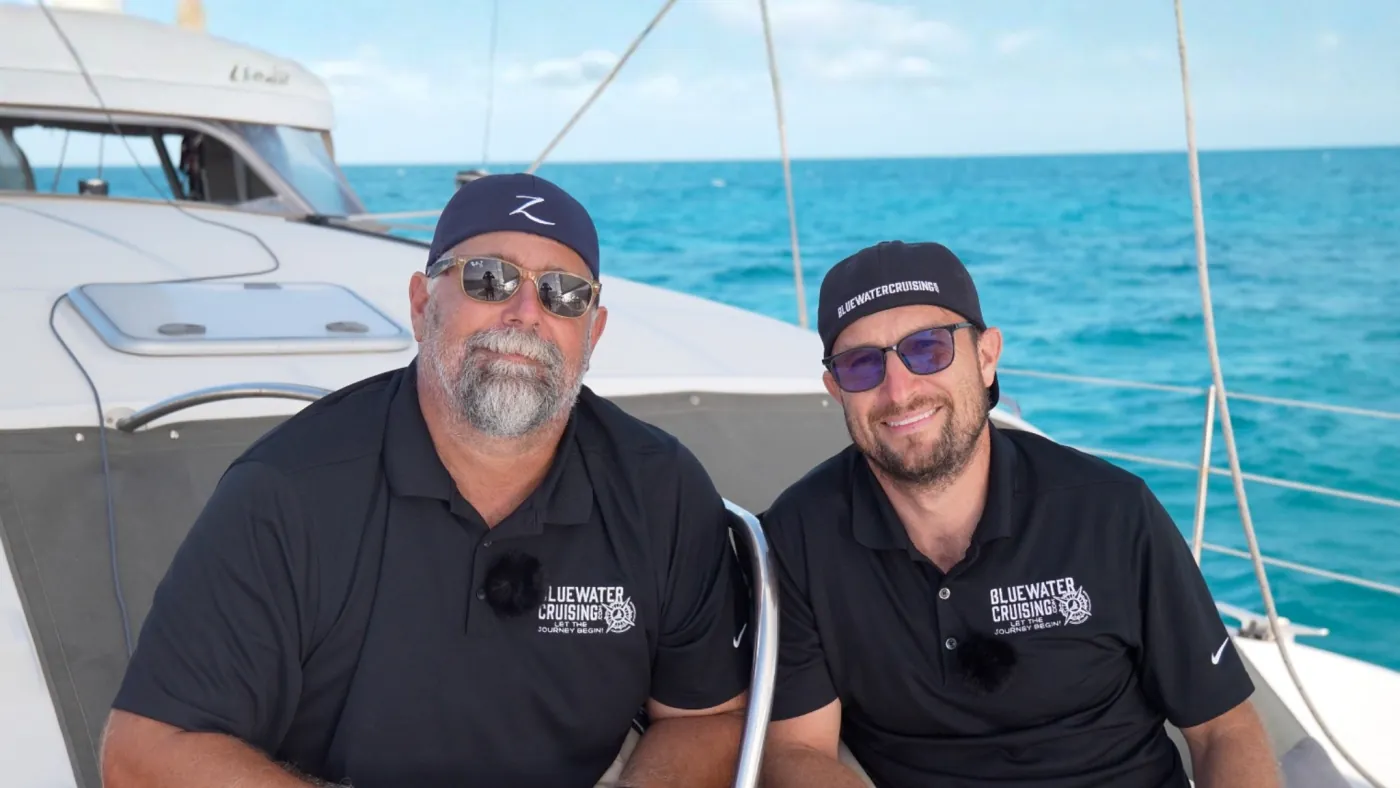
Chris: Hey guys, welcome to the Blue Water Cruising podcast. Super excited today I've got a good friend of mine and a special guest here, Peter Rollo. And we're going to have a little bit of chat, a little bit of a chat about Blue Water cruising, how he gets start, how he got started and a lot of things related to working aboard while cruising. One of the cool things about Peter and his family is Peter works aboard. So give a little bit of a background here on Peter. Peter, he's got an mba. He ran a big car yard business in New Zealand for a number of years before he sold that. Back in 2019 I met Peter. Was it 2017 or 2018 that I met you?
Guest: Yeah, well, firstly, yeah, good to be here and look forward to participating and being part of the podcast. Yeah, it was. I was on my power boat which made me fall in love with living aboard, but it still wasn't big enough to go around the world. And then I approached Chris. He was in his lagoon on anchor in my hometown at Mount Manganui. So I just idled up to the back of him and said, hey, is your catamaran for sale? Because I'd seen one for sale like that. So I thought he might be for sale. And he's like, nah, man. But he was super friendly guy and. And then we come back and we had a meal a night or two later. I think I'd leaned you a car for a few days and here we are.
Chris: Yeah, yeah, no, I remember, I remember that. So yeah, that's when I met you back in. Was that 2018? I think that was in 2018. And then you asked me that question and then within a year from then you were like buying a boat in Tahiti and doing your first, first ocean crossing and setting out to sail around the world. So. And it's you and your partner Yogi, and you've got a little one, Liam on board now as well. And yeah, like I said at the beginning, I think the, the coolest thing is that you're juggling working aboard while full time cruising and, and making it all happen. I think you're, you know, you're running your YouTube channel and you do some business consulting and Yogi runs her accounting firm that I think she ran kind of land based and then transitioned that to working aboard while you guys are cruising. So I'm curious to hear a lot about that. But I think to, to get started. Yeah, maybe give us a little bit more on, on your background and where you were at before you guys went cruising. And the specific question I'd kind of like to to know about this is like why did you decide to go blue water cruising and what did it mean to you? Like what did it represent?
Guest: I think the answer, what it represents is it represented escapism probably at the time of making the decision. Done 20 years and we've started and run my own automotive car sales business for 20 years and I was just over it and ready for a career change and ready for a lifestyle change. And there's one good friend of mine and he says that I've been talking around about sailing around the world since I was 16, but I can really remember in my early 20s with the old boat trader booklets open on the desk and looking at oh that's a blue water ready yos and dreaming about it. And I can afford that, that's 80,000 or whatever it was at the time or I might be able to afford that one day was more of it. And then did it really just come to a head as I was getting, you know, coming up towards 20 years in the business and getting really, really tired of it? It's the wrong business for me. Car sales. I'm far too friendly to be in this. All respects to car salesman. There's, it's a real balancing act between being friendly and, and making some money out of versus giving away all the profits. But that's another story. But yeah, really tired of that. And then I brought a slightly bigger trailer boat which enabled us to go out on it for weekend trips. And while on that trailer boat we went for a five day trip in a very beautiful part of New Zealand. And then I came down the coast to a little secluded bay and there was a yacht anchored in that bay and it was remote, it was beautiful and it was away from it all. And we stayed a night there on the trailer boat. And then I was just thinking, yeah, I want to live on board the water. But at that point I also thought that I was too young and that was going to be like a retirement thing to do sailing and cruising. And I even said to Yogi, oh that's something we'll do when we're older, but maybe, maybe we'll just go for seasons or something like that, buy a boat and have it up in Fiji above New Zealand or do seasons. And then it just sort of took off from there to now I'm sick of the business, let's cash out of this and let's buy a boat and work on board and sail around the world.
Chris: What bay was that in new. Long story short, what bay was that in New Zealand?
Guest: Fongamumu Bay, just down from the Bay of Islands. And there's some old whaling ruins there.
Chris: Oh, yeah.
Guest: Come down the coast a little bit.
Chris: Yeah, yeah. That bay is amazing.
Guest: Yes, it is. Yeah.
Chris: Yeah.
Guest: So that was clear as bell. Pivotal turning point to, yeah, I definitely want to live on a boat. And then it just gains my momentum. It started that started probably about four or five years before actually buying cocoa in Tahiti. But, yeah, it does take a bit. Well, it took me a bit to, you know, move through it, cash out of a business and change your lives. And. Yeah, now we've owned Coco for three years and we've sailed from Tahiti to Tonga to Tonga to New Zealand and New Zealand to Fiji. And we're just about to leave from Fiji to New Caledonia and Australia to avoid the cyclone season.
Chris: Amazing. Amazing. And I want to. I want to touch on this really quick just because I think it's. It's also changed the dynamic of things for you because you had your. Your baby when you. After you started cruising.
Guest: Yes.
Chris: And I. And the reason I want to ask that is just. It's really quick is. I know it's a big question. Question for a lot of people, like cruising with an infant and having kids while cruising. And. Yeah, I was curious how that. How that changed it and especially with working aboard.
Guest: Well, it's become a real juggle. And I don't know if somebody asked me right now, would you recommend cruising with a toddler? I would probably say the simple version is. I'd probably say no. But let's put a bit of context around that because you can totally cruise with a toddler. And every anchorage we're in is always between three to 50 boats in Fiji, and there's always three to four toddlers there. A lot start from about three years upwards. And we started from zero upwards. Liam's two and a half now, but it is a real juggle. But I was over my career and ready for a change and we knew a baby might come along. So I suppose we brought a boat that was big enough to sort of work on board and. And grow a family on. So that was. That was a actual decision that we made to buy probably a bigger boat than we needed to, to allow all those things to happen in comfort and, you know, hey, we're out here doing it. But if I loved my job in New Zealand and I wasn't ready for that change, I was. I would probably say go when you've got the kids five, six or seven upwards. It would probably be my advice. But hey, you're adventurous person. If you're not juggling working aboard, then maybe you can juggle the toddler in the boat as well. Because at the moment we juggle the toddler life, the boat life with maintenance. We've a repairs, storm anchorages, you know, wind dumping up at 1am and having to move to the other side of the bay, meetings the next day with Yogi's clients, vlogging, podcasts. And so it is probably a bit too much of a juggle. But hey, we're suckers for punishment. But it's beautiful out here too, so I can't complain too much.
Chris: Yeah, no, you've got, one of the things that I say about the lifestyle is you've got very high highs and very low lows.
Guest: Yeah.
Chris: And you can't have, you can't have one without the other. You can't have super high highs without going through some sort of lows to get there. So the punishment's part of the process, I think.
Guest: And Chris, you had, you had toddlers on board as well when you were cruising full time as well. So.
Chris: Yeah, yeah, I started with a four month old, Mia was four months old and then Aya was five. So I had both of those ranges. And actually, I mean my, my experience around that would be that the, the infant age, the you know, from zero to one and a half or two was the easiest. And Silas kind of says the same simply because you can just plunk them down somewhere and they can't move. It's when they start moving around and like needing stuff that it becomes harder. And the other thing that we did. But I completely agree with you, like it's a lot and we didn't really do the work thing and we took on a lot of crew to, to help with just that, just that the kid aspect of living the lifestyle.
Guest: So.
Chris: So yeah, I think that's actually a, a very hot button topic. I think it's something that a lot of people want to know about. Yeah, especially the, I, the, the question around when is the right time to go with kids. And you know, generally our, our, our suggestion around that is go now because you never know what's going to happen if you don't.
Guest: But yeah, it's a good point.
Chris: There is some planning things around that for sure. I like to kind of contextualize the cruising world in different categories of, of cruisers. So there's cruisers that they go cruising for what we would call sabbatical so they go for like two to three years, they take off with the kids, they're not working. And the plan is they've got two to three years that they can do this without working. And then they come back to civilization. Maybe they get a different job or the same job. Then there's what I would call like early retirement people. So these are people that have worked for 20, 30 years, built a business, built a good career, and they want to retire in their 50s rather than their 60s and head off for an indetermined amount of time. And then there's also another category that I would call like the pre career, which we don't really work a ton with. These are people in their like twenties that haven't even really had a job yet. They just buy a super cheap boat and head off and make it happen however they can. And then there is the last category. And this is what would be like the liveaboard work aboard digital nomad type category. And in, in my opinion, it's actually probably the fastest growing category of, of people, blue water cruising. I think based on what I hear and so what, I mean, based on what we've talked about, I think you, you fall in the last category with that. Is that kind of an accurate definition where you're at?
Guest: Absolutely. And I see all those categories in the Anchorage. We're here at Musket Cove and probably the majority are the retired 50 to 60s. Okay. But my view on that is you don't know how life's going to play out. And I'm 44 and there's heaps of people that have got cancer at 50 and aren't that I know of, colleagues, business people that I know of and they're not here anymore. So yeah, you could wait till you've got a bigger investment fund or whatever and go when you're 50 or 60 or you might not make it. So hey, with me being ready to change my career, it was the perfect timing and the digital nomad world and this digital life really enabled Yogi's business to come on board and come with us. And, you know, it's enabled new opportunities for me to build my digital income up slowly over time as well. So it's, it's well different than 15 years ago for this whole category of cruises.
Chris: Yeah, yeah. And just, just out of curiosity, had you guys done any digital like online type work before? I mean, you were, you were in a very bricks and mortar business with the car sale. Yogi was, I think she was bricks and mortar with the accounting Business as well. What was she? I don't actually know.
Guest: Yogi's accounting firm is about 10 or 12 years old now, give or take. And it was probably a mix of bricks and mortar and digital and probably during the MBA program, the university, I collaborated with lots of other students on assignments and used, you know, Google Docs and Skype and just really brought me into that world. And then that probably segues onto. And now Covid has brought the whole world along to Skype, phone calls and podcasts and Zoom calls and all of that collaboration where if you went back pre Covid, some people would be like, oh, I don't know how to use zoom, but probably virtually everybody on the planet is probably exaggerated but knows how to do a zoom.
Chris: Yeah.
Guest: So that's made. That's built the opportunity up to work digitally as well. And then there's the remote homework that a lot of businesses have chosen to do. So that's even opening up the category for cruisers to go off and cruise while they work for many different companies and organizations.
Chris: Cool. Cool. And so why, you know, why did you guys specifically choose to go now and go as digital nomads? Like, what were kind of the deciding factors? I know you've touched on them, but if you want to elaborate a little bit.
Guest: Yeah, I suppose. Firstly, there's that wanted to change career, so I was ready for a change anyway. So that's number one. Secondly, for me, it's wrapped up in the purchase price of the vessel and what your initial budgeting is. And I know you do a lot of this in your full confused to captain course, Chris. But if I speak to it simply for us, it was we, if we worked out here, we could not buy a much better vessel. And we talked about it. Do we buy. What's a good word for it, a much cheaper vessel or a much more budget vessel? And then eek. And. And then spend some more money on investments or use that money to slightly slowly decrease your savings over time and go cruising for a period of time until those savings run out. So there are some of the options and I know you'd go into that a lot deeper. But I'm giving what happened for us and I said to Yogi many times is do you want to have to work or do you want to buy a really nice boat? And the Leopard 48 is a very nice boat. It's very luxurious and generally it's the best vessel in the anchorages apart from the super yachts generally, occasionally a couple of really nice privileged catamarines. Coming along. Or a large ultramur 55 or 60 or something like that comes into the anchorage. But generally we are on the higher end. But for our budget, that definitely meant we were making a choice to need to work. And being young, we often said to ourselves, we just don't want to go snorkeling all the time. I don't want to do endless surfing. I don't want to do endless. It sounds nice, but I actually really enjoy sitting down with Chris today doing this work to promote our channel. My brain is very active. And if it was just cruising and just another Anchorage and another boat trip, that's not enough for me either.
Chris: Yeah.
Guest: So I hope that makes sense. It does.
Chris: It really makes sense, actually, because I think it's. It's. It's something that. I mean, it's an interesting awareness that you had at that stage, because for me, when I did it, I didn't have that awareness. And I also know Keith, you know, when we talk about this, that he didn't necessarily have that awareness either. Both of us were done with the business and we sold our businesses and we started cruising. And I would say, you know, three to four years down the road full time, all that stuff, that work thing comes back or that desire to create comes back. And it's cool that you just saw that. Hey, that's gonna come. Anyway, so what can I do to feed that now and keep this going more sustainably rather than, you know, I think my approach was like, full on cruising. And I did it for four years. And then I kind of, in some respects, almost burnt myself out on cruising because I just spent so much time, like you said, surfing every day, spearfishing every day, all doing all those things. And then at some point that turns into, okay, what's next?
Guest: Yeah, which.
Chris: Which turned into this for me. But, yeah, so that's cool that you have that awareness now and. And you're building something. And what is. What is your YouTube channel?
Guest: The YouTube channel is sailing, Driving and Eating with Peter Rollo. Okay. And our focus. Hey, there's a gajillion YouTube channels out there now. So we had to find a way to differentiate ourselves. Differentiate ourselves. And we're just really focused on unique food experiences while we sail around the world. And we just shot a season in the Usawa Islands, Fiji. And I found a sea cucumber to eat. And I found. We got a local village, you know, 60 miles out at these crazy beautiful islands. We've got a local little village lady to cook a logo with us. And we Filmed that. And plus we're filming the boat life and the repairs and the maintenance and the passages. But we've just got this focal point of finding unique food where you did a catch and cook of a snapper on the beach and, and, you know, just wrapping that all up in this life of living on the boat. So we're trying to differentiate ourselves there.
Chris: I've got a question for you on that. Why? Because, and you mentioned it. So there is, like you said, there's probably thousands of YouTube channels now. And this is a twofold question. The first one is because we get this question all the time too from people that want to go cruising and work while they're going. They, they say, oh, I'm going to start a YouTube channel and that's going to fund my, you know, my cruising and, and, and, or maybe not right away, but shortly it will fund the, fund the cruising in some way. So first question is, is that true? And then the second question is, why, why did you want to start a YouTube channel?
Guest: So the first, the first question with the financial. Is it true? Yes, it's true. But I am just schooling myself for a brutal year or two of making good videos, working hard on it and just seeing very little reward or outcome. I think it's around year two that a lot of channels that have committed to it and have jumped up a notch and start seeing a flick of income that might actually help towards a budget, maybe with a professional editor and we can do it in a year to two. But I'm really mentally dug in for that to be a slow process. So my advice to you guys out there, if you are going to be a YouTuber, you're going to have to really study it, be a real presenter and really you're going to have to have a budget to go for a couple of years with it, making no money, no sponsorship, no Patreons, nothing. And, and I think that would be really quite hard. I think Yogi's business being established before we left and we do earn some income out of a rent for a house back in New Zealand and that's leaving us still a little bit tight. But it'll be much nicer once I get my digital income growing. But it's going to take a couple of years and it's going to be frustrating and you're going to put up, you're going to work hard on videos and you're going to have to really be able to mentally be strong about it.
Chris: Yeah. So you're in it for the long game. It's not a get rich quick scheme where you turn, turn the YouTube channel on and then the next couple months you're getting checks for ten grand a month.
Guest: Yeah, yeah, I wish I would. I would think if you're doing any sort of budget, you maybe might getting a hint of revenue after two years, maybe a thousand or a few thousand a month after a couple of years of. Yeah, properly making videos. And that's probably once you get good at making videos. And I've started. I've studied making videos since 2016 so. And with my background in business I know how to apply myself. So I'm doing a lot of research and to the styles and learning, not just sort of putting up a home video.
Chris: Yeah.
Guest: What? There was a second question there, which was why video? I have been a presenter my whole life and I was a car auctioneer for 10 years. So I do enjoy sharing it and it feels a bit wrong just to keep it to ourselves. So I think a lot of YouTube channels would feel like that. And then the camera, the video camera gets you behind the scenes and it forces you to not be a tourist. Like you can rock up somewhere and go, hey, we want to feature you on our YouTube channel. Are you interested? And the locals that normally you pick something, somebody a bit sort of interactive to start with, but their eyes just burst open and they just welcome you into your house. So it's like the camera is a step or a window into behind the scenes versus being a tourist and just taking pictures out the front. That's how I feel about video and plus it drives me to do adventurous things as well.
Chris: That's cool. I like, I like that approach actually. That's.
Guest: Yeah, that's. Yeah, that's how I've come to sight.
Chris: That's not the first time I've heard that, but it's the first time I've heard that from talking to somebody. Actually, I've read that somewhere else, but I've never, I've never. Yeah, it's a. That's a cool approach. It's a really cool approach.
Guest: And to. Of course it's very dreamy and people will probably in two to five years time, as the channel's very established people go, oh, you're so lucky. You're getting paid to have adventures and sell around the world. It's like, well, it took me four to five years to get good at making videos, studying it behind the scenes and then it took two years of doing it without much of a pat of a back or a cent. And some people Say they do it for love. I do it because I do love sharing. But I'd be very happy with it when it's self funding because that's sort of like the pat on the back that's the validation that hey, we're successful at it is when it's financially paying for itself and providing a nice little income. Hey, it doesn't need to be huge. One of the things we decided from giving up our normal life was that we aren't going to chase major amounts of money in the future and we are going to be more content on a budget. And for us that means way less restaurants compared to when we were in business mode in New Zealand and making some changes like that. And that has actually been a bit tough because we like getting off the boat and going to a restaurant. But it's got to be one a week or two a month or something like that. Otherwise the budget's going to fall to.
Chris: Bits around your budget. Because that is a big question for a lot of people is, you know, what does it cost to do this and things like that. And the question though is not what it costs is different for many different people depending on how they want to live the lifestyle. And you alluded to something there which is. Yeah, you alluded to something there which is that you, you dropped restaurants in order to make it more manageable. What like the question is how much time did you spend on thinking and planning about what this was going to cost before jumping into it and doing it?
Guest: Probably maybe up to around a couple of years with actually doing budgets for it. Our budget was between 70 to 90,000 New Zealand dollars per annum and that was probably before the inflation.
Chris: Yeah.
Guest: And for a family it's probably heading towards, it might be heading towards a hundred thousand per annum to, to live a lifestyle out here, but you people can do it cheaper. There's all sorts of budgets. We, we really love our food and that's why we're sailing, driving and eating. So even the food on board is expensive for us. We've got a lot of free fridges and freezers and so we don't live on two minute noodles like that. But we're not really flashy in any other way.
Chris: Right.
Guest: But and then there's a big confusion on budget with your boat purchase and the refit of the boat to get the boat to how you like it, either in terms of comfort or safety. And then that's separate to me. I'd lump that together in the boat purchase. So if the boat is 100,000 and your refit is 50,000. I called a boat costing 150,000. Then the ongoing cost would be to maintain that boat at that level and renew the equipment from that point on. That's how I would speak to that. But, but again that could be. And then, so then your annual expenses is your food, your insurance and your boat maintenance and saving a little bit for the next refit, the next big refit in the next location, that suits it. But you go deeper in that and they can choose the captain's course stuff.
Chris: Yeah, yeah, we do. We do. Yeah. And I think that one of the other big mistakes that people make is when they buy the boat, they don't do, first of all, they don't do this, the boat price plus the refit and figure out what that is. But that I think the biggest mistake is they don't think about what it's going to cost them to live the lifestyle first and then figure out within their budget what's left over. What can I buy a boat for which I think you did. And you came to the conclusion that if I buy a boat for this price, I'm gonna have to work because I don't have enough money to live the lifestyle. And, and that's a big mistake. I think people make, they buy a boat and they think that they're going to be able to live the lifestyle for some amount that they haven't really figured out for real. And then they, they start doing this and they realize in one year that they can't afford it or.
Guest: And that I would think that would be a real shame. And you see boatyards littered with the dream, failed dreams and boats sold due to health and budget issues. And you want as much as possible to get that sort of stuff right. And hey, your course is fantastic for clarifying that.
Chris: Yeah, let's. Let's dash on into. I want to get to. Yeah, this whole digital nomading thing and what you think.
Guest: Yeah, we want to stay on that topic, don't we? There's a lot of topics.
Chris: Yeah. What, like what are the, you do the YouTube thing, you do some business consulting and Yogi does some accounting. What are some other ways that you've seen people do the digital nomad thing while working aboard? And what are the specific, like, what are the specific challenges that come with that? Like the day to day challenges of living aboard and working aboard the boat?
Guest: So I suppose the challenges is juggling, if you're juggling any sort of work would need to be. I would. My first comment would be. Needs to be very Flexible and at times Yogi. Yogi's work is mostly very flexible. But occasionally she has a few deadlines with tax deadlines with her clients and meeting deadlines. And then, and then you're juggling that. Against the background of weather moving Anchorages changing countries. We've been more pushing, pushed around by cyclone seasons than I ever would have imagined. They because we brought the boat halfway through a season in Tahiti and then we had to leave to get to Tonga to get to New Zealand before the insurance run out. So we were really pushed like that. And then in New Zealand the customs deadline was pushing us to get out of New Zealand and the cyclone season while we were trying to do as much of a refit there and then so we got extension on that and then we had the baby and all of that. And now we got to Fiji a bit late because we were doing more upgrades in New Zealand, but. And now we're pushed, we're a little bit tired. We're not ready for the next offshore passage. But yet in a couple of weeks time we're moving for we're sailing to New Mia, New Caledonia and in Australia. And hey, if I had my choice, I wouldn't do another offshore passage for four months. We would just work and catch up on it. Yogi's been a bit pressured to get a lot of client work done before that passage starts. So it is a real juggle. And then hey, you know, some, some weather might come in, somebody anchors too close, you got to move in that afternoon instead of doing that work. And so would you know, and for us you add in a toddler, would.
Chris: You say that it like adding the work component to it, never mind the toddler component, but adding the work component to it. You need to do some more, you need to be more clear in the high level planning as to. Yes, you know where to sail, when to sail, what times to leave and.
Guest: How is the Internet there?
Chris: Yeah. And how various things work in these different countries as far as check in procedures so that you've got a little bit of a high level timeline. Yes, the work needs to be flexible but it needs to still be fit in within some high level timeline and that the more planning that you do, it sounds like the more plan, the more high level planning you do this it still has some hiccups and hurdles but the smoother it it runs for you.
Guest: Yes, yes. And Internet's a big key but it's amazing how much Internet is available out here. Yes, there's some islands two to 300 miles off the coast of Fiji, that we would only be able to go out there for two weeks. Yogi would just say she's on annual leave. And the good thing about my consulting, I just don't book any clients or. But of course, I'd be filming a lot for that, for YouTube, so that, hey, that counts as work there. And. But we're not tending to go to those sort of places. We just went 60 sort of 50 to 60 miles out to the asara group in Fiji. And there's good Internet the whole way, pretty much. Couple of anchorages were a bit sketchy. So you're like, okay, we're only stay there for a night, and then we'll get back to one where we know there's good anchorages. But in comparison to a cruising couple that had a lot of energy, was, say, 50 to 60, fully retired, that go to a lot more anchorages and a lot more locations than what we are. So sometimes they're like, oh, have you gone here? Have you gone there? In a way to kind of make you feel a bit weird about it because you feel like you're missing out. But we've just had to decide this is the way we've chosen to do it, and we're happy with that. And by filming a place, we get to make more relationships with locals and have a deeper experience than just another Anchorage, just another island.
Chris: Yeah, I think that, again, that, to me, that comes down to this lifestyle thing where it's like, what's the lifestyle you want to live? And so for some people, that is what they want to do is go to as many places as possible. And I was like that. You know, I was like, I want to see as many places as possible. And over time. And Keith's like that, too. And over time, both of us have got to this place where we're moving slower. I'm moving really slow now. I'm not going anywhere, but. But in. You know, towards the end of what when I was actively cruising, I was. Yeah, I preferred to sit in one place for three weeks rather than just like, go Anchorage to Anchorage to Anchorage, because. Exactly. For that reason, I felt like I developed more relationships with the people in the place that I was in and got to know the place better. But yeah, I think it's. It comes down to the lifestyle because there's. There's two ways to do it. I have friends right now. I don't know that you've run into them yet. They. They are a family that are in Fiji, too, On a leopard floor, 42 and they, they're not working and yeah, they've just been dashing all over the place. They were just out in the Lao group to Falanga and now they're coming back to Sabu Sabu I suppose or maybe into Suva or something. So they're like yeah, moving all over the place, which is another way to do it. But I think you made a good point which is that that's. You got to keep in mind if you're going to work what while you do this. Those are going to be things that you, not, you're not you cannot necessarily do unless you're super flexible or unless. Unless you want to spend five grand a month on Starlink.
Guest: Yes, yes. Yeah, our budget, we just use some offshore weather Iridium which is very. Which you can't surf or work on. You just get weather and send text messages on and then we just buy local SIM cards for, for the Internet. But yeah, we're all fingers crossed with Starlink becoming say maybe 2 to 500amonth and being reasonable.
Chris: Yeah, yeah.
Guest: And because hey, I love my Netflix.
Chris: It's coming, it's coming to Indonesia in supposed to be in 2023. It's coming into Indonesia and you can use. Because I've got, I know a few people around the world now like in New Zealand, in the US in the Caribbean you can use the RV version which is like a hundred bucks a month and it's 500 bucks a month for the hardware but you have to stay within that region. So if you're in Indonesia you can cruise all over Indonesia with start once they get it here with Starlink is the plan for 100 bucks a month which.
Guest: Oh, and there'll be people watching this podcast that the maritime version of Starlink. They'll easily be able to afford it. There'll be some high end very specialist conditions consultants, IT professionals, maybe some medical professionals that hey, there's one boat on a leopard 48 like us and they spend 20 odd thousand a year on some satellite Internet and obviously that works with the income and you know, if you've got to spend 20, 30, 40, 50,000 a year to have really, really good Internet from anywhere in the world, but you can earn 50 to 100,000 or upwards kids from your, your profession and you want to sit on a boat doing it, hey, it's, it's all doable, isn't it? Yeah. So yeah, accounting is totally doable. We've proven that. We've done the accounting for three to five years now. She moved it Online before we brought the boat. A couple of clients left but the word of mouth means she keeps growing, growing clients. Anyway, some wanted to come and have a coffee with her and drop off the box of receipts. And so we did see a few clients leave and that was a little bit early on and we were a bit nervous about our budget. But hey, there's no problem with Yogi getting enough work.
Chris: So the business is actually growing.
Guest: Yeah, it's limited by the amount she wants to work or that we've got time to work juggling the boat in the toddler.
Chris: That's cool.
Guest: And so yeah, legal would be very possible I would think. Two types of legal. Anything high tea related. I'll just go off a bit of a list here. There's a lot of authors out here that could be sailing books, cookbooks, bloggers, travel stories. Of course there's video documentary making. Hey if I want I could probably sell video services to other boats out here. I'm not choosing that but there's. I'm just giving you some ideas, you know, maybe some high end video for the drone for the super yachts that are around in the Anchorages. You could design courses as per your profession. Chris, you're an example of that. Trades people, boat repairers. I'm not in that category. I've had to work hard to learn how to be a trades person and maintain Coco and I've learned lots but I wouldn't, hey, I probably could help a few cruises with a few parts and repairs if they were stuck. But hey, there's trades people. You can fix boats, engines, electrical is huge. Lots of opportunity for both electrical work around Anchorages and out here in the sales, customer service, answering emails, promoting a product, building a marine business like some people. I know one guy Rich from Cruisero, he supplies our water maker so shout out to him. But he's built that business up while he's been a cruiser making water makers and you know drop shipping, shipping to products, handling all the inquiries. So you could start a business for that but on your budget. If you were going to start a business from scratch. If you think a normal business is a slow lead up time building one while away and out cruising would be even slower. So you have to have a big buffer of savings or start two to three years before. Before you go. Yeah, yeah, that's my advice there. Graphics designers, freelancing fiber, that's all the sort of the ideas, hey, it's not limited to this, it's probably limited by your creativity.
Chris: I think, I think you hit A key point though, which is the difference between running a business or actually just having a job, because there's a lot of opportunity for online jobs now, way more than there's ever been. And they can be quite flexible because you don't need to work 40 hours a week. You can take a part time, 20 hour a week job or something like that that's flexible in customer service, graphic design, whatever it is. And you can do that almost right away and go cruising. If that's the thing. You might, you might, you might take a pay hit, a pay cut from what you're doing now. But if it's enough to keep the cruising lifestyle going, that could be your, you know, your transition into starting the business or whatever the other thing is you want to do while you're cruising.
Guest: So yes, and I'm glad you've mentioned that. I'm very entrepreneurial. I've had my own companies virtually since I was 19 and 19 was, apart from donating some time to university and other sort of type educational places, I pretty much worked myself. So I tend to be very busy, business focused. But again, that's like you said about me, Chris, I knew myself. So you've got to know yourself. Being in business, you've got to have a lot of schools, skills, you've got to do what's hard. If you don't like closing sales, maybe you're good at graphic design, but you hate following up clients and closing sales or running staff or some other aspects that aren't within your personality. So you're going to either have to grow in that way and go, right, I've got to do this, that's very hard. Or you could fail at it. And then maybe it suits you more to be working for a company that just gives you the flexibility, uses your existing skill set and is a much more steady income and then you've got income to go right now.
Chris: Yeah, it's it. I got a good example in IT for that. A friend of ours, Thomas, he was, he was, he's an IT guy and he was sailing, he sailed for a few years and he said, oh, I need to make some money. And they were in New Zealand and so they just spent one full year in New Zealand, cruising around in the winter as well. And he picked up an IT job for a company out of the US that needed somebody in the New Zealand time zone and he was doing like a little bit of QA and help desk stuff and I think they paid him like 100 grand a year for a year of cruising. Around New Zealand, which costs very little, you know, so you just banked a ton of money and then quit and, and you know, and went cruising again. So there's a lot of different ways to do it.
Guest: Yes.
Chris: Yeah. If you, if you're flexible with how you're planning, I want to switch gears a little bit and go into practical tips around this. So if somebody wants to work aboard, whether they're going to run a business or get a, a remote job, something like that. What like how have you set up the boat and what are some, some practical tips that you would suggest if somebody wants to start cruising this way?
Guest: Probably starting at that setup the boat. We brought a larger boat to enable it because our plan is to be out here for 10 or 20 years. They might get sick of it next year. Currently we love it. We can't imagine any other life really. But on a bad day you still miss your friends and stuff. But yeah, we brought a really nice comfortable boat to make it work and we upgraded it a lot with power, lots of water. Hey, it's got a dishwasher, it's got electric oven. So we did a lot of upgrades to make the boat comfortable because you can't digging back from getting groceries, have a long day, some tricky clients and then the boat has to be comfortable in my view to then take on the two challenges of working on board as well. Otherwise it's. It could be beautiful anchorages, beautiful beaches, but you get wet coming home in the dinghy. You've got to. Then you have a cold shower. And so for me, the boat had to be really good to make this happen for us. And, and we've achieved that with how we've refitted. Yeah it. And we could always, by popular demand, do a podcast on how to refit a boat for a really comfortable, safe time. So. So that was the first step. The second step is probably SIM cards as your Internet. I maintain a home number for all your two factor authentication that you can turn on and get a roaming rate. But then we buy local SIM cards and that's really worked for us. There's no problems with that.
Chris: That's a really good one to like that. That's one I think that's commonly overlooked is if you're going to be working all these two factor authentication things are especially online now. Everything requires two factor authentication. And if you don't have some consistent number because a lot of people that cruise will change their number in every country and that ain't going to work for two factor authentication. So keeping a consistent Home number for that is critical.
Guest: Yes. And what's really good now is WhatsApp isn't phone number dependent, it's just devastating device dependent.
Chris: I didn't know that.
Guest: And so if you've got a bunch of clients or like I put the Fiji SIM card into my phone and the WhatsApp everybody still knows it's me, it just kept working. So if you had a WhatsApp client list and you know, whatever you're doing, if it involves someone else, then, hey, you're still fine. The other thing Yogi does and we plan from is we will take, we will call it annual leave when we're at C. Sea. So that's when Yogi will email her client list and say, hey, I'm on annual leave and I'm back on this and we'll go to sea and do a passage. Okay, so that's, that's our little.
Chris: Does Yogi's client list know that she's cruising? Like she's.
Guest: Yes, yes. We felt some kickback from that at times we've been honest about it and times we've been quiet about it, which is, is not dishonest. A couple of people showed jealousy at times and some people are probably annoyed by it, but on the whole they understand now after a couple of years that that's her lifestyle and, and, and the fun work. It's working great.
Chris: I, I wonder like, because I, I know some people that run sim, like different businesses that are not related to cruising and they're very open about it in like in their newsletters and things like that. They send updates of the places that they're at, the things that they're doing and it's, it's actually been a very positive thing for their business. So I was just curious how you guys.
Guest: Yeah, we've probably been for Yogi's business, we've probably been neutral to slightly proactive about it, but not totally proactive about it. But each, hey, that could be also just by total time. It's hard for her to say, sorry, I've been busy. I, I'll get to you next week when all the photos all over the sailing, driving and eating Facebook page is be beaches and fishing trips and local food experiences. And of course some clients that have known her for a long time are friends on her Facebook page and we, we'll pick that up. So I suppose that excuse is no, she's just got to get the work done or, or, or not use that excuse.
Chris: Sorry, I've just been sitting on a beach for seven Days. I'll get to you when I'm done sitting on the beach.
Guest: Yes. Yeah. So these are, these are good perspectives that will be coming at you. I, I would, I'd definitely comment. The work needs to be reasonably flexible. If it was a employer really expected you 9 to 5 and to be available at any hour, in any minute for it, I would say it's possible, but the challenge factor of that would be huge.
Chris: I would say it's not possible.
Guest: Or you.
Chris: But just.
Guest: Yeah, virtually not possible. Or maybe you've got to live on a boat in Fiji but never go to another country. Yeah, you're living something, you're living at.
Chris: You'Re living at anchor and going out on weekends if that's, if that's the job that you're going to take.
Guest: And yeah, and maybe you, maybe that's your choice. But if, if you love that and you're making that with your eyes wide open, that's a good choice. We've covered satellite Internet, still pretty expensive, but yet it's our practical tip. So to set up a boat, I'm downstairs in a catamaran, owner's version at the moment. So I actually have a proper little desk and a little. I've got an office chair which is kind of nice. And Yogi's upstairs at the moment in the saloon and the toddler's gone to sleep so that we could record this. It's his sleeping time. And so when she's doing meetings this afternoon, I've got to take liam out at 3 o' clock because she's doing some client meetings and so she either books him when he's asleep or I'm gonna have to take him out. And we've got a local Fijian nanny helping us as well because you get no child care when you're sailing around the world. You don't have your local daycare center. And so that's something to factor in. But that's unique to us because we've got a toddler on board. Even if you're working for a company, you've got to be a self starter and you're going to have to satisfy a client or a boss, so you're going to have to have those skills. So that might be looking at some of your personal attributes that are in your life for what you're going to be doing as you transfer into the cruising life. Have I got. Maybe you've got to be 8 out of 10 first things self starter, diligence can create your own schedule. You know, hard working don't need to be told off by a boss to get it done. You know, there's probably going to be 10 attributes. You're going to probably have to be seven or eight things to, to make it work, working remotely. And if you don't know that, you could test yourself over time or read books on, on those sorts of attributes.
Chris: I think, I think that's a really good point. And I actually think it, it, it bleeds into more, more than just the, the working aboard. You know, Keith and I talk about this, that in order to decide to live the lifestyle in general, you need to know yourself. You know, you need to know like for the type of boat you want. Are you a person who likes big and luxurious things? Are you somebody who likes simpler things? You know, for the, the how, how much the lifestyle is going to cost you? You need to know yourself. You know, you need to know what your habits are and are you prepared to change them or not prepared to change them. And then particularly around this, this working aboard thing as well. So yeah, I think that's, that's a really, really good point.
Guest: Yeah. And that's all topics that you spend considerable time on isn't. And the confused to captain.
Chris: Yeah. Because it's, it's.
Guest: I think today we're just glancing across the top and sort of smattering you with the basics of being a digital nomad really. And each area, budget, personal skills, the boat to buy could be whole podcasts in themselves.
Chris: Yeah. There's a lot to dive into each.
Guest: Or your course, each one of these.
Chris: Particular categories that, that you're talking about. And I think that comes from again, the way that, I mean you have experience with this, the way it, you know, as far as a life transformation, on a scale of 1 to 10, what would you, you say this like moving from the life you were living to the cruising life. How significant of a life transformation was that as far as aspects of your life that it touched?
Guest: Well, it's, it's huge and, and, and it's massive. It's almost. And I was sitting in Fiji about writing for about a month and I thought of this about a few days before I talked to you and you, and I talked to you about it and it, you've got to become a cruiser and that becoming is in your core, isn't it? You've got to. There's so much to learn and I found it really difficult because we just took on so much and, and it has been a real challenge for us to learn how to be out here living this life. And the biggest challenge for me was probably the boat maintenance and the boat operation. Hey, and I run a car, I've mechanically checked cars, not fixed em, but I mechanically check cars for 20 years and I had my power boats but I wasn't an everyday handyman and I rebuilt cars when I was 16, you know, blew up diffs from doing skids and put the cars back together myself. So I did, I did know what a pair of long nose pliers was. But to maintain and operate an offshore capable cruising vessel is a two to three year transition. And I probably did it the hard way a bit by myself. You know, two friends, Chris helped me assess the boat and put in the offer. And you're a fantastic Chris so thank you very much for that. And I was probably able to move a lot quicker and maybe even save a hundred to two hundred thousand US because I found a really good deal in Tahiti. So by you know, working with Chris and doing his course and learning more quicker you get save a lot of money. But yeah, that's the hardest part and then it's getting all your little habits of how am I going to get time out, how I'm going to talk to friends a few times a month where we're quite over living with each other and just need to sort of get off the boat and spread out and you know, so there's a relationship aspects. Every day we've got to take Liam for a walk and ourselves for a walk because even a big night it's nice boat like a Nippon 48 still becomes small and particularly when you're working on board because, and it was the same we worked in the house a bit before we left our old life. We had to get out of the house on the weekend. But hang on, sometimes you're tired, you don't even want to go to a cafe, you don't even want to go to the beach. You just, and what I do then is just watch Netflix in my cabin away from it all and, but sometimes you don't even want to watch that. You're over everything, just want to get off the boat. And so you, you got to become that, you've got to become the maintainer, the business person, you got to become the captain, you've got to become the, the, the weather expert. But all these things are doing it give yourself time and, and, and give yourself good training. And I don't want to make it, I don't want to put anybody off. It's also fantastic the things we're seeing the lifestyle that we're having. If I looked at a living in a house again, I just think it's so boring and I couldn't imagine doing anything else for now anyway, where I'm at now and we're three years into it.
Chris: And so I think, I think that was. That was brilliant the way you kind of put a nice little bow around that and tied that all up. As far as a nice segue into wrapping it up. But I want to know before we do that, what are the. Like, what are the. If you could pick two things or three things that are the worst things that have happened to you while cruising and then two things and three things that are the coolest, absolute best things that you've done or that you've experienced as a result of making this transition, making this change, this choice to live this life, this different lifestyle.
Guest: The. One of the worst things is probably my water maker. It's a good water maker, but I hit the previous owner didn't look after it well enough and I had to sort of replace 80 or 90% of it. And. And Rich, the supplier was always helpful on the phone, but it probably had three problems that were ghosting me and sometimes even in the car. There was three problems wrong with a car. And you can't. You can diagnose one problem you can find that's not pumping or the power is not to that place. But when you've got three problems happening and you start going around in a little circle and cruising without a water maker just sucks. You gotta. We like using a lot of water and a lot of comfort. And that mean you'd have to up anchor and go to a dock once a week. And that's the thing with living aboard. We would find even up anchor and going to a water dock for a morning a waste of a morning because we're a bit pushed for time. So we want our water maker buzzing away, making our water. And that gives you a little glimpse to. That we still care about time out here. We haven't become fully salty hippie time doesn't matter, though. I still. I forget what day of the week it is. So maybe on some level it doesn't matter.
Chris: It's annoying. It's annoying to have to interrupt your day to go get water when you've got a water maker that I just. I just think it's hilarious that the first thing that you come up with is a mechanical problem. Mostly because I talk to people all the time that are thinking about this and the things they think are going to Be the worst problems are have really very little to do with that. It's often like storms, pirates and things like that and the first thing that you're like the worst thing is my water maker stop working.
Guest: I was, we worked really hard. We'd had the baby, I'd ordered a whole lot of new parts I put them in and we were ready to go cruising in New Zealand we only had six weeks to go cruising and the water maker didn't work and we had a really difficult start. Baby had operations, we'd got the house rented out and literally I was in tears. It's. It is kind of funny. Literally I was actually in tears that our water maker was still not working and I brought a second little smaller unit to use as a backup and now I've got two water makers on board. My big one is nicely working and we love it. It's luxury. It's going so well for us but runs off the solar power and the inverter and everything but it is another story. But yeah so the mechanical is the bad ones. What other. The bad thing was during the buying process the broker talked about the. The bank held up the money for the transaction and the broker Talked about keeping our 50000 US dollar deposit and selling the boat to somebody else and that's that in the buying process. It wasn't my fault. I sent through all the records that we'd sent the money. The anti laundering stuff can hold up international transfers. I bet you do a segment to that and you're cruising captain or something and that was brutal and that was some great hairs and when you've worked so hard for your whole life to be able to afford a purchase such as this and money counts that's just really.
Chris: That's really. That's really not. I think it's really unprofessional on the broker's part to even. Yes to even. To even mention that is ridiculous but yes. Yeah we don't, we don't need it.
Guest: If it was some non performance like I had said I was going to raise the money because my business sale fell through or something like that for sure things happen and there is reasons for people to lose deposit. Hey I know that I've been on the other side. I've kept people's deposits before but it was from non. It was from no non performance of myself in the transaction and in the end I was able to borrow money pay for the boat from some borrowed money and then recoup the money from the banking system and the broker And I'm lucky I had that bloody.
Chris: That's, that's, that's, that's just ridiculous in the buying process. And that is, you're right. This is something that we do, we talk about a lot about because we constantly hear stories like this in the buying process. Because that whole world is a disaster and unregulated. And it's, it's a wild. Yeah. And, and it's really important to be careful going, going, going into it and make sure your, your, your eyes are dotted, your T's are crossed and you're aware of what, just what can go wrong.
Guest: So one more bad thing. We've had good passages. We haven't been bashed too hard at sea. That sort of fatigue definitely kicks in there. Sailing shorthanded with a toddler can be brutal. The toughest times, arriving at a country with all the bureaucracy, you stay awake, just a glance across that. And the good times is the. When you're offshore, it's unpolluted, your mind goes calm. The sunsets, the sun rises, you know, just day three or four, you, you've let go of all of the land distractions. The food tastes good, all right. For me, the food in a remote anchorage, having nice yummy food and a beautiful place when the anchor's just gone down and the engines are turned off and you've arrived there and, and it's special, there might be no boats there. Great Barrier Island, New Zealand and our upcoming New Zealand season. There's some really dreamy passages like that and some, some of the anchorages in Fiji just spectacular.
Chris: And what's, so what's, where's your, where's your favorite anchorage and the favorite food that you've eaten?
Guest: The favorite food. I really enjoyed Blue Lagoon in the Yasawa, Fiji. And we went and shot at the local's house and had the lavo, the ground oven and I was there all day cooking and filming that and eating that and that was spectacular. New Zealand has just got some beautiful fresh raw anchorages, you know, with kiwis in the background and the sun rising and the, you know, the morning bird tweets as you go up.
Chris: Cool. And what are the, what are the YouTube. What are the, what are you, what are the videos called that People can check those out.
Guest: So the New Zealand season's just dropping right now in YouTube world. We're just arriving in New Zealand, so go and check out our New Zealand season trailer and we've, we're really excited to bring a documentary that we made too. We've Taken it to documentary style of our very scary offshore passage from Tonga to New Zealand. Because that New Zealand passage is quite risky. The other probably top thing is, hey, I met Chris here and have been really good friends and colleagues with Chris for five or six years. Well three or four or five, six years now from being cruising and the, the people are amazing, they'll help each other. And you know the people in Anchorage, you can go and give him you spare bananas and make friends just like that. And the like minded people, they're adventurous, they know they're taking some risk out here. So we're all prepared to help each other. And hey, if you needed spare parts or tools, you could go on the dinging and see a couple of people in the Anchorage and I bet you'd come back with that tool.
Chris: Yeah. Amazing man, amazing. It is a wonderful community. Well, I think that that covers it off again. So just to recap your, your if you guys want to hear more or see more of, of Peter's life and how he does this whole thing with the toddler working, his wife, yogi working. If you guys want to see that, check out his YouTube channel. Sailing, driving and eating. Sailing, Driving and eating around the world or Sailing, Driving and eating.
Guest: Yes, Sailing, Driving and eating. We'll find it. But the name is Sailing, Driving and eating with Peter. That's me.
Chris: Okay, so check out his YouTube channel, Sailing, Driving and Eating with Peter Rolo. You can just google that, it'll come up. And yeah, I just want to thank, thank you Peter for taking the time. Really appreciate you taking the time. I know you're super busy with work and looking after Liam and all that and we got a good time where he's sleeping and yeah, I appreciate, I appreciate you taking the time. I think everybody in the community is going to appreciate you taking the time to just share a snapshot of your life, how you make it work and I think that'll be really valuable for, for people that are deciding to, to try and pursue blue water cruising in this way or in a similar way. So thank you.
Guest: I should thank you for the opportunity and it's, it's just an honor to work with Chris and his team and see the products they're making for the cruiser market. And yeah, it's just an honor to be here and very grateful for getting to share with you guys and hope we've had some help. Yep. All options are on the table. You just got to make it happen one, one tiny step at a time.
Chris: Absolutely.
Book a call with an experienced cruiser
From dreaming to doing. It starts with one call.
Get your first steps into bluewater cruising, mapped out on a free 15-minute call with an experienced cruiser. We'll look at where you are, what you're working with, and map the real next step for your situation.
Completely built around you and not a template, because no two cruisers are the same. Stop wondering where you stand and come find out.
Pick a time that worksBluewater Cruising Compass Call
Bluewater Cruising is a complete support system for people serious about living aboard and cruising long term. We are working captains and real cruisers, not classroom instructors, covering the whole path: choosing the right boat, setting it up, building the skills, and a community that has crossed oceans together. Everything you need to go from dreaming to doing, all under one roof.