The Mindset Transformation from "Land Logic" to "Boat Logic" & Making What’s Important, Important
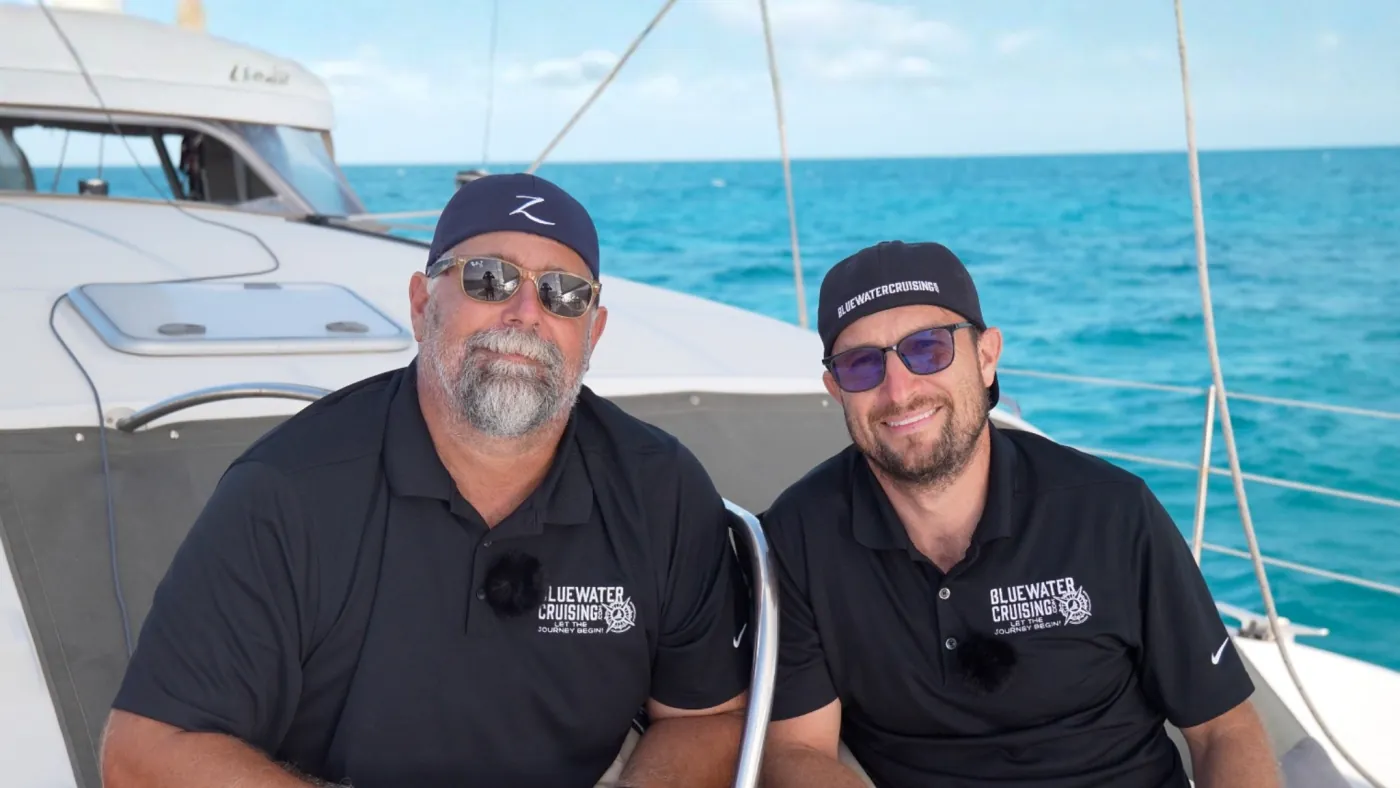
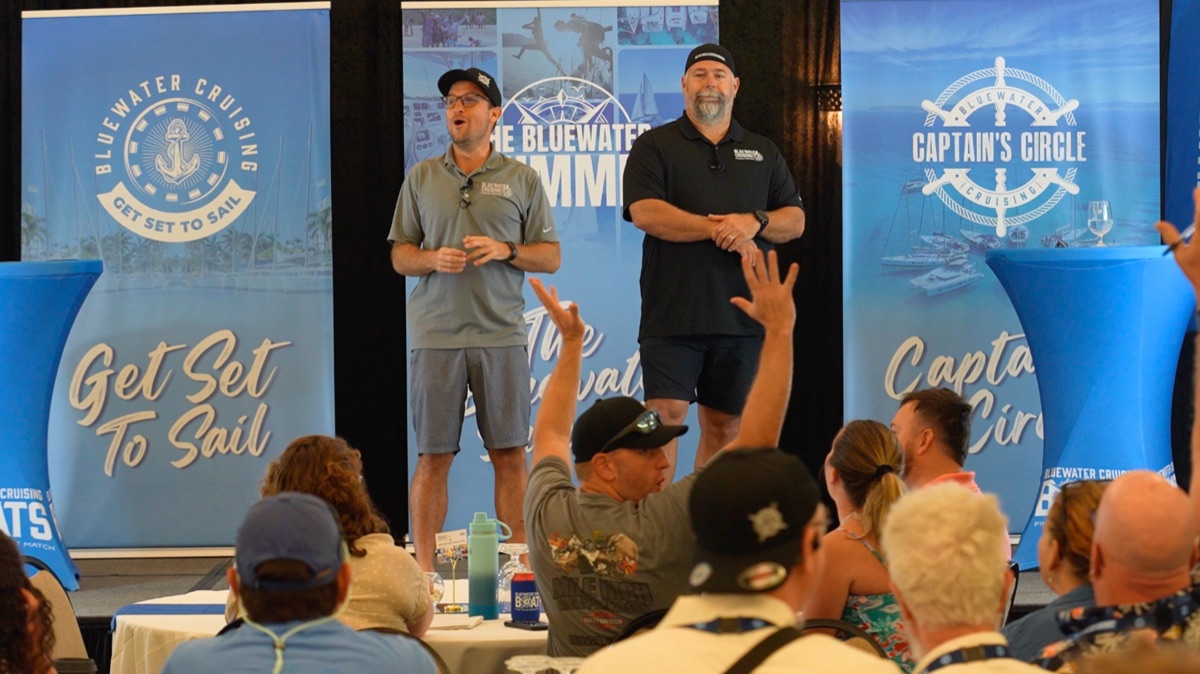
Jeff and Valerie Mathews, entrepreneurs used to calculated risk, talk about moving from land to water and learning to swap land logic for boat logic, including one very uncomfortable passage.
In this episode
Land logic versus boat logic
Why money is not really security
A 1200-mile passage with failing systems
How community changed everything
Read the full episode transcript
Notes:VAL AND JEFF MASTER_1 - Recorded on Aug 25, 6:32 AM. Copied on Aug 25, 7:54 AM. Summary The meeting discussed the importance of finances and leaving everything behind when considering a major life change. Speaker 3 emphasized the lack of regret in selling their house and upgrading their boat. The speakers also discussed the importance of experience, support, and finding a balance when cruising. Key Points (4:49) - Jeff had always wanted to go sailing but was hesitant due to finances, until Valerie pushed him to come up with a number and they realized they had enough money to start cruising (9:13) - Two big questions people have when considering a major life change are finances and what happens if they leave everything behind (16:19) - Speaker 3 emphasizes that no matter what, they won't regret selling their house and stuff and making the decision to change their lives (32:58) - Speaker 3 talks about how he upgraded his boat with new batteries, solar panels, and a water maker, and learned how to install them himself (34:23) - Speaker 1 discusses the importance of having experience and support when cruising, and finding a balance between working on the boat and enjoying the water and community (45:32) - Speaker 2 discusses the comfort and game-changing impact of sailing with a community of boats (1:01:02) - Speaker 3 discusses the balance they hope to achieve in their lives and how the experience of cruising has changed them (1:07:13) - Speaker 2 discusses the challenges and rewards of cruising and advises having a realistic mindset and listening to others' experiences Transcription Speaker 1 00:14 All right, guys, great to see you again. We're here for another episode of the Blue Water Cruising podcast. I've got Jeff and Valerie here with me. They're not on their boat currently, their boats in Grenada. They were one of the first couples that we had through what was the Confuse the Captain program back in the day. They've been out cruising for a while now, and I'm super excited to have them on board. If it's your first time tuning in to the Blue Water Cruising podcast, what we discuss on here is all things related to Blue Water Cruising. It's the best place on the Internet to map, equip and train yourself to get out there on the water and go Blue Water Cruising. So super excited to have you guys, Jeff and Valerie, to start off just a brief maybe I'll just a brief overview on you guys. I met you almost, I'd say almost 18 months ago now when we first launched the Blue Water Cruising Confuse the Captain program. I think you'd already bought a boat when you came into the program, took it anyway and got out there and went cruising. Have had some wild and crazy adventures and stories to tell that we'll get into since then. I think originally you're from the Pacific Northwest, very close to where I'm from in Vancouver, but you're from the US. And, yeah, I'll let you give a background. I've heard a lot about you. We've had many chats, but I'll let you guys kind of maybe start off brief background on you guys, what your life was like before cruising, and then we'll go from there. Speaker 2 01:52 So we're from Graham, Washington, like you said, Pacific Northwest. We both owned our own businesses. I had a dog grooming and boarding business, and Jeff had a contractor business, and we were both working way too much. And we have a blended family with six adult children. Our young adult Speaker 2 02:18 I. The real estate market was, like, through the roof, and I was like, we should cash in. We should get out of here and go somewhere warmer. And Jeff wasn't really on board at first. I asked him how much money was enough, and we gotten a bit of a TIFF about it. And so he sat down and crunched the numbers and decided, we can do this. The sailing was his dream, but I just wanted to be somewhere warm, and I was physically hurting from working, and I needed to do something different. He was kind of, like, in the top of his business, doing very well, but I wasn't going to be able to work too much longer doing what I was doing. September of 21, we took ASA courses in Florida, 101, 103, and 104. Seven days straight classroom testing on the water, and we loved it. That was kind of our test to see how we would do. I didn't realize we were going to have to study, like, 500 pages of sailing training manuals before the classes, but I'm glad I did that. And anyway, we loved it. We loved learning all about it. It was like a whole different world, and we were like, let's do this. And so we made a plan to close our businesses and to sell our house by the following April, which would have been April of 22. So about December, the exact boat that we were looking for came on the market. And then probably two weeks later, we saw the ad for the Blue Water Cruising. And so we were like, let's check it. So by the time the Blue Water cruising course started, we already had the offer on the boat, and we were like, that week, going to the Survey and the Virgin Islands and all that. So we were kind of in it before the class even started. I think within the first three weeks, we had already closed on the boat. Speaker 2 04:42 We sold our house. We sold the house and moved onto it. Speaker 1 04:49 Amazing. I want to back up just really quick because you said so. You guys were both working, you had your own businesses. It's interesting that you said that. This was something you really wanted to do. Jeff wasn't so on board, which we hear that, but more often than not, we'll hear the husband is the one that is really wanting to do this, and the wife spouse is the one who's a little bit got the brakes on. So I just wanted to comment on that. The other thing is you mentioned something around finances, how it was like Jeff, maybe in your mind at that time, what did you think it was going to take to be able to do something? Speaker 3 05:30 Like, how was your yeah, so I'm a workaholic, and so I built a business, and the business was very profitable, and I liked profit and I liked storing the profit. And it was the first time in my life where, I mean, I've always worked hard, but this is the first time where something I was doing was really maturing. And I had always wanted to go sailing. I think she rented a boat. We've sailed before a couple of times on evening sales because it was something that I'd always wanted to do. Okay, a couple of times she took us, we went sailing. It was something that my father had always wanted to do, and so he was always dreaming about when I was a kid, and he always had the magazines. So it was just something that him and I had always kind of talked about, and he never got to do his before he had passed away. And me working myself to death and her working herself to death. When it came time to we need to do something different than what we're doing, where she used my dream against me to get me to retire, which is a genius plan. So she got me to quit working and we were able to find the boat, but it did come down. We did look at money. It was one of those options as to when can we go. And so she would ask, well, when can we? I'm like, well, soon. When I have tons of money, is what I'm thinking. And I think that's what everyone kind of thinks. Well, we're going to need lots. Speaker 1 07:04 Did you have a number in your head, or were you just kind of thinking, like, I see oodles of cash so I don't have to think about cash anymore. Speaker 3 07:14 Throw a dart at the board. As for how much we need, he. Speaker 2 07:19 Didn'T have a number. I called him out on it and I said, if money is the answer to the question, then what is the number? Speaker 3 07:26 Yeah, what's the number? Speaker 1 07:27 You're in the classic treadmill problem where you're just like running but with no destination. Speaker 3 07:36 That's what I was doing. But I figured if I just kept running the race, then eventually all problems would be solved. Speaker 1 07:41 The hamster on the wheel. Speaker 3 07:45 But she did. She pushed me as well, then how much exactly do we need? And so I kind of started doing the rough math, what a boat costs, what I thought annual expense would be. And so I just kind of put a number together. Now, I know you guys put this number together in blue water, cruising essentials, the fundamentals, fundamentals, fundamentals. But I put it together before I'd taken that class, and I don't think I was that far off, actually. So when I did do the class, I was like, I already got my numbers, so it's easy, but I don't know how accurate my number was. I just put extra money in there for fluff to make sure. And so I did come up with a number. And so I give her back. This is the number. This is what we need. And she's like, well, how soon will we have that number? I went, Hold on. I'll go back and I'll add it up to the bank account and see what we have. And turns out I came back to her. I'm like, It appears we have enough money now. And so that's kind of when the ball started rolling. I was like, I guess we're doing this. Because I ran out of excuses. Speaker 2 08:48 I called it the bluff. Speaker 3 08:54 We had enough money can buy. We can live and see where the cars land. And I did it at a time where I was young enough, where if I wanted to go back to work, I could. If we did it for two years, five years, whatever it was, I could always, either one, find income while on the boat or return to work someday. Whether living on the boat or not. Speaker 1 09:13 That's a big question for a lot of like, it's a big question mark. The finances a like, how much money do I need to do this? And I think, Valerie, like, you were onto something with that. I think a lot of people don't ever think. They don't ever stop to think, like, well, specifically, how much do I need? They just think, oh, I need a ton of money and just, I'm going to work until it feels right, but doesn't work that way. You need to figure out what the number is. And then I think the other big question that comes up for people is, jeff, you nailed it, which is like, what happens if I leave everything? We go and do this and then we stop, what happens then? What am I going to do? And a lot of people, in my experience, that's a big question for them, and then they don't do it because they can't see beyond that. And so I'm curious at that time where you got to around that, both you and Valerie, because, Valerie, you want to get out of your business, but where were you at around where was that in your thinking? And then also because now the situation that you guys are in is you are beginning to transition out of this after going and experiencing it. And we'll get into that and how that came up. But if you can chat a bit about where your thinking was then versus the reality of what you're experiencing now, and how does that all land for you? Speaker 3 10:37 Yeah, well, because I've been in the same trade for 33 plus years, and I've worked at different aspects of that trade. I felt at the time. Well, if it only took me X amount of years to build a business for myself and be able to produce this nice profit margin, then even if it was ten years later, I would still be young enough to be able to either one, use my craft skill set to earn a living or work for somebody else and make someone else a bunch of money, of which I would get a salary on that. And I could do that all the way until I'm in a walker or whatever. I could do that for a long period of time. I think a lot of it was we put a lot of credit as far as security. The money gives us that security, but the money isn't really the security. Because if you're just going to use that as your security blanket and just put a bunch of money in the bank account, then that's all you're ever going to do. You're never going to really live life because you've kind of been a slave to that, and you kind of tricked yourself into thinking that you need to have that now. Like you said, we have been out there, we've doing it. We really haven't been working the whole time, and we still have a bank account with money in it. And on top of that, when we sell the boat, we still got that money. It's like we didn't really spend a lot of money to do this realistically, especially if you even wanted to compare what we've spent on how long we've been doing it, it's not very much money that we've spent. And for the price of the adventure, it was a great value. Speaker 1 12:21 So I was going to say especially when you compare it to what you were able to experience yeah, exactly. Speaker 3 12:28 And what that could have cost if you did. I don't even know how you could have done it a different way to experience what we've experienced. And so to me, kind of worth every penny. And so literally, my plans on when I return, I have options. I'm still young. I got plenty of time to do whatever it is I want to do employment wise. On the other thing is that on the boat, you also start to learn a little bit of balance, or at least we're trying to learn balance and we'll talk about that in a little bit and hopefully I'll be able to bring that back to land with me. Speaker 1 13:05 Good luck. Hopefully I got my fingers crossed. Speaker 2 13:10 That's not encouraging, chris. Speaker 1 13:14 Let me be clear on that. I would say there's a fundamental shift in how I perceive and view the world and how I want to show up in the world. But there is like, and Sio said this, she's like one of the reasons she wanted to go sailing was to pull me out of work, too, because I totally relate to the workaholism thing and have me be more present. And one of the reasons we went to land again was to build a business. And so it's like, I'm not going to show up and be president in the same way that I was on the boat when the core focus is something else. Right. But the lessons of that are all there. They're all present in me where it's like it is a priority now. It's something in my awareness to be like, hey, yeah, I want to not work as much, spend time with the family. But I don't know, I think you kind of get it where it's hard sometimes, right. When your core focus is something, it's just like boating. It's like you get consumed by the project when you go cruising. You get consumed by making it happen, living the life you set a project of, I'm going to go build a business. It's very probable you get consumed. It's hard to not be completely consumed by it, at least for a personality like me. Speaker 2 14:33 That's been the biggest challenge for us. To go back to your last question. So part of the equation for us is that we're both entrepreneurs and so figuring out ways to make money is not as scary to us as maybe other people that have been employed by others. There's so many different ways to make money and that doesn't really scare us so much. We've built massively successful businesses just from us. So anyway, it's not that scary to us. That part of the equation. And I know everyone doesn't have that same experience. And then the other part of the equation for us leaving Washington is that we didn't want to stay in Washington. And so to sell our home and leave everything, it was never going to be a regret if it didn't work out. So that was a stepping stone and part of the process that we were able to use the money from our real estate here, our home, to put into the boat. And so that was another big part of the equation. And there was never a plan to go back to Washington, at least not full time. We would like to come back to the summers, which we were able to do this year. But anyway, that's another big part of our equation. Speaker 1 15:54 So you really saw it, if I can kind of paraphrase that, you really saw it as a transition. It was know you didn't want to be in Washington, this was something else you wanted to do. And it was a stepping stone into a new way of life that yeah, maybe it was going to work and it would work for a while, or maybe it would only work short term, but it was leading somewhere else. Set, right? Speaker 2 16:17 Yeah, exactly. Speaker 3 16:19 No matter what we did, we're not going to look back. We never should have sold our house. We never should have sold all our stuff. We were never going to look back and say that. And we're still not looking back saying that. Speaker 2 16:29 Yeah. And I think that's an important lesson for people. You have to be able to make that decision because you can't tell what's going to happen in the future. So you have to be all in basically to say it. Speaker 1 16:46 I absolutely agree with that. It's about the desire to change your life, not the desire to go cruising. The desire to go cruising is secondary to the desire to I want to fundamentally, really radically change my lifestyle and the way that I'm living. And this is one vehicle and way that could possibly work to do that. It may not work, which then you're still on the desire to change your life. But if that fundamental desire is not there, cruising isn't the solution, in my opinion. Speaker 2 17:18 Right. Speaker 3 17:18 Cruising is not a solution to anything. But to give a frame of reference, the hours we worked were all hours of the day. We worked from sun up till sun down. And so it was pretty much all consuming. And I mean, we literally had to purposely make time, if we made time at all, for family. And that's not the legacy we want to leave behind. Now that our children are older now, it's like we can be more purposeful with our relationships with them. And actually, speaking of relationships, the relationships with our kids, since we've been on the boat, it's almost improved because now we spend more time on the phone talking with them and having conversation and relationship with them and of course obviously we come back and visit and we've been able to spend time with them. So on a lot of levels, I think it's improved a lot of our relationship with our children. So a lot of people, I think, fear that. Speaker 2 18:06 Yeah, amazing communication. Speaker 1 18:08 Amazing. Speaker 2 18:09 That used to be. Speaker 1 18:15 It'S a really good insight because I think you're right, it is. One of the main fear for most people is what's going to happen with my relationships with my parents and my kids and yeah, I'm curious about that. In what ways has it improved for you guys, the relationships with your kids? Speaker 2 18:35 My kids do DoorDash and they're like early twenty s and so they drive around with me on the phone, on calls and we use Facebook messenger or WhatsApp. And so there's no charge while we're in international waters and talk to them for 3 hours, if they want to talk for 3 hours, or we can do video calls that way too. And when I was working, I boarded dogs from our home, like separate, not in the house. And so I was always like clients coming all the time and taking dogs in and out and just all of that and the same for him, clients calling with problems and cabinet orders. It was the same for both of us in different ways. But I'm on the boat doing whatever I'm doing so I can talk to them for 3 hours straight if they want to talk to me for 3 hours straight. That never would have happened before. They're busy. I'm busy. Whatever. And they're in that age where they're busy, whether I'm here or not, they're busy doing their own thing. And as much as that little mommy part of me wants them to just be sitting around wanting to spend every moment with me, like it's not reality and I'm glad they're not. Speaker 2 19:55 We actually probably realistically talk more than when we were both in our jobs. Speaker 3 20:03 Yeah, we were present, but we weren't present. Speaker 1 20:05 Yeah, you were physically around, but you weren't present. Versus you're not physically around now, but you're present. You're emotionally present and more available. Yeah, cool. Speaker 3 20:18 I think that's improvement. I think we're going to carry that on no matter where we go. We'll probably still be able to find what it was, is just we were out of balance before and we kind of fell into balance, especially at least with the kids anyway. Speaker 1 20:32 Yeah, okay, so you bought the boat, took our course. You bought the boat, took our course. You got out there and you started cruising. You guys started in the Caribbean and you've been all kind of all over there. Tell me a bit about expectations versus reality as to what you were thinking and then what actually happened and how that panned out for you, maybe some pitfalls that you fell into along the way. And also I'd love to hear a little bit more about this balance thing. Speaker 3 21:09 Tell the story. Speaker 3 21:13 Well, when we first got on our boat, it had been sitting for about two months, which we had attendant watching the boat. But when we got on the boat, you leave a boat alone for a couple of months in a marina and it gets a little salty. Speaker 2 21:30 Our first experience, dusty and cockroaches and. Speaker 3 21:35 Et cetera, mold, mildew, whatever. So we land, we get off the plane, we got our luggage, we're heading down to the marina. We're going to get on our boat. Yay. Speaker 2 21:46 And I have never seen the boat. Speaker 3 21:47 Yeah, I bought it with I remember this. Anyway, so she hadn't seen the boat yet. So believe me, I'm nervous. We get on the boat and the first four days on the boat, everything we touch was just either fell apart or was dirty. So we're going through the old owner stuff and trying to figure out what we need to keep and not keep and figure out what it is, figure out what stuff is even. We're just going through this. I don't think we talked for that whole four days. I don't think we barely said a word to each other because that high of showing up. Here we are in a boat to what did we buy and just trying to clean up two months of just sitting there, of humidity and whatnot. But we did. We dug in, we scrubbed and we cleaned and we fixed and we repaired. Speaker 2 22:38 I have to tell the cockroach story. Speaker 1 22:40 Yeah, I'd love to hear the cockroach story. I've heard cockroach stories before, but it is a bit to show up to a boat that is newly sold to you and have cockroaches is OD. It's not super common. Speaker 2 22:53 They were little cockroaches. Speaker 3 22:55 Yeah, they weren't the big black ones. Speaker 2 22:56 Two months. Still, I'm sure. So he found a cockroach in the toaster and he could not get it out for nothing. And he got mad, and we're in this state of just dealing and so he was like, you know what, I'm going to teach this cockroach lesson. And so he tied toasted the cockroach to the dinghy engine hanging off the half deflated dinghy off the back. And so the toaster is hanging from the propeller of the dinghy towards the water. Just the toaster just hanging. So we got dinghy, motor, cord, toaster hanging. Speaker 3 23:38 He's not coming out. Speaker 2 23:39 He's not coming back in the boat. The funnier part of the story is that I forget all about this because it was that way for like four weeks. Okay, three weeks, I don't know. And people would walk by the boat and we're like the very first boat, like anybody going anywhere in the marina, all the cruise ships, everything had to go by our boat. And people would walk by the boat and laugh. And I just got a toaster today. It's not that bad. I mean, is our boat so bad that it's laughable? And I was just like, I've just had it. And I get off the boat, I'm walking down the dock and I was like, oh, it's the toaster. Toaster hanging off the dinghy. Speaker 3 24:18 I suppose we could bring that down. Speaker 2 24:20 Okay, yeah, that's probably like laughable, but it was just like I don't know. I think that paints the picture perfectly of the mental status. Speaker 1 24:30 Do you think, just in hindsight, as far as lessons learned around that, that it would be prudent for somebody who's and I have to ask this question it would be prudent for somebody who's looking at buying a boat. To really take their time in the boat buying process and make sure that really dig into that boat that they're buying to make sure that it is what it's represented. As. Speaker 2 25:00 For us, it was the tail end of COVID and the boat was in BBI and we couldn't get into BBI. And so we decided to have the survey done without us and have it moved to USVI. Speaker 3 25:22 Do a visual inspection of it. But the owner was not very forthcoming or wanting to show off his boat to me. Here I am. I'm here for four days. There's no brokers, just me and the owner. Speaker 2 25:34 Yeah, neither broker neither broker showed up. Speaker 3 25:36 For that meeting. Speaker 1 25:39 And the owner wasn't very transparent or willing to show the boat. Speaker 3 25:43 He was not interested in showing me anything. Speaker 1 25:46 Right. So in hindsight, if you were to go through it again and buy a new boat, another boat, that would be a red flag for you based on absolutely. Speaker 3 25:54 If the owner is not willing to show off his boat that he spent money on, he's cared for, if it's not some source of pride for that individual, then you need to run because there's something very wrong with a boat owner who isn't willing to show off his boat. I think I could be wrong. Speaker 1 26:15 I agree with you. Speaker 2 26:17 Yeah, I agree. But that being said, the boat was listed for a lot less than what we thought it should be listed for. We knew what was fine. Like all the rigging was new and the sales were new. Structurally it was fine and everything. And so we knew what might be a problem and we knew what was definitely fine. We decided, still uneducated, we decided that we were willing to take the risk of what we knew might be a problem and get a better deal because what we thought might be a problem still wasn't going to be more than the difference in what they were asking. And so that's what we did. But what we didn't realize is how much time we would spend sitting in marinas waiting for that work to be done. Not even so much the cost of that, but the time of that was like we did not understand that at all going into it. And so that's really bigger consideration. Speaker 1 27:30 I totally get it. You looked at it as what we would call, like, an opportunity boat. You're like, oh, there's an opportunity here to pick up a boat that is maybe undervalued there's a little bit of work that needs to be done, but having not maybe done this before, been educated, you didn't understand the implications of the money. But the bigger one is the time. Yeah. What it actually takes while you're cruising, time wise, to fix a boat. Time and energy wise to fix to upgrade it, fix the things that are wrong with it. Yeah. Speaker 2 28:02 I think it took about six months to realize that we knew we bought a boat that might be a fixer upper, and then when it was, we got mad. Speaker 1 28:15 That's funny. So you bought an opportunity boat, then realized that there was work that needed to be done and then were like. Speaker 3 28:21 Damn it, that's pretty much where we're at on that. So that's unrealistic expectation. Speaker 2 28:30 Answer your question? That's it in a nutshell. Speaker 1 28:34 I love that. To me that's the biggest thing, that the biggest point I try and get through when it comes to boat buying is it's like you want to get as crystal clear as and you never can be completely, 100% clear, but as crystal clear as you can. On what are the realistic expectations of what you're going to need to put into this boat time and money wise, in the next one to three years? You could come up with, hey, I'm going to spend a whole bunch of money and a whole bunch of time, but then at least you know and you're like, your expectations are realistic. And I think it's always better to have more conservative, realistic expectations and then get lucky or not even get lucky, but have it work out slightly better than you think. Speaker 3 29:18 I was just going to say that the only good thing about walking into an opportunity boat is that you do spend that time in the boat, and therefore you do know where all the wires go and come from, you know where all the pipes go and where they're heading. And so you do get to know your boat much better than if everything worked. If everything just worked, then all of a sudden something comes up. You're like, I have no idea, and half time I still feel like it. Speaker 1 29:47 That's a very positive perspective on it, Jeff. I like it. I like that frame. It's a good one. It is true. It is true. Speaker 1 29:59 I think that sets the stage for the boat. And it's good to know that, I think, because I think in my opinion, based on what I know about you guys and what you've done, I think I think from what I've seen, and maybe I'm wrong, but I think that you've made a real crack at this and. Done some really cool stuff, let's say in spite of also having this kind of anchor, for lack of a better word, to deal with and improve. And you've also done amazing things with the boat in this time as well to really transform it into a real cruising boat from a project boat. So I'd like to hear a little bit about so you walked into this holy crap thing and what did you guys do to kind of transform that and turn it around? And how did that affect your lifestyle, the lifestyle that you had expected you were going to live, your relationship, these types of things? Speaker 3 31:00 Yeah, actually that's a real almost black and white question because actually when we first got the boat, we did take it on a passage, 1200 miles passage, with the boat being in the condition that it was when we bought it. Of course, the destination was a place where we could do some upfitting and get some work done on it by others. Speaker 2 31:24 That we didn't realize needed to be done to the extent it needed to be done right when we left. Speaker 3 31:30 Which we call now challenges. Speaker 1 31:32 Yeah. Speaker 2 31:33 I call it baptism by five. Speaker 1 31:36 That works too. Speaker 3 31:38 So, yeah, we did have a passage where a lot of the systems were failing and we had no concept or perception of whether this is a crisis or just a problem because we just got the boat and had been there for a couple of months, and so we didn't really have a concept of understanding the importance or unimportance of the problems we were facing. And I don't know how you can get that other than through experience and or having someone else with you that is a little bit more seasoned. On that trip we had another rookie like us and so although helpful, very helpful on our passage, I think he hold us together. He kept us from completely falling apart. But we did get a chance to get it. We took it back to Florida and we got to learn about batteries and solar and water makers and units because I think in Marathon we had the aircon guy come out like literally every couple of days and he was charging us a fortune. And finally, what is it that you're doing? How are you making it work? And oh, you're bleeding the water. Why couldn't you just tell me that? Because they wouldn't make any money. Speaker 1 32:54 Because he wants to charge you a bunch of money. Speaker 3 32:58 Bleed the water and it works. That's it. Anyway, so he started learning how to do things on the boat and in was kind of nice on a way that we did get this project boat because for example, I knew I wanted to upgrade when we were considering the purchase. Well, I want it to be a full cruising boat, which means I need solar and I need batteries. And the nice thing on this boat, none of the batteries were any good. I think one battery worked and there was zero solar. So I wasn't morphing a bunch of systems together from old and new. I got to start clean. So basically rip out the batteries. There's no solar to tear out, and their inverter was shot. So we get brand new everything from the floor up. And that was kind of nice because I got to help install the wires and install the MPPTs, and I got to install a lot of the electronics, so I got to learn how a lot of it worked, which is kind of important on a boat. If someone else does all the work, you don't even know where the stuff's at. And so the company allowed me to pull wires and save them time. They just gave me the product, so I had a good time learning the stuff. And so that's some personal growth for me. I didn't know anything about solar before or lithium or anything like that. So it's been nice to be able to work through all that. And I think I did the water maker myself. I got a kit from Seawater Pro and was able to install that. It was definitely a DIY, and I was afraid to drill the first hole in my boat, but after I got past the first hole, I was able to drill more holes. Speaker 1 34:23 Yeah, so you transformed the boat into I mean, I've been on your boat and it's beautiful. So, yeah, I think you really transformed it into something that is from what it sounds like it was, into something amazing that works. Speaker 1 34:38 You touched on a few things there, which is the idea of this baptism by fire. And I think everybody, to some extent, experiences that when they start cruising, because there's just the stuff that you can learn as much as you can, but you have no direct experience with it. Speaker 1 34:58 Yeah, there's no frame of reference. Really adequate frame of reference for what you experience. Speaker 1 35:08 My take on that is exciting expectations, again, is critical for people to really understand that, hey, it's not all sunshine and roses. You are on your own. There is nobody around. And like you mentioned, having experience either on board or close at hand to be able to walk you through the moments of problems. Is this a problem or is this a crisis? Trying to differentiate that in time, you figure that out on your own. When you have a problem, you're like, oh, shit. Okay, we figured that out. That wasn't that bad. But at the moment when you have no frame of reference, every problem can seem like a crisis because you have no frame of reference for it's. Scary. It's like this has never happened before. Is this going to be really bad or not bad at all? And in my opinion, to be able to rely on somebody who's got experience, whether they're on board or off board, we talk a lot about a shore support team now in the program where having people on standby that you can call and be like, this is what's going on. What do I do? Do I need to panic or not? Even it's that simple. Can provide peace of mind. To me, it's all about peace of mind and maintaining. Let's go back to maintaining a balance. Talk to me a little bit about this finding the balance thing, because it sounds a bit like you went from this land life, where you were a workaholic in the construction business, to buying a boat that's a project boat and then spending a ton of time fixing and pulling wires, as you said, on really the construction of your own boat. Speaker 1 36:54 Talk to me a bit about this balance and what you found in that and how that's worked for you guys. Speaker 3 36:59 Yeah, we're looking forward to that. Speaker 3 37:10 Seriously, I've spent a lot of time, a lot of hours, a lot of frustration and have neglected my relationships and everything else to try to make this boat 100% perfect. Everything's going to be fixed. I still have this thought that if I have everything fixed, then I'll finally be done and then I'll be able to enjoy the boat. That is completely false. In fact, one of the biggest things that my wife and I just got we during this off season we've been discussing is my inability to balance the work of the boat. And I was told before I bought the boat, after I bought the boat, since I bought the boat, like a couple of hours of cleaning, a couple of hours of fixing, and then close shop, be done. And now go enjoy the boat. Go enjoy land, go enjoy the water, whatever it is that you want to go do, whatever. Go shut your brain off. Speaker 3 38:10 It'll still be there tomorrow. Because I thought everything was kind of in the cris, I categorized everything in the crisis mode, and realistically, if there wasn't water coming in the boat, I guess it's really not a crisis. Speaker 2 38:25 But seriously, that's the truth. Everything is just a problem to be solved. Unless it'sinking I think it took us like nine months to a year to really realize that this is just another problem that doesn't need to be elevated to crisis level. Speaker 3 38:48 Right? And so I'm hoping to go back to the boat here. Actually. I think we're leaving two days to head back to the boat and obviously it's on the hard, so I want to take care of a couple of things that I need to take care of on the hard and then get it back in the water. And then my whole goal for the next until we because we are selling the boat. But until we sell the boat is that, like I say, spend my time in the morning and then be done at noon at least or some hour and then literally turn it all off and try to enjoy the water, enjoy the land, enjoy my wife, enjoy the people. Enjoy the people. Because now we have this bigger community that we're sailing with. When we started, we had a couple of people on land we could call when we were in cell service and now we've kind of fixed all that. So we have communications all the time now with Starlink, et cetera, stuff like that. So now we can call anybody anytime. And there's a lot of people that we'll be sailing with when we leave Grenada, the group bus, it looks like we're going to be all leaving about the same time. So there's a lot of community there and I want to enjoy that community. I want to enjoy what we're doing. I mean, we came out for a reason. I want to at least say that I enjoyed it. Otherwise if I was to get off the boat now, I'd be like, yeah, it's a lot of work. It would be my comment. I'm going to go, oh, no, it's a lot of work. But it was fun and so I want to be able to leave that. But it's going to take me balancing know, work or projects with downtime. So that's my biggest challenge facing me is being able to turn it off. Speaker 1 40:20 And what about you, Valerie? Speaker 2 40:22 Yeah, well, I want to add some context to that because anybody who doesn't live on a boat will go well, dude, yeah, of course you got a balance. And as frustrating as that was is whatever for me, you have to realize when something isn't working properly on your boat, that means if the weather changes or the wind changes that you may not be able to move it or you may not be able to control it in the manner that you need to to. I mean, you're probably still safe but not as safe as you want to be. And then if you have to order a part, like going to the beach and hanging out for the day when you could have ordered the part yesterday when you knew you needed the part, but you prioritized fun over that and then you're going to fix something and break two more things and have all those things for all the things. It's like prioritizing fun over the reality of that and not being able to operate your boat if you need to doesn't make any sense. It doesn't make any logical sense, but it doesn't matter. You either are going to work yourself to death or you're going to figure out a balance. And that's been a real challenge for us to figure out. And so I want to put that out there so that people can really think about it because it's really robbed us of enjoying all the beautiful places that we've been because stuff needs to be taken care of and it needs to be a priority and maybe it didn't. Speaker 3 42:00 Yeah, are you going to be doing that every day? Every day. You'll never enjoy where you're at if you don't set those boundaries, because, like I say, it's like that common sense that land logic that we have isn't necessarily applicable on a boat. Boat logic and land logic are not the same, and it's taken us. Speaker 1 42:22 How would you differentiate them? Like, what would you describe landlogic as? Speaker 3 42:26 Well, land logic is if it's broke, you fix it so it's not broke anymore. Speaker 1 42:30 Okay. Speaker 3 42:31 And then you'll have fun later, and. Speaker 2 42:33 Eventually you're going to stop fixing things because you'll get to the end of the list. And I'm not sure that happens on a boat. Speaker 3 42:39 Yeah, a boat. You never end up at the end of a list, but on land, you may finish a list. Speaker 2 42:46 I don't know. There's a lot of things that we've learned that did not transfer. Our first passage was a big lesson in that. Just like, I didn't feel like we knew enough that we should be sailing at night. And so we went into every anchorage, which added 4 hours to our day. Speaker 1 43:05 And it's actually more dangerous. Speaker 2 43:08 Yes. Speaker 2 43:13 Ten days to two weeks of doing that borderline trauma to learn the lesson, because you got to go back out of the channel in the dark, and there's boats that aren't lit up. And what are we doing? We could have just been out in the ocean where there's nothing to run into. Speaker 3 43:31 But the land logic is, well, it should be dangerous to sail at night. That just seems like ocean. I mean, why would you do that from landlogic? You just go, no. Safe heart anchor, get some rest. Speaker 2 43:45 Which we didn't. Speaker 3 43:47 That's landlogic. Sea logic is, no, you're in the ocean. Just keep going. You're already in the ocean. If you got a destination, just stay on course. There's no reason to stop. Why are you stopping? That's sea logic. Speaker 2 44:00 But again, we didn't know what we didn't know, and we didn't have another buddy boat. We sailed the first seven or eight months, like, totally on our own. No one was ever with us. There might be other boats that were kind of with us for a few days or here, kept seeing them accidentally, but there was never anyone that was going where we were going anywhere near the same time we were going or to the destination we were going to. And so we were just there figuring stuff out on our own, which was not usually the right way. We did fine. We learned a lot. But as far as logic and what's a problem and what's the best way to do things, we kind of did need to get to crisis mode before we called our friends on land that knew or you and asked, should we be freaking out right now? No, not really. Speaker 3 45:08 Okay. Speaker 2 45:08 Yeah. Okay. Speaker 2 45:13 It would have helped big time to have a buddy boat with us, and I mean, not just anybody. You have to be traveling the same speed and have the same priorities and values and destinations generally in mine. So it's not as easy as just grab a buddy boat. But it was a game changer when. Speaker 1 45:35 We did end up sailing with some community. Speaker 2 45:40 Yeah. Just because when things went wrong, you. Speaker 1 45:44 Got somebody to talk to. Speaker 2 45:47 Yeah. And it was a game changer because that thought I tell people that thought when you're out sailing in the middle of the ocean in the night, there's no other boats. There's no other pleasure boats to be seen anywhere. Not on AAS. Not anywhere. And that thought that I'm the only person on the planet that thought what I'm doing, where I'm doing it right now, was a good idea. Speaker 3 46:13 No one else thought it was a. Speaker 2 46:14 Good idea because they're not here. No, not one person thought this was. Speaker 1 46:18 The ocean is a big place, though, right? Speaker 2 46:20 Exactly. Speaker 1 46:21 The ocean is a big place. Speaker 2 46:24 That's the truth. Speaker 3 46:28 But there's comfort when there's five or six all boats going the same place, they're all heading the same place. Okay, I feel better, but what's even better is having that one person that you can call on the radio and confer or whatever, talk about 95% of your anxiety is just gone. Just gone. All of a sudden, you can enjoy. Speaker 2 46:47 The passage just to have somebody else to run by. Speaker 3 46:51 It is a big game. Speaker 1 46:56 I appreciate there's some challenges that you had, some crises moments. I think at the end of the day, though, you're doing it and you're doing something that less than 1% of boat owners do. Never mind the population. Let's look at the population. How much of the population is boat owners? So it's very few people, when you look at it in context, actually a decide that they're going to actually have the courage to go and change their lives and be like, yeah, we don't like this anymore. We don't want to do this. We're going to go try and find a new way to live. Very few people actually end up making that decision. The allure of comfort or the allure of security, despite how painful it is, often wins out versus the fear of the unknown and not knowing what's around the next corner. So I think that despite the challenges, and there's always challenges when you decide to go embark into the unknown, you're doing it, which is like, incredible. Speaker 2 48:01 We've done as well. Speaker 3 48:02 Yeah. We're actually pretty good at it compared to what we've seen. Speaker 1 48:06 Well, yeah, of course you're good at it because you've overcome all these problems. Speaker 2 48:14 You don't even have functioning equipment. Got it. Speaker 3 48:20 We thought, well, we can watch other people and see what they're doing, and we'll do what they're doing. And then we started watching other people. We're not doing that. Don't do that. That was like kind of a game changer. Speaker 2 48:31 That was also landlogic. They didn't last. Speaker 3 48:33 Right. Speaker 1 48:36 I have to ask a question because I remember you guys did your first passage and it was stressful. Stressful. Yeah. Brutal stressful crises. And we had a chat. You had a chat with me, you had a chat with Keith and you were going to sell the boat at the end of that. And we kind of had a chat and you decided not to. Good decision to not sell the boat at that point in time based on where you're at. Speaker 2 48:58 Yeah. Speaker 3 48:59 Yeah. I'm glad we didn't quit when it. Speaker 2 49:01 Was yeah, I turned that really quickly. Speaker 3 49:03 Yeah, no, I'm glad we didn't quit because we barely got started and if we had quit it right then, I don't know. In fact, we had a conversation about that while walking through a parking lot and we're like, I don't want to go back to our old life. Almost had, I swear, like a brain aneurysm because I was so stressed out because I just didn't know what I didn't know. And so I was very nervous and usually I'm very used to being very confident about what I'm doing. I've been in trade so I'm very confident, I'm very capable and for the first time in my life borderline scared. But when we were talking about it, I remember we talked to you, we talked to Keith and we were talking about like, we're done. I think the first phone call I made was to a, was like we're um, but we thought about like, I don't want to go back to land. I don't want to give up on this dream. We barely even got our feet wet. I wanted to give it a go, but it was thankful for people that talked common sense into us. Yes, you had a rough passage, but the ODS of having another rough passage like that are pretty small. So in fact, the more people we talk to, the more people realize you've had like six or eight years worth of problems in one trip. And so their confidence, I'm like, well that'll be the hardest thing you ever do. It'll be easier after that. And it has been easier after that. The advice was not incorrect. It has been a lot easier since then. Speaker 2 50:36 Do you want to set the context for that passage? Speaker 3 50:42 If you want to set the context. Speaker 2 50:43 For the passage, it's pretty epic. You can leave it out of the conversation. Speaker 3 50:48 Pretty epic trip. Go for it quickly. Speaker 2 50:52 Okay, quickly. So 19 day passage from USVI to the Florida Keys. By the time we got off the coast of Cuba, we were down for four batteries to one battery that we were hoping would last. One engine had been stalling so we had been restarting it every eleven minutes. Speaker 3 51:21 Fuel. Speaker 2 51:24 We later figured out that the fuel was back fuel flow, but we didn't know that at the time. And then we had a oil pressure alarm that was going off, which we later figured out was a false sensor, but we couldn't run the engine until we were sure that that was the case. And Jack that was on board with us helped figure that out. Speaker 3 51:50 Have an engine again. Speaker 2 51:51 Have an engine again. That we weren't starting every eleven minutes for three days straight and there was no wind, so we couldn't sail. And although we had set up our communications before we left USVI, we hadn't done it all down to the last wire because we were just trying to get out of there. I shouldn't say the last wire, we hadn't set it up on land with whatever we were to be able to communicate. Speaker 1 52:17 So you were unable to communicate any communications? Speaker 2 52:22 We didn't have any internet for weather updates or anything for the last five days of that with anybody. Stressful. And people don't realize once you're outside the US. There is no Coast Guard, there is no Navy, there is nobody. When you say you're on your own, I used to think, well, you're on your boat and you better know how to troubleshoot your own problems. No, you are by yourself in the ocean. Speaker 1 52:50 You're on your own. Speaker 2 52:55 On your own. Yeah. That's what it means, buddy. Speaker 3 53:00 Boat comes in handy. Speaker 2 53:01 Yeah. And we were at the very end of the hurricane season. Speaker 1 53:05 Yeah. End of the cruising season. Heading into beginning of hurricane season. Yeah. Speaker 2 53:09 Everyone else had already left and so when we heard the first transmission from the Coast Guard over the radio, I was like crying. Okay? The first pleasure boats on the keys, I was like, oh my gosh. Because if we had lost, if the engine had quit or we'd lost the last battery, we wouldn't have had navigation, we wouldn't have had power, we wouldn't have had engine, and there was no wind. So at the time I didn't realize we just would have drifted where we drifted. But I didn't even go that far. Anyway, it was stressful. That was our first passage. Speaker 1 53:50 Cruising is a series of high highs and low lows. Speaker 2 53:54 Yeah. Speaker 2 54:00 Anyway, it was stressful and it was like, what are we doing? Why are we doing this? This is a lot. This isn't fun. We reassessed, we overreacted. Speaker 3 54:14 Though. Speaker 2 54:15 I'm glad that we gave it a shot because I think we would have always wondered, of course, if we had always wondered if we hadn't just gotten mad and walked away, what would have been? Speaker 1 54:35 Well, you did it. You did it. You were like, okay, how many miles? 4000. Speaker 2 54:43 Just shy of 4000 miles. Speaker 1 54:45 Yeah, I mean, you did it. You did it. You didn't just give it a shot, you did it. I think we talked about that before. Like you're selling the boat now, but on average people cruise for 18 months. That's 18 months, three years on the high side. Beyond that, there's very few people that last more than three years cruising full time that are like that's their thing. There's people that they'll cruise, like, six months of the year, and they do that for longer periods, but people that move, move onto the boat. This is the lifestyle they want to get out there and get into. It full time. Very rare to do it beyond three years because it's so much work. Like, everything that you guys have just. Speaker 2 55:26 Said. Speaker 1 55:29 It'S something we talk about a lot. Like, the idea of I'm going to go do this for the rest of my life is absurd. It really is. Because when I hear somebody say that, I'm like, you have no idea what you're talking about. Really? And I mean that respectfully. It's like, you have no idea what you're getting into. So to say, I'm going to go do this for the rest of my life, when you don't really know what that is, you don't know what you're saying you're going to do what exactly? This. And we've talked a lot about the challenges. And maybe to wrap this up, I'd love to hear, like, I'm sure there's good times in here that you guys have had and amazing experiences and amazing places and done really incredible things that weren't in your awareness that was possible for you to do. Because everybody I talked to that goes cruising has those stories as well. So would love to hear a couple of those in the spirit, really, of it's. Like, yeah, you had this really gnarly first challenge of an experience. You persevered, you pushed through, you still had a bunch of challenges, and we've talked about those. But what are the highs in that? What are the silver linings in that? What are the good things that have come out of that? Speaker 3 56:44 Well, for me, I've caught a couple monster lobsters, which is awesome, Speaker 3 56:53 when we were in the Florida Keys at one point, they have a mini season before the lobster season starts. And I mean, it was morning, jumped in the water, went for a little swim, went, grabbed a couple of lobster, came back, put them on the cooked them up in the pan and ate them for breakfast. It's like, where else in the world could you do that and just go grab a couple of lobster and eat it for breakfast? So that's starting the day out right there. And then to me, I like diving. I like to snorkel, but really just free dive and get down there and see the different reefs. And I've got a list of my favorite coral reefs where the fish and the fauna floral are just abundant and just be able to be down there. It's warm, it's beautiful. It's kind of just like exploring, but underwater. And you never know what you're going to see around that next reef. I just really enjoyed just diving and fishing when given the opportunity. I still have a mahi to catch, so I'm really excited to go back out. I hope that within the next few months, you'll hear a story that Jeff finally caught his mahi. So that's looking forward to that. And so got some yellow fin and lots of seagrass. Speaker 1 58:22 That's good. And Valerie. What about you? Speaker 2 58:28 I think it's not lost on us that there is no other way to duplicate the life. I mean, just pulling up in front of a $5 million house and throw an anchor and pulling up in front of a $10 million different house the next day, I'm like, you can't just do that any other way. There's beautiful places and beaches, and I love to go snorkeling. The creatures under the water are just incredible to me. I think God had the most fun in the ocean, and the sailing community has just been just the most incredible sorry. Speaker 3 59:13 Cheerleaders. Speaker 2 59:16 I'm sorry. Speaker 1 59:17 It's okay. Speaker 2 59:18 They've been the most incredible, the most incredible community. Everyone wants to know where you came from and where you're going and what your story is and how you got there or why you haven't left yet. And just the biggest cheerleaders from that first cockroach toaster story. Everyone should have just been like, don't talk to those two. They're in it, and they don't even know. Speaker 3 59:50 But it's not the way it was. Speaker 2 59:52 We were the biggest embarrassment, and nobody treated us that way. Everybody encouraged us, and we're 100% behind us. And when we had that terrible passage and we got to Florida, you would think everyone be like, you tried. You just walk away with your heads up, and everyone was like, you can't give up. You come so far. You can't give up now. And continued to be our biggest cheerleaders after that for the next whatever it's been year. And we have friends all over the world now and, like, good friends that we keep in touch with that it's amazing. And I have never been a part of any other community that has been they'll drop everything to come help you, and we would do the same. Speaker 3 1:00:42 Absolutely. Speaker 2 1:00:43 And it just reminds me of a simpler time, and I have just so appreciated the sailing community in every way. Just amazing. Speaker 3 1:00:54 Yeah. On the community thing, I don't think that can be stressed any harder than that. Every boater looks out for every boater. It's like if they even think that there's something wrong or you need a little hand, they're quick to offer help. Just because I always help someone else, just because I want to be a part. I want to help you. I don't want you to have to struggle or I want it to be hard because it's hard enough life as it is. As far as just kind of the work, having an extra set of hands goes a long ways. And I'm not a mechanic, just so you know. But there's a mechanic on a boat who told me how to replace a rear main seal on a diesel engine. What? And I did it just on. What he said. And it turned out it was way easier than I could have possibly imagined. And to me, that was like kind of like climbing Mount Everest to me because I've avoided engines my whole life. I don't want to break them anyway. And so just the encouragement that everyone gives each other out here and just the fact that you're not really ever alone, there's always someone right around the corner to give you a hand to help you out if you needed it. Unless you're at the end of the season, right? Unless everyone already left. Speaker 3 1:02:13 But even just to kind of sum up, even though that we're leaving the boat and we're selling the boat, we are going to move back to land, but we learned a lot while living on the boat that we're going to take with us back to land. Just like balancing your life, making what's important, important. And so it literally forever changed us. And I hope that will be evident in our life when we do return to land, that there will be a balance of work and play and that we're able to enjoy our lives, not just work ourselves to death. If we got anything out of it, I think hopefully we find this happy medium. We're still working on it. We're still not there yet, but I think we will be. Speaker 1 1:03:02 Yeah, I totally resonate with that. I think to use a cliche analogy, it's the old whatever doesn't kill you makes you stronger. And to me, it sounds like this balance thing that you're searching for and you've kind of found there. It was part of the reason that you decided to go cruising. It was like, hey, life's crazy. We're working all the time. We need balance. Let's change our lives. So the change was made not necessarily to go cruising, but the change was made to seek this again, like I said at the beginning, to seek a different way of living. And you guys have gone through this experience over the last 18 months or so and realized a lot of those still things. Those things come up in a different way when you just change the context of how you're living your life, which I think this is my own personal belief. You what? Speaker 2 1:04:02 We are both still part of the equation. Speaker 1 1:04:05 The problem is still there, but it's like you see the problem. I believe it's important to do things like this to get to change, because you see the problem in different ways when you just do the same thing over and over and over again. The problem is there, but you almost become desensitized to the problem because you're just doing the same thing over and over again. When you seek to have new experiences and new things, step into the unknown, the problems that you have show up in different ways and they become more apparent. And then you're like, Holy crap, I really need to do something about this. Now how do I do something about it? I totally get that. And I've said, for me, many times, my experience, cruising was like, more of a voyage of transformation than anything else. I was one person going in. I thought I was one person going into it and coming out of it. I'm the same person, but in a completely different way. I'm more aware of these aspects of who I am than I was before, and the awareness allows me to show up differently. And it opened up. You guys have kind of said this, too. It's like, for me, it just opened up what was possible, what I thought was possible for me in the world, becoming more self reliant, realizing, hey, I can be in the middle of the ocean and I can be okay, if you can do that, you can do anything. Speaker 2 1:05:34 I do feel that, and I have told people that. I'm, like, it's strengthened me in ways that they're not possible any other way. I mean, you can't sail oceans in the middle of the night and show up the same person. And I don't mean that in like, I was terrified because I was never terrified. But you're just not the same. You're not the same person. You don't see things in the same context because you just can't. You're strengthened in ways beyond what you believe you should be capable. Speaker 1 1:06:12 So two questions to end with. First one is, and I love to ask this to everybody that goes cruising, if you knew what you knew now and you were like, hey, should we buy a boat and go do this again? Would you make a different decision overall? Not like, of course, there's a bunch of little decisions that you would make differently for it to come out better, but the overall decision of going to experience the cruising lifestyle, is that, like, do you regret it? Or is it like, no, I'm glad we did this. I would do it again because it's an experience that we needed to have. Speaker 3 1:06:40 Yeah. And that's what I would say, is I do not regret it at all. It has taught me more about who I am than anything. And we did get to learn a lot of new things along the way, which is fine, but I'm going to chalk up that if I leave the boat and it didn't change me, then it was a waste of time. But the fact that I will be changed and my wife has changed because of it, then it was worth every penny. Speaker 1 1:07:10 Valerie. Speaker 2 1:07:13 I don't regret doing it, but it definitely was a lot harder than I had decided in my head that it was going to be. But it was also more amazing in a lot of ways than I ever imagined it would be. Yeah. I don't know. Honestly, had we been able to balance things a little bit differently and learn that lesson sooner than later, it would have been a different experience. And so it's hard to answer that question and one of the reasons that we wanted to do this podcast, because we hope that other people will learn from the mistakes that we made and have an easier and better and more enjoyable experience. I mean, it's not all. Speaker 1 1:08:01 Butterflies, sunshine and roses. It's not all sunshine and roses, beers and bikinis, butterflies and rainbows, whatever you want to say. It ain't that beaches, booze and bikinis. Speaker 3 1:08:16 But if we had found the balance, like she said, if we could have found that balance earlier, we would have enjoyed it over a bigger period of time. Speaker 1 1:08:24 Right? Speaker 3 1:08:25 Yeah. I mean, that would be our encouragement, is do what you got to do, but don't let the boat control you. Speaker 1 1:08:34 Yeah, I have a question around that, but I'm going to say one thing, which I think Speaker 1 1:08:42 you're selling the boat, but that doesn't mean you're done. Done. I know a lot of people that sell their boats and in three to five years or ten years down the road, they're like, you know what, let's go back and try that again. Let's do that again. And then you've learned a whole bunch and you do it a different way. I know many people that do that, that cruise for 18 months to two to three years, they get out of it for whatever reason, and then they go back to it. Me and Sio being in that group of chatting about, hey, what did it look like to go back and do this again? And I have just as many challenging stories and things, but there's an allure to that and the challenge of like, hey, can we do this in a way that is different this time? And what can we learn from last time? The last question I want to ask is exactly what? You guys have touched on it a couple of times now, but if you could pick one thing to tell people that are considering living this way of life that based on your experiences and the lessons you've learned. One thing to share that would the biggest thing that you think would make an impact and make it a little bit easier for them or make it smoother for them or more of a success or however you want to phrase that, what would that one thing be? Speaker 2 1:10:01 Just to have a realistic mindset of what you're going into. It may be the hardest thing that you ever do, and we have led some challenging lives, but you're taking all the knowns and comforts that you understand away largely, and you got to figure out largely, living on a completely different planet, sort of. And so I think going in with that mindset, I didn't have that mindset. And actually listening to what people are telling you, because everybody has it in their head that they got it figured out. And your problems aren't going to pertain to them and their stuff isn't going to break, and you just didn't have enough experience and blah, blah, blah, whatever, et cetera, et cetera. And I think just really trying to understand people and what they're telling you from a context that you can't have and really ask all the questions that you can ask of anyone who is willing to talk to you and listen to them because that's how you're going to learn. Because if you know everything and nothing that they've learned applies to you, then guess what? You get to make your own mistakes. Speaker 1 1:11:27 It's painful. Speaker 2 1:11:28 Yeah, that would probably be my biggest advice. Speaker 1 1:11:33 Awesome. Jeff. Speaker 3 1:11:36 I don't know if I have any advice. I'm sitting here thinking about what that would be. I guess the only thing I would really encourage is to be part of the community, to have conversations with one another and just get to know your fellow yachties and you know that not everyone is living aboard. Some people are just in the marina because that's where they live and they just go marina hopping. But as far as blue water cruising and what we're doing, where we're out in the water a lot, that community is much smaller. But there is still community there, and that community is very important. I don't know why. It's just I think as human beings, we're just meant for community. And when you're out there on your own, on your own, it's just not the same as when you're sharing that joy with other friends, whether it be diving, sailing, or fishing, whatever it is you're doing, you're doing with other people. And to me, that's the fun part is hanging out with other people, doing these just amazing sharing the experience, which is just amazing. Speaker 3 1:12:46 And it's easy to do. It's easy to get that community. Just talk to your fellow budy. There are so many times people just come dinging up their boat, hey, what? And boom, now we're friends and now we're talking about whatever, and we end up being lifelong friends and absolutely. I don't think when we sell our boat and we move back to land and we do whatever we're going to do, we're still going to have our feet in the water somewhere. And so I still expect to be on boats and or chartering boats or doing something in the water once or twice a year at least. Maybe captain boat, maybe move boats. I don't know. We're going to do something. It's still going to be in the water a little bit. So I don't think we can just give up the life because it is a pretty fun filled life. Speaker 2 1:13:31 Yeah, something where someone else gets to fix the boat. Speaker 1 1:13:36 Yeah. Cool. Amazing. Well, thank you very much, guys. I think it's a great place to end it. Community is key, and I think it's one of the biggest reasons that we're now doing what we're doing is to help people establish that sense of community because it's so helpful, and I love it. I mean, it's amazing to me, people like yourselves who have come through our program and other people that are out cruising are able to contribute early on now and reach people that are even just contemplating this and share your experience with the people that are just contemplating. Know, it's not just me. It's not Keith. It's other people. And I think the more people we have that can share that, the more educated people can be before they get into this. And the more realistic I love, Valerie, what you said, the more realistic their mindset can be around what they're getting into. And it's mean there's a reason that that's the very first module in our fundamentals program know, setting your compass the Speaker 1 1:14:34 so thanks, guys. Really appreciate you taking the time for coming on and sharing your wisdom, your hard earned wisdom around cruising. It doesn't come easy. And, yeah, it's a pleasure having a chat. Yeah, thank you. Appreciate it. Speaker 3 1:14:52 Thanks for having us, Chris. Speaker 1 1:14:54 You're welcome. All right, that's a wrap for this episode of the podcast. Thank you guys for taking the time to watch this. I hope you learned something. Once again, if you guys are interested in diving into the blue water cruising mindset, creating your own plan, getting educated on what you need to do to make the transition in your life to try out blue water cruising, let us know. There's a link down below where you can book in for a quick call with us, where we'll take the time to lay out the fundamentals of what you need to start your blue water cruising plan to get going. And Jeff and Valerie are selling their boat. If you guys are watching this and you're interested in a boat, it's a beautiful Leopard 40. They spent a lot of money on it to get it upgraded, ready to go. Actively cruising it now, and I can't think of many more people that would be better to buy a boat from to get a handover to make sure that you guys get a smooth start into the blue water cruising life. So if you're interested in their boat, also click the link down below. We've got the full specs and everything on that that we're able to share with you if you're interested in purchasing their boat to get out blue water cruising. So thanks again, guys, and look forward to seeing you all on the next episode.
Book a call with an experienced cruiser
From dreaming to doing. It starts with one call.
Get your first steps into bluewater cruising, mapped out on a free 15-minute call with an experienced cruiser. We'll look at where you are, what you're working with, and map the real next step for your situation.
Completely built around you and not a template, because no two cruisers are the same. Stop wondering where you stand and come find out.
Pick a time that worksBluewater Cruising Compass Call
Bluewater Cruising is a complete support system for people serious about living aboard and cruising long term. We are working captains and real cruisers, not classroom instructors, covering the whole path: choosing the right boat, setting it up, building the skills, and a community that has crossed oceans together. Everything you need to go from dreaming to doing, all under one roof.