Thriving in Life On The Ocean: The Perfect Blend of Fun, Hard Work, and Adventure!
Martin and Hildrun Verges and their family of five took to the water with a glass-half-full outlook. They share how the right mindset carried them through boat projects and their first tropical storm.
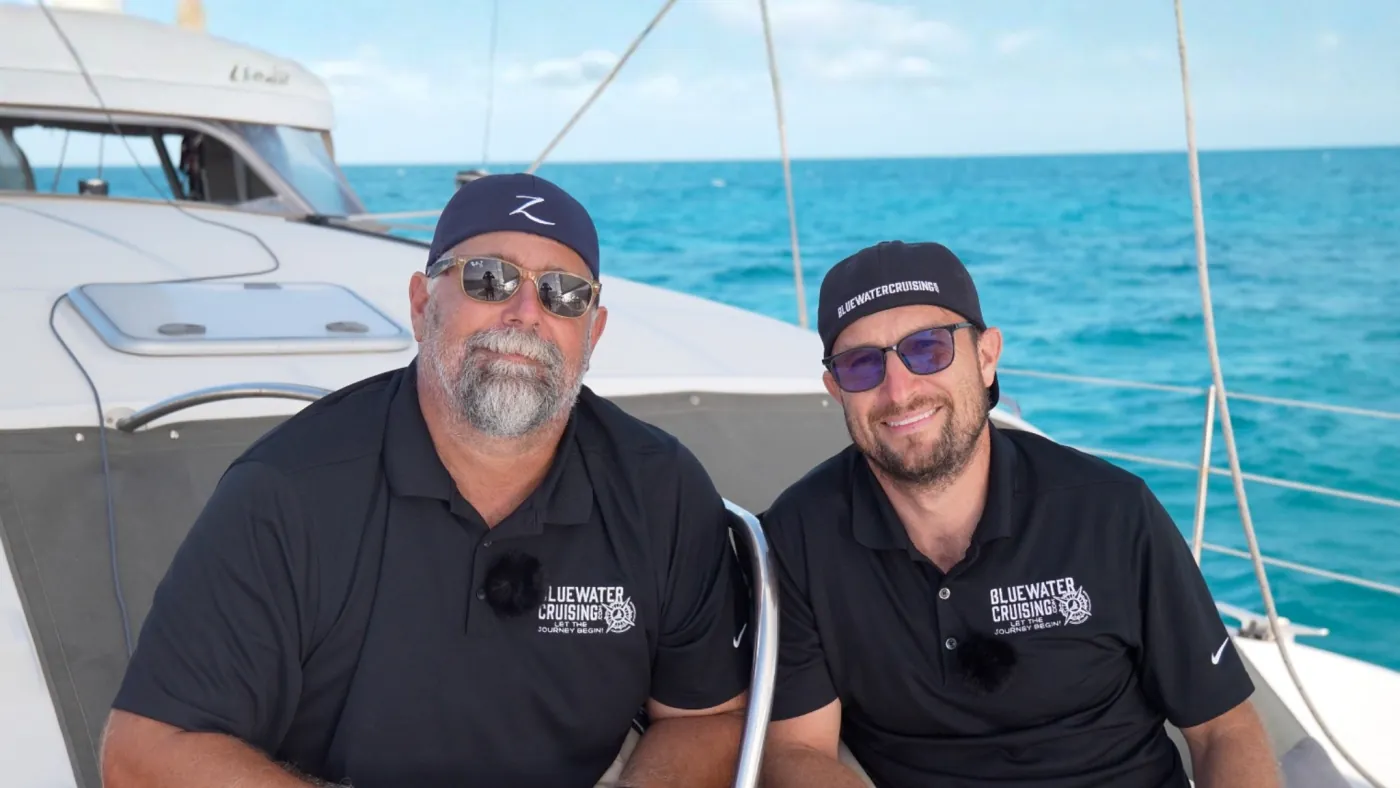
Hey guys, uh, welcome to a, another episode of the blue water cruising podcast. Uh, excited to see you here. Thanks for, thanks for checking in. Uh, I'm super excited today, uh, with our guests. We've got Martin and Hildren. I've known Martin and Hildren now for a year, maybe, maybe a year. Yeah, somewhere, somewhere around there, almost, almost a year. Um, and, uh, yeah, I met them about a year ago. I think I started talking to you, Hildren, over email is how you found us. I'm not even sure how you found us. Um, we'd love to hear that. But anyway, Martin and Hildren, um, we started working with them. Yeah, let's roughly a year ago and they're on their boat now in Grenada, which is super exciting. Uh, And they sailed down last season. Um, and they did a bunch of work on the boat in Grenada Which I'm sure we'll get into a little bit Um, and I think you've got some grand plans ahead of you as to what you want to do in the next year or so Um, but I think i'll hand it over to you guys just to maybe give a bit of an An intro to yourselves as to, yeah, I mean, the first question I have is basically, I maybe introduce yourselves and, um, you're from Germany. Uh, I know Martin that you, you run a business, uh, and, uh, you've got some kids, um, but maybe if you can give a quick overview of you guys and, and who you are, uh, to paint the picture as to your life. Yeah, should I start? Okay. Um, we had a good life in Germany, our home in Munich. We, um, have three kids. Um, we... Got around in Europe with our motorhome and, uh, it was all, I would say, quite okay. Um, but we sailed for some time in Croatia. We did a bare boat charter and things like that. And we always liked that. And, um, yeah, at some point, uh, Hildren decided to request, uh, yeah, journey to Lagoon in their, um, boat yard. Now what's the term, shipyard. But maybe you say a little bit wrong. So, so, so wait, wait, I just want to, the request was from Hildren. So you guys did the whole RV thing. I, I, I did know that. And then. But the request to go and like this, the whole idea to go cruising, was that from you Hildren? Or was it from Martin? Uh, not the idea of cruising itself, but I wanted to see the, the bigger boats, how they were built. And so you can go in them, but usually you just see them from the outside or on pictures or something else. And so. I just wanted to see them in, in real life. Like a tourist. She just wanted to see nice boats. And for that reason, um, I, uh, did a request, um, that we want to buy a big one, uh, Lagoon 77 and, uh, organize the, Yeah. Um, did we get a appointment there? She handles all the logistics, so flights and everything, always, uh, does it quite well. Um, maybe you say a bit more to her. So yeah, it's about one and a half years ago. where we went to Bordeaux to visit the, uh, the shipyard. Um, we got a whole day just for us. There were no other people. So we had a tour through the shipyard and then we could See the, the finished boat and it was quite impressive and yeah, in the end, Martin told me, uh, he thinks we have to get a boat before we flew there. I just was okay. Let's do that. So that she is happy and. You know, happy wife, happy life. Yeah. And then I ended up with, damn, we need a boat. And that was, that was the lagoon. That was the lagoon shipyard you went to. Yeah. Okay. And we got an exclusive one day. Uh, tour. So really just for us, they opened, uh, their yard, um, showed us every step in the process. Um, it's a real, the whole day. And, um, it was well organized, uh, was, was quite impressive. Yeah. Um, and it's, it was a nice boat, to be honest. I mean, the Lagoon 77 is... It's impressive as well, but also expensive. Is that, is that based on doing that? Is that, is that something that you would think is that worthwhile doing for somebody who's, who's interested in going cruising, interested in boats to go, to go to the shipyard? Is it worthwhile in the sense that you think it's a necessary part or does it add value or is it okay just to look at used boats? If somebody wants to buy a used boat. It's, I think it's also really nice to see the, the building process. But we are technically, yeah, we are more interested. So we asked the details about Western Engine, how is it looking and can we go in there? The sales guy was a little bit like, what the heck is wrong with these people? But, um, yeah, so it's really interesting to see the, for us, all the details. Because you can see in the boat before it gets glued together and things like that, which is not possible if you see a boat on the sea. Um, and I would say if you're interested in how these boats are built and What are the details behind it? Then it's absolutely a good trip to do that. Um, if you get the chance to do it, I mean, I don't know if you just can't go there. Yeah. Okay. Okay. So that was, that was kind of the impetus. That was the beginning was Hildren's grand idea to go check out some, uh, some catamarans in the lagoon factory. And after that, then Martin, you were like. All right. We're buying a boat. And that was about, that was a year and a year and a half ago. And you still had the RV at the time. Right? Yeah. Yeah, usually. So we have a, we had a motor home, quite a big one. We, um, always did long journeys on it. Um, Long for, for regular workers, I would say, um, like six, seven weeks in Iceland, um, we did Norway, Romania. So European countries always like extended one up to one and a half months in one go to just see the country and stay there for longer times and periods to see more of it and not these classic tourists that just fly there. Go to the beach and fly home. Um, Yeah. And that's what we always did with the motorhome. And I would say, from what we see so far on, um, being out there, it's a little bit like that. So you go from island to island here in the Caribbean, where you have different countries, and you stay there a bit and see what the island has to offer, and how the people are, and all of that. Which is kind of... The same, but you're no longer bound to roads, traffic jams, things like that, which was kind of nice. But back to, back to how, how this all started. Um, yeah, after she dragged me to Lagoon, um, and, um, we decided, okay, that, that It needs to be done, we buy a boat. Um, we discussed how we could do that and, I mean, the lagoon, it's super crazy expensive and I would have to sell one of my companies and, um, this is also not a fast process. So, we were discussing a bit, um, how we can do it and then she found Blue Water Cruising. Yeah. Maybe you say something. Uh, I can't really remember how I found you. I think on Instagram. I think. I'm not sure. I don't know. Or just googling. Googling something. I don't know. Uh, but worked out. So I contacted you and, uh, yeah, we got on the confused to captain course with you in, I think it started in November, end of October, starting November. Yeah. Like half a year after visiting Lagoon something or less than that. Yeah. And did you like four months or so after it was, did, did you like, what was your, at that point, I mean, you'd gone to the lagoon factory and you'd seen these boats. Um, I'm curious around, like, what was your, what did you guys know about cruising at that point? And the lifestyle and how it was, you'd done this motor homing thing, but had you, yeah, had you known anything about what it's like to buy a sailboat and cruise around? Um, not really. No, we never owned a big boat. Um, when I was young, we always had a small, I don't know, six, eight meters long motorboat, um, to go from one bay to another. Um, nothing more. So we never owned it. And, um, um. The bare boat charters that we did, and it was like a week in the Mediterranean in Croatia, um, and at multiple times, um, it is the only experience, but this is not really living on it, not for extended periods, um, it's like you go there. You pack some stuff and get some groceries and then you're out there enjoying for a week and come back and get the invoice. Okay. I think motorhome is kind of similar. You can compare it a little bit. Yes. Yeah. Yeah. You can compare a lot of it. Yeah. It's really, you're just, um, I mean, a marina is like any Campground, they always try to make money out of you. Sometimes they are so expensive that you can book a hotel instead of coming with your own motorhome. Like an RV park. It's like the same here. If you go in a marina, it's also super expensive. Yeah. But if you get a chance to just stay in the wild, which is unfortunately Not always allowed with a motorhome in some countries you can do that and it's it's the same as being on anchor you're somewhere out in the in the wild and So I would say you can compare a lot of it and there's always something to fix. Yeah Yeah, but but the motorhome is way smaller and way less things that you need to fix And usually you drive home after some time and then you can do the Major repairs, but on the boat, yeah, you have to do it while you're on the boat, or put it on the heart, which is also expensive. Um, but it, that's... That's the difference, I would say, I mean, you just have to know it and, um, have to calculate it. So, so when, when did you, when would you say that you made the decision that you're, that where you said, okay, we're going to do this, we're going to buy a boat, we're going to go cruising? I would say we, after we started this training to confuse the captain, um, it, it was like a month, two months in where we really said, okay, I think we can do that. And after we realized we don't need to get a new one, so we have, uh, so they don't need that much money. That's really one of the biggest takeaways that we had at the time. We thought about buying a boat in the range of six and a half million euros, um, which is the same in US dollars. Um, and we ended up buying a way cheaper boat as it is used, as it is, um, a little bit older, but nevertheless also, um, provides everything we need, even more. I mean, it had a lot of toys, uh, On a boat. We had a lot of equipment that we just got with the boat, um, which we wouldn't have when we buy a new one. So that's one of the biggest savings. I mean, that's multi million dollar that we saved basically by attending, um, Confused to Capital. And, um, yeah. So we realized, um, we can... Or it's better to buy a used boat to save a lot of money and start sooner. And before we had the plan, when we started the training, we had the plan of like, ah, three years or so. Maybe I can sell my company until then. And, um, then we buy the boat, which also needs some time to, to get it done and built. And, um. Yeah. So when did we start searching for boats? I think it was January. Yeah. Um, so shortly after running through the Confused 2 Captain, um, Running through. Yeah. We basically did like Bing watching. Um, so we, we sat there every evening, uh, listening to all the talks and. Um, doing the workshops and, um, put together more and more to the picture of, uh, what it will be, um, to be on the boat with the family and, um, sailing around. Yeah. Cool. And in, in January, um, we started to actually look for boats in the correct price range. And, um, it took us, I would say two months. Two months. Yeah. Um, until we found a... A good fit. And, um, then we did the survey and, uh, in the end we bought it. Which I think just, I think I'll add it. It's quick. It's quite quick. Two months. Um, and I, and I think it was, it was quick though, because you were super focused on what you wanted. Uh, like you had a really clear idea, at least from my standpoint. Um, you had a very clear idea of what you wanted, which makes it really easy to go find something. It's often takes a long time to find boats for people because they're not super clear and laser focused on what they want. You know, the price range is maybe a bit up and down and they're not sure which model and when you're, when you're trying to figure that out, it's overwhelming because there's so many different options. Um, but when you're laser focused, it's really easy to just drill down and find something and make a decision. So, I mean. As a decision maker in multiple companies, I'm used to make a decision, so that's not a hard part, but it's exactly as you say it. Um, I mean, there are so many options, you always have to think about what is really the important part. So, for example, from the relatively early in the process, we found out and we learned that also in the training. Um. And you're like 90 percent of the time at anchor and only 10 percent less or less than 10 less, far less than 10, um, sailing around. And, um, so choosing a boat that is focusing on performance or sailing capabilities, it's a bad choice in our opinion, because. It's only a small portion of your life, um, that you would improve in such a, uh, decision. So, that was never an option, um, to, to search a boat that is, um, faster or anything like that. Um, but what was super important for us, for example, is I'm a tall guy and, uh, I want to stand up and not, uh, hit my head every day, um, and a lot of boats are built, um, I would say, um, better for sailing capabilities by keeping the ceiling lower, um, but That's worse for your life. Uh, I mean you have less space. It's always a little bit Okay, there's a german one I have no clue how to spell it um It feels like it's pushing on you if the ceiling is too narrow. Um, and That was one of the biggest reason for us To choose the lagoon here because they have a good space and I can stay everywhere or near to everywhere and um This is important because you live on it. You run around the boat, you don't want to duck non stop and hit yourself, or have super narrow, tiny doors or things like that. Um, we found it important because it improves your life quality in the end. And if you can get a boat that is like that, then it will be better. It's like owning a bigger house. Better and nicer. I mean, it's more work, of course, because it's bigger. You have to clean more stuff. But, um, In the end, it's way more comfy and that's important if you live on it. For us, at least. Yeah, if that's, if that's what you value. Yeah, and that's a good value for us. Yeah. Okay, um, so I'm going to go back just a little bit because you said to this decision making moment, because I think that's, that's for most, for a lot of people that are considering the lifestyle, there's, that's one of the hardest things to get to, is this like, okay, yes, we're going to go ahead and do this now. And for you, it sounds like that decision was primarily financial. In, in the timing around it, because it was like, Hey, it's not going to cost us six and a half million euros to buy a boat. We can do it for a whole lot cheaper. Um, was there any other factors beyond the financial one that you said, Hey, okay, yeah, this makes sense. And, and let's go and do this. I think it's, it's not only the financial part. It was, we, we basically decided you want to do that. The. Realization that you can get the same for way less, uh, it was tipping point. Yeah. And it, uh, speeded the process. Yeah, it greatly speeded the process. Um, I mean, we have, we had other reasons as well. So for example, as, as mentioned before, we, we had a good life in Germany. Um, Germany is a great country in that regard. You have a good life. Um, but, uh, We have a school system that is not the best for every child, I would say. It's like, yeah, mainstream. If you're average, then it's the perfect system because it cuts everyone to average. But if you're, yeah. Let's say a more complex kid, then the school system is sometimes a problem. And we have a kid that is, um, let's say struggling with the school system. It was also a reason to do it. Um, so Ella, our second, um, um, goal that we have is, um, yeah, was struggling basically in the first. And, um, so we thought, hmm, homeschooling, it would be a nice option, but in Germany, you cannot do that. Uh, it's not allowed. And the only way to avoid it is by officially leaving the country and leaving the country in a motorhome. And it's not nice. It's too less space, um, to live all day long in it, but going on a. Blue water cruising adventure. That's, that's more doable. And so we can do homeschooling with her and be more focused on her school capabilities and training her in the way that she needs, how she needs it. So this was also one of the factors that came to, yeah, to make the decision. Family values to the idea to go aligned with the family values and what you're looking to achieve. Yeah. Okay, super common story. I mean, it's, it's yeah, very, very, I think in being out there, you've probably seen it in other people too. It's the same sort of thing. You know, people are like, all right, it's not just Germany. I think there's many different countries in the world right now where the, you know, there's families that are not. Necessarily the education system is not giving them what they want for their kids and they want to take them into a different environment and show them, teach them in a different way and show them that there's a different way to live. Absolutely. Yeah. We always try to, uh, to teach our kids to be open minded and, um, from the beginning in the kindergarten, they already learned a second language, English. Um, and we always try to prepare them to be out there and see the world and. And now we can really show the world to them, which is also fantastic. Amazing. Okay. Okay. So the, yeah, there's the financial piece, but then, and that's accelerated. That's what accelerated the plan really accelerated. It was realizing, Hey, you don't need like, you know. Multi millions to do this, you can do it with less. Um, and it's, and it provides the same, the same outcome. In some ways, maybe even a better outcome. Uh, I mean, that's something Keith and I say all the time when people ask us. Like, whatever the budget is, it's like, just find a way to go and make it work. Cause once you get out there, generally speaking, within a moderate budget, doesn't really matter. It's like, just get out and do it. And, and, and it's great. So, um, so what, what has then, what's the experience been like? So you, you bought the boat, we kind of walked, you went boat shopping starting in January, ended up buying this boat, uh, and how, how has the experience been expectations versus reality? Uh, as far as what you learned. I'm curious also, as far as what you learned in the course with us and what we. Cause we can't prepare you for everything. And I'm sure there's, there's gaps in, in things and just gaps in expectations. But what is it broadly been like for you guys? Expectations versus reality as to what you thought it would be and what it is. We learned that surveys don't find everything. Uh, big learning. So on the boat buying side, on the boat buying side, the, the expectations versus reality was, yeah. On the survey, how they work. I mean, yes or no. If you buy a car or a motor home, they can find basically everything. I mean, they look around and they find everything. What, what's wrong with a car usually? Um, but on a boat it seems to be harder and a lot of things can be covered up by the previous owner. And, um, I would say that that's a good learning. Um, so e even and lots of fines depend on. On the weather. Yeah. Uh, exactly. So if you, if you're going out there and do your survey on a super nice, um, sunny day, no waves, nothing, you won't find all the troubles and problems and things that you otherwise would see on the, um, on the boat. And we had that issue. So the survey didn't find all the, yeah, nitty gritty details. And, um, luckily it was only. Things that are, I mean, they are not structural problems or so, it's like convenience problems. We had some water coming in our room and, um, it's not nice if it's raining inside your room. Leaking windows. Yeah, it was leaking windows and, um, I mean, in our opinion, a surveyor should find it. Um... But the surveyor couldn't know that Lagoon screwed it up with... The screws and then, but he couldn't, he couldn't know that. I mean, he should be the expert that knows the stuff that happens to the boats and how they built them. So I mean, if you buy a motor home, for example, um, the one that we had, they granted seven years, um, warranty that there's no leakage. You had to go there every year and they basically just sprayed water, um, across. Everything of the, of the motorhome to make sure it's watertight. I would expect a survey. I try it out. I mean, is the boat watertight? I mean, it should be something. It's not a long thing to do that. And it would give, um, yeah, a good impression if it's really watertight. Yeah. I don't know if that's always a problem or if it's. Just a bad, um, experience here. It's, um, often a problem. I will, it's often a problem. It's often a problem. It's, it's, I think it comes back to the, what you said about, it's difficult in a boat because it's, it's easy to particularly boats that, um, you know, that, that, well, any boat really, but particularly a boat that has been chartered for part of its life. Uh, it's easy to fix problems temporarily to keep the boat running and the everything works, but it's not necessarily working in the 100 percent optimal way or fixed properly because the motivation is to just keep the boat running, not to make sure that it's fixed properly. And it's something we're talking more and more about is this idea that it's like, it's also the way you're using the boat, you know, you're using that boat in the way that 1 percent of boat owners use the boat. And, and so the surveyor needs to really understand that. And I don't think that all surveyors do understand that. It's difficult to find a surveyor who really understands what it means to blue water cruise a boat and live on it. And the, the test that the boat's going to go through to, to, to be able to withstand that environment, uh, is a different test than a boat that just goes out on day trips and comes back to the dock. And, and I think that's, that's, that's the difference, right? It's like, I know in your situation is we talked about it. You took your boat out to sail between islands and has started having water coming in 99 percent of people that buy that boat would never do that. And so the problem is most surveyors. That's why that's what they surveyed the boat for. They surveyed the boat for 99 percent of people, not for the 1%. And so it's finding the guy that. You know, it's going to survey the vote for the 1%. And that's the challenge. Trying to find those guys is, it's not, not easy. So, yeah. Yeah. All right. So that was a, that was a surprise. Let's put it that way. Um, a surprise. Uh, any, any, how, how has it been? I mean, well, actually Martin, you and I talked about, you want to tell the story if you want about you going on your first passage. And, uh, the weather and the chats we had about that. Yeah, so, um, we started end of May. Um, we packed everything together. Um, had some, um, provider bringing two pallets to Martinique, an island here in the Caribbean. St. Martin, sorry. Um, and, uh, we. Got the first flight from Munich to, to Paris, then from Paris to, uh, St. Martin. And while we were sitting on the airport, our flight was cancelled, uh, to Tortola, the last island where the boat is, uh, sitting and waiting for us. So you have a lot of luggage, you have three kids already, yeah, I would say burned out, um, and your flight got cancelled. And, um, yeah, so we stranded on St. Martin instead of The right island on a, um, boat and, um, after two, three days of dealing with, um, the airline and, uh, all the things around that, um, I decided to go alone and, uh, bring the boat with the, with some contact that we had, um, the guy who Took care, um, of the boat, um, to get back to the family, because then we can keep all the luggage and crap on the same island, and, um, it's just the first passage that I do without the family. So I ended up there. We, um, We did some repair before we started, and, um, it was mainly the engine. We had some problems with the engine, with one of the engines, and, um, and we started. And we tried to find a good weather, um, to sail from Tortola to, uh, St. Martin. And there's a, it's a, like, half a day, no, a bit longer, uh, like, um. Yeah, something like that. We have to, to start early, very early, uh, morning. Um, we started at, I think three o'clock in the morning. Um, and we, we check the weather, everything before and there's not a good spot. Um, In the next, like, two weeks, uh, announced. So we said, ah, let's do that. It's only, what was it? One and a half, two meters waves, um, something like that. Wind, um, um, how's the English term? Um, upwind? Upwind. Upwind. Yeah. Upwind. Upwind. Yeah. So it was, uh, the wind was, um. All day long, blowing upwind against you, and um, I need to go to my family, we have to get the boat there. It doesn't matter, it has an engine, just push it. Um, so we started, um, we started out there, it was already shaking in the, in between the islands of the British Virgin Islands, and then we, Got to the open sea, and got a little bit bigger waves, and we had the water coming over the deck, and it was a huge mess, let's say that, because We had water coming in, and we had to clean up here, and the waves were really crazy, and I never had problems with, um, sea thickness or so, but this was heavy, so after, after some time, I, I couldn't basically stand there, I had to focus on the horizon and try to not puke. That was a tough, tough ride, the first one. But yeah, we survived, we came there, we had a lot of issues afterwards. So our already old and on our to do list to repair trampolines, for example, one of that ripped totally. We had the anchor getting loose a bit and with the waves. hitting, what's the term of this, um, the cross beam thing in the middle, the cross beam. Yeah. And yeah, doing some damage to that and things like that. So it was really a rough ride. Um, yeah, the boat thruster was no longer working because it was completely flooded. Um, the electronics were gone. Um, yeah, it took us some, some time to, to fix that, to heal. So maybe we should have. Maybe we should have chosen a better date to, to sail there. But again, there was no real better. I mean, there was like, if it's one and a half or 1. 7 meters. It's not such a big difference and it was always upwind and yeah. So you'll, you'll avoid one and a half meter swells with an eight second period in the future. Going upwind. Precast and the waves didn't match the waves. Yeah, the precast didn't match it, but you, you told me that afterwards. I, I didn't know that. Um, I, I mean, I could have known it, but, um. I didn't realize that it's like an average. So you have some way higher waves as well as some lower ones and an average. You have that. And so there were some crazy huge ones in between and um, can be up to twice. It's twice the size, right? Can be up to twice the size of what's forecast. Yeah, exactly. So we tried to avoid it. But actually we sailed through, um, I would say the same, um, forecast. The highest forecast we had was 1. 9, I think, but it was not bad. Yeah, because it was not upwind. It's not always upwind. It was not upwind, right? Yeah, yeah. There's an old saying, there's the old sailing saying that, uh, gentlemen never sail upwind. And it's for a reason, gentlemen and ladies and ladies, never sail upwind. Yeah, but we arrived and, um, I mean, we had to clean the boat. Um, we had to. Try the boat. We had a lot of repairs that came to the list that were not on our list before. Um, so it was quite a lot of change. Um, yeah. But we, we were together as a family and we couldn't, could, um, put our staff on the boat and did that was the nice benefit. So, um, uh, after being separated for some time, that, that's nice to be back. Um, it took, I mean, we were separated for two weeks. No, more. Three. Oh, three, sorry. It took us quite a long time to repair the engine problem. Um, we had to replace the injectors and the high pressure pump, and it's hard to source them in the BDIs. The Caribbean islands, they all have only a small stock, and they charge huge amounts for that. Uh, for these parts. Yeah. Okay. So then you, you, you got to say Martin and then I assume you kind of got the boat all sort of put together to get you. Cause it's getting on hurricane season at that point. And, uh, you're needing to get down to, to grenade, to Grenada. Yeah, exactly. So our plan was to stay in St. Martin and, um. Take the time. We can shop everything there. We get some new dishwasher and washing machine and stuff like that. And we make the boat how we want it before we start sailing. Three days in, Pratt was announced. The first tropical storm that hits an island in the Caribbean. And we're like, Oh shit. And the first announcement was. It will be directly hitting St. Martin and we are like, damn! So we were, hmm, do we stay here and sit in the first storm of the season? Or do we just hurry up and go down there and maybe make a stop in Martinique to go shopping there? Because Martinique is also quite a good spot to max out your credit card. And, um, yeah, three days after arriving in St. Martin, with Basically nothing fixed, um, we started sailing for two days, I think it was two days, um, trip to Martinique, uh, to avoid the storm. While we were sailing down there, the weather forecast shifted. It directly followed us, and so we came at Martinique at, I think it was five o'clock in the morning. Um, And we took the last, uh, windy forecast and, yeah, Brett was directly targeting Martinique again. So it followed us and we were like, screw this. Ah, okay, we go to, to Grenada and, um, we do all the repairs in Grenada. Then we just stay there for some longer period. So we continued our sailing and in the end we sailed for two, three days. Non stop, um, but we stopped a little bit before, uh, Grenada in, in a nice island. Uh, it's, um, it's the first, uh, one after, um, St. Vincent, yeah, St. Vincent. The, the northest one of the Grenadines. Yeah, it's Biquia and, um, It has a nice beach and, uh, you can snorkeling and do all this stuff. And we were, um, communicating, um, with, with other sailors around and, um, ask them, Hey, you guys, what are you doing? Was the storm coming? Oh, we are heading there. And multiple of them told us go there. It's safe. And, uh, yeah, that, that's how we ended up going to, um, this island as well. It's in beautiful island, absolutely. Um, place to visit and, um, as we had not a single night at Anchor and we knew from the survey that it's a quite rusty old chain, we decided to now follow the. Suggestion from some local as we arrived on the island offered us a bowie and he multiple times ensured us. Yeah, it's It's safe, it's good, uh, it's, um, well maintained and for your boat, no problem. So we took the chance of going on a buoy, because we had no clue if our anchor is good for a storm, uh, or some part of the chain and the anchor. And um, Yeah, so we got on the buoy and the storm came and we dragged the damn buoy 300 meters across the damn bay in the storm. And while we are on that buoy, we hit another boat in the process. Luckily, nothing really happened. Luckily, just a minor scratch and we polished it a bit afterwards. Um, But we tracked the dam, um, buoy through the bay and... Including the concrete block. Yeah, everything, so... The whole thing. It was still attached to the boat and we were just moving around with it. And while the storm was blowing, um, yeah, we had a problem with the other engine. We couldn't get it started. And then we opened... I remembered that there is some failsafe and you can... Um, start the engine from the, the other engine. So we took the manual inside the storm and searched for where the damn switch is. And then we found a picture of it and we got in the engine room and we tried to switch it and nothing happened. We couldn't get the damn engine to start. Yeah. Why? Because the lagoon manual showed the arrow to the wrong. Switch. It was the next one. Yeah, but in the middle of a storm, it was, um, yeah. It was great. So on one engine, with the concrete block and all that crap dragging through the way, I decided, ah. I don't give a fuck. Drop the, drop the anchor and something will hold. Can't get worse. I can't get worse. And even if you have to cut it out, I don't care. So we dropped the anchor and yeah, we got the boat to stop. And then we waited until the storm settled and, um, Yeah, got rid of all the mess and figured out what was wrong with the engine, so the battery died. Yay! And then we found the correct switch. Yeah, then we found the correct switch so that we can run the engine. And man, that was a, that was an interesting experience. It was an adventure. I mean, we survived. We learned a lot in the process. Yeah. But it definitely is an adventure. How, um, how are the kids with, with all this adventure? I would say. They did quite well. They, uh. Some seasickness on the journey. Yeah. And during the storm, they, most of the time they slept. Yep. Just, just when we were dragging the buoy, they came up, but we sent them back down. So they, but they. Basically, they handled it well. Cool, cool. Yeah, so after that we enjoyed this nice island. So, we had another sailor, um, another sailing family that we found on the way. They came over and helped us a little bit to find a good anchor spot, the first one. And, um, yeah, we will put a boat away from the buoy and we try to avoid buoy. Okay. We are now on the buoy as well. You are not allowed to anchor here. Yeah, we are in a no anchorage zone, so we have to take a buoy. But, um, we try to avoid them now. But there is no storm. Yeah. Um, but, uh, yeah. So, so we made some friends there and, um, we tried to, or we reported some, some of the problems, some of the findings. But we are at Anchor Dare, so we, we snorkeled, we enjoyed it. We had some fun with the dinghy and some toys that we, uh, what we put the kids on and pull, um, what's the term? Um, drag around? Yeah. Towed them around. Drag around with the, with the dinghy. Yeah. Yeah. Towed them, towed them, yeah. Amazing. And, um, that, that was, it was fun. It was work. It was an adventure. Absolutely. Uh, it wasn't. Yeah, I would say it was a good experience in the end, even though at some point the start was a little bit rough. It was a little bit rough start, yeah. Yeah. Yeah, and so, um, we learned some lessons and we got a good insight of the boat because we had to figure out why the engine wasn't starting and all this stuff, so we learned a lot. And, um, since then, how long has it been ago? Three months? Something along that? Uh, two and a half. Okay. I think three, something around three months, um, where we are in now and, um, we sailed up to Martinique again and, uh, down to Grenada and with some stops in between, and, uh, we visited other islands and we enjoyed the interesting local culture, some, some base, for example, you have some boats coming by if you want to buy ice, um, gas, I don't know. You get your fruits, fish, everything, it's nice. So you can buy everything from the boat and bring it to you. I mean, they are a bit more expensive, but yeah, that's service. And, um, it's, it's, it's nice. I would say it's super, super cool. Then if you're in the right bay, you have awesome water. You can just jump in there. It's, it's great. Um, so that's absolutely the nice part. And, um, yeah, in Grenada, we fixed. Most of the things that we know that the boat had as issues, um, the to do list is really. short by now. Um, I mean, there's always something on the list. Yeah. We already started in, um, doing some beauty work on it, like, um, fixing some, uh, caulking, or what's it, sealant, sealant? Yeah, caulking, sealant, yeah. Caulking, yeah. Um, things like that, just to make it a little bit more shiny and better. And, um, I would say it's, the major parts are all done and we could. Get it, um, sorted here, but Grenada, everyone told us, yeah, go to Grenada. You can do everything there. No problem. A big problem in Grenada is sourcing of materials is hard. You have only like two, maybe three bigger shops and these shops still have not a good stock, I would say. And especially if you have a larger boat as we are. They are not prepared for that. So, for example, we would like to get another dock line. You can't get it in the size that we need. They only have it for, like, the dinghy. They have it for regular boats as well, but, um, it's hard to find such stuff. We have a 14mm anchor chain, and we would like to, to, um, Add colors to it to see how deep you are. I mean, we have a display that shows up from the helm station, but not when you're, um, at the forepeak and take a look at the anchor. You don't know how much chain you already put out. But again, 40 millimeters. No one sells you this here. I don't know if it's available somewhere else, but here you basically can't get it. And the same applies to nearly everything. Um, it's hard to find a lot of material. Often it's sold out. Even simple things like SikaFlex to, to, um, do some caulking. It's, uh, it's often sold out and not available. Um, and then it's not available not for a day or so. It's like for weeks. And, um, that's a problem, uh, in Grenada. We wanted to, to get rid of or replace one of our, um, uh, air conditioning compressors. I told exactly this to some, um, companies. They came, where's the device? Yeah, we don't have that. Why should I have a compressor myself? You're the expert, bring the right device and install it. And then tell me what you get. That's not working here. They don't have that stuff. They can always order it, but it takes like six to eight weeks to arrive here. Um, that's something you need to know when you plan to do. Major things here in Grenada, bring everything, bring everything, or have some logistics managed before to bring the stuff that you want to install. Um, I mean, you can do the easy work, like do a new bottom paint, all things like that. It's easy and everyone can do it. But, um, doing replacements, refitting the boat, things like that, it's hard. Um, there's not even a shop where you can take a look at, um. A chartplotter, for example, there's not a single shop here that shows you a chartplotter larger than five inches or so. I mean, my mobile phone is bigger than that. Um, that's, that's Grenada. Um, all of them will sell it to you, but you have to prepare for a long waiting lead time. Is there more stuff in Martinique and St. Martin? Yeah. Martinique is awesome. You can max out your credit cards. It doesn't matter how many you have and what limit you have, you can max them out. They have everything. It's crazy. They have even, for example, Victron Energy. They have shops with multiple official vendor, um, uh, shops from Victron Energy are marked on the map. And there are even more. And we went to some. It from outside, it looked like a small little shop and then you got in there and it was fully packed with devices from from that and the price was okay and you basically can get everything on the island. They have so many things there. So if you want to buy some stuff to get it there and for example, the anchor chain. They had that. They had it. Just in stock. And before that, I called so many different islands and shops. No one had it. Not a single one. We were in, um, in, uh, Martinique and we got in a shop that I didn't call before. They just had that laying around, like it's normal stuff. I have always like big chains in kilometers long. That's what I had. They had more than a kilometer in stock. And, yeah, so they cut the right length for us. A kilometer, more than a kilometer. And I was like, okay, just need 120 meters, which we now have on the boat. And, um, they installed it. They did all the work. It was awesome. And the price was really good. Yeah, the price was also really good. With the installation, with everything, 120 meters, um, G40 galvanized chain, 1, 800 bucks. Um, I would say that's a good price. Yeah. Yeah. That's a really good price. And it took them three hours to install it. Two people, three hours to install it. That's a really good price. That's exactly. And they got rid of the old one. Oh yeah, as well. Yeah. Yeah. Just to put that in perspective, I paid in New Zealand, I paid Uh, for 90 meters of 10 millimeter galvanized chain, just to re galvanize the chain, not for new chain, just to re galvanize it. I paid 600 bucks. Cool. Okay. Just to re alvenize it. So. I would say that was really a good price. Yeah. Yeah. Yeah. Super good price. Cool. This was really a good place to buy stuff here in the Caribbean. It's really awesome. Um, I mean, you don't want to jump in the water in any marina that we saw so far. It's always. But the marina in Martinique. The water looks way better than the Grenada, the Marina water, and even the whole bay around, um, uh, the Marina is disgusting. It's really disgusting. It's like all marinas. You can see, yeah. It's like every Marina everywhere I've ever been, the water is terrible. And this one was really special because we, we switched on the underwater lights and you could see maybe. Maybe 10 centimeters for the light. Yeah, and the boat is not equipped with some cheap Chinese, uh, lights. It's the Luma 10, 000, uh, um, Lumen lights. So the bright light and you couldn't see anything. It was like. Okay, did we even turn it on? It's so disgusting there. It's really crazy. Um, yeah, but on the other side of the island You have a beautiful nice beach. I shared some pictures in the discord chat. Um, it's awesome there beautiful water everything And um, so you have ups and downs and uh, that's a nice part, huh? You're making me even so there are the nice holes All the people gather in the yucky water. That's what we don't get. Why are the people staying there? There's no storm coming. Why do they stay in the shitty water? People are, people are weird. That's my explanation for it. I don't get it. I also don't, I mean, personally, I also don't get, I know people that they sail around the world and they go marina to marina to marina to marina. And they just constantly stay in those places and that's, but that, that's, I guess that's what they want to do. I don't know. So, um, this is, this is great. You're making, you're, you're making me want to buy a boat and go sail the Caribbean. Um, sorry, I haven't been there yet. Absolutely nice here. Um, you have fantastic weather, you have a great fish, you have, um, nice locals, they all were kind and nice and helpful. So never had any issues here so far. So, so what's, what's the plan now? I mean, it gives me a little sense of, yeah, what's the. Where are you going next? What are you doing? Um, we planned, um, to do a short trip, uh, back to Germany, um, so while the hurricane season is still, um, so during the hurricane season from the insurance side, we are not allowed to go north of, uh, Grenada or we can go there. We are insured for every normal, um, event, but not during named storms. So, um, we thought maybe we just visit home for, um, because family and kids, they, they want to stay connected and we want them to stay connected. And, um, after the hurricane season ends, or with the end of the season, uh, we then want to start, um, sailing. Basically up to, uh, until the U S, um, but from island to island and see all the places in between. So basically a nomad life from, from island to island. And, um, we most likely will restock again in, uh, Martinique and St. Martin. Yeah. That's, that's due to the, to the, uh, voltage for electrical components is better because it has the same. Voltage and connectors and that we are used to and that we have on the boat. Um, so we have a two 30 to 20, whatever, um, to 30 volt boat and it has French connectors here. So a French Island is, of course, the best choice. Um, But you also get way more stuff food wise. Um, so the French ones, they like cheese, for example, and you can easily buy cheese there, which is hard here. They have like one or two different kinds and that's it. Um, and they are so expensive. It's ridiculous. It's really, it's just ridiculous what they sometimes try to charge for it. And, um, also, um. Um, meat wise, uh, here you have a lot of chicken, um, and it's hard to get beef or pork. Pork sometimes. Sometimes, yeah. Beef super hard. You can get it, but it's expensive and then it's super, so expensive. Expensive. Yeah. Yeah. And on Martinique, you have no problem. You go just in the next supermarket and buy, uh, yeah. Whatever you like. Basically. Just the same price than in Europe, a little bit more, a little bit more, but not that much. And so we follow the boat again and, um, then come to the next island. Amazing. Amazing. So cruise through the Caribbean up to the US. And then are you planning to go, uh, across the Atlantic or back over to Europe or you're not sure yet? Wait, this decision is not made. We stopped making plans because what we found out that that's a super important part, don't make any plans. They will just fall apart. I, as an entrepreneur should know that no business plan ever survived. The first contact was the customer. So why did I even try to make a plan with a boat? Um, I mean, what a hack. Not a single plan that we made even with buffers and all of that. Worked. Yeah. Survived. Yeah. Not a, not a single one. And we, we are unsure if we want to directly start and go Pacific, um, do a real large huge, um, crossing, or if we maybe go, uh, up to, uh, Canada, so the, the east coast of the U. S., um, and take a look there. But we took a note at Windy, and, um. I mean, it's currently the hurricane season. That would be the time when we are up there. And somehow there are non stop storms. I do want to go there. So, we are a little bit, hmm. It's still a good place to be. But everyone tells us, yeah, it's also nice. It's a good place to be and all of that. So we are not yet weighing your options, weighing your options. Yeah, cool. So we keep it open, let's say February. So Europe is no option. We would have to pay tax and it's not like the dirty, cheap us tax that they have to pay in Europe. We get really ripped off. Um, I would have to pay for the used boat here around 200, 000 tax and sorry, that's no option. That's just no option. And then you only have three years until you have to pay it again. Yeah. If you leave them for longer than three years, you have to pay the tax again. The next time you come back, you also have to pay again, which is ridiculous. I'm not paying that. Um, so yeah, A, we go up there, B, we do the crossing, or C, we go back. Go back to Grenada? I'm not sure. We are not yet decided. It's totally open. Cool, cool. But it's also. We could try South America. Oh, true. Um, I mean, but this is a nice part of it, isn't it? Yeah. You go wherever the wind is blowing and wherever you want to go at a time. Yeah. And. If it's not this year, then next year, and we do the crossing then, I mean, a big deal. So, let's see, I've got, I've got two other questions and I think we'll, we'll wrap up. It's been amazing. Thank you so much for everything you've shared. First one is I know you're, uh, you're working from the boat and I know there's a lot of people that want to work from their boat, especially now with Starlink coming out and things like that. Uh, how has that been the transition from working? land based to working boat based. So, I, um, my main company that I currently lead is, um, is founded as a remote company. Long before Corona, we did all work remotely. We had no office at all time. Um, that means, um, I was sitting at home in my basement where I had my bureau and, um, Yeah, working all day long and, um, seeing my family when I go up to get something to drink or eat. And, um, that's basically it. That was where I came from. And, um, we switched here on the boat. Um, one of the major issues I have is it's hot. And I'm not used to that. So sitting on a laptop, sweating like shit. Um, that's a little bit different experience, um, to, to work in, Yeah, a hot environment. I mean, if you're used to that, I guess then this is no problem. But if you come from a. More cold country. Then, uh, that's a huge change, um, for your work because it's, yeah, it's exhausting. Can you run the air cons? Um, yeah, when we would run the generated and we could run the icons, but I don't want to do, uh, I try to avoid the generator. Um, we already got a. Um, 3, 000 watt, um, solar arc on the boat, and we are waiting for a new shipment of, uh, batteries. And then you should be able to run the generator. Never run. Or then you should be able to run the aircon. Exactly. Yeah. Yeah. The aircon without the generator, and that's what we plan to do. Uh, I mean, the 3, 000 watts won't, um, won't be enough to, to run the AC nonstop. But, um, to keep the boat a little bit cooler, um, and it's just like. I mean, here it's 34 degrees Celsius, something like that, um, most of the time, sometimes even more. And we already start to freeze if it's like 28 degrees. Especially the kids. The kids, they cry like, oh, it's so cold here. And we're like, Hey man, that's super hot. Um, but, so you, you adjust to that. And, um, I mean, you only need to drop it a bit and then you can work way better or I can work better. Starlink is the, is the reason why we could do that here. If there is no Starlink or no good internet connection, I would say we couldn't have started. Um, even though we could, um, do it, uh, financial wise. I still have to somehow take care of my company and, um, all the businesses that I, um, yeah, do on the side. So, that was a game changer. Starlink is super important and it's super nice. Um, I already shared also in Discord, um, uh, tip how to save a lot of money in the Caribbean with Starlink. And, um, It's like, it's as expensive as, uh, at home, or, I mean, in Germany, internet is quite expensive. So, it's like the same price, and it works most of the time quite, quite good. Yeah, everywhere, and that's the beauty of it. Um, so wherever you are, you basically have, um, full internet connectivity, flat rate, as long as you're not out, uh, out, um, far away from the islands. And even then, you have connection, but you have to pay per gigabyte, um, which is, No big deal. I mean, you don't, uh, download huge files while you're offshore. Yeah. Yeah. Yeah. So, so this is a game changer and it's important and this way, or this helps to, to do remote work. Um, so I can sit on the computer, do some video calls and, um, do all that. Um, so that works quite well. It took some time to adjust, but I guess that's always the case. You should prepare like, um, yeah. Three, four weeks to adjust yourself to the new environment because you have to deal with the boat and with your work. That is a lot of to dos at the same time, but after getting used to the boat, then you can start working again. Yeah, and Yeah, that's really a game changer. And again, Starlink, there are some hacks for the Starlink dish that allows you to Run it with less power consumption so that you're not needing, um, the generator or too much solar power to, to operate it. You can bring it down to a, to a lower level. Things like that, um, they're all documented somewhere in the internet and, uh, can be executed by everyone with two. Two hands and some skills, I would say. So in, in general, it's been a relatively smooth transition to go just from working at home, working remotely at home, but working remotely on the boat. It hasn't been, it's been manageable. Yeah, absolutely. And I would say every one of my employees would be able to do that as well. I see no problem why they shouldn't be able to do that. Um, if you work like them in a remote company. Uh, or have a workplace that is remote, then you should be able to, to work as, as you know, from home. Cool. Amazing. And I can advise you to do so. It's way better. It's way better. It is, it is. And, um, and Hildren, uh, with the, well, for both of you actually, but with the, you touched on earlier on the kids and the, the school system. Um, how have you guys found it? So far, uh, with the homeschooling of the kids and having them in this environment on the boat, has it been a positive, uh, change for them and their education and your relationship with them as their parents? Um, I think they adapt quite well. They, I think they use. time to do their school work and you can be more individual with them. So, uh, Ronan, the smallest, for example, he would have started school like two weeks ago in Germany, but we started with him, uh, in the beginning of our journey, when the bigger ones had to finish the last year, we already started with him. So. He's way ahead of the, the, his, uh, classmates, if you want to say so. Uh, so, and I can, I can adapt the speed to him. So if he's really good in math, so I basically could start second grade with him. It's really crazy. That's a, that's a nice part. If you, if you have kids and most kids are not like. They have some pros and cons, whether they are good or bad. And, um, Ronan is good enough, so you can push it. And there's something that is always important. Try to focus on the things that someone can do good and improve them. Because focusing on the, on the positive side, way better, um, effects than focusing on the negative side. So if you, if you're bad and I don't know, music and you still. Push the kid to learn some, I don't know, instrument. It will never be a musician. Yeah. Um, but if the kid, uh, kid is good in math and you allow him to, to grow in that, he will be good in that field. And that's, that's the beauty here. Um, if you're in the regular school system, he would have to wait for the next content, basically. Yeah. And get bored all the time. And get bored. And by bored. Then usually the kids start. Yeah, they check out doing silly stuff. Yeah, doing silly stuff. Yeah. Checkout and, yeah. Yeah. Um, disengage and engage in other stuff. Often kids then will get, yeah. And often kids then will get into some problems that lead to some medication to push the kid down. And it's basically just suppressing your kids, uh, yeah. Development. And this is something you can take care of. I mean, if the kid is not good in something, you can help him. If it's good there, you can really, um, let him grow in that field and things like that. Um, that, that makes the, the kid's life way better. And I guess. It will be better for their future. Um, and I mean, even all the contact to, to different other kids, uh, other languages, cultures, things like that. I doubt that any other kids from their classes, uh, will have the same experience and same skills in the end. It's amazing what they already learned in three months. That, uh, I'm, I'm, I'm happy to hear that. Cause it's a question we get often too, right? A lot of people wonder about the socialization of the kids. Um, going cruising and education and socialization and you touched on the education, you just lightly touched on the socialization piece, which I was going to ask around is, have you, how have you found that finding other kids for them to play with? Cause yeah, people worry about that. They worry, Oh, my kid's going to be isolated. They're not going to be well socialized. I can't put them in like soccer practice or whatever, you know? Um, so here in Grenada, for example, that's. That's, that's most likely why a lot of these boats stay in the dirty bays. There is, there are so many good boats that they, um, there's a place called, um, Les Fableux. Yeah, it's a small marina. It's a small marina with a, with some, uh, grass in the front and things like that. And they do all kinds of. Kids, um, stuff like, um, the, the boats come with it, but it's not the marina doing that, but the, the people organize themselves to meet there. And then they, the kids do chess club and books club and. Right now there's a first aid, um, session running where the kids can learn first aid skills. Um, things like that. And it's really, you can, if you take a look there, you sit there and in the morning time, you see how the dinghies from the family boats come with all the kids. They drop the kids basically and go back to their boat. So it's like the kindergarten for all the kids around. They all play and enjoy. So, you can say, here it's no problem to keep the kids connected and socializing. We're here on the other side right now, but, um, we also have multiple kid boats around. So for example, the direct neighbor, um, three gulls on the boat, um, they play well together. Just, just swim over and... Yeah, they really just swim over and it's really nice so the kids can play after doing school. So they are more motivated to do the school as well. Yeah. And, um... That, that works out. So I have no doubt that they still socialize and have all the experience. You just have to look for the other boats. Yeah. Um, I think it will be not that easy after the hurricane season ends because then they all go their ways. But you still, you still will find them. There are ways, there are Facebook groups and apps where you can find all the boats and then you just connect them. And I, I mean, what you can always do is try to find a buddy boat and sail with them for some time, and it will also work out. I mean, most of the boats here in the Caribbean will sail the same direction. I mean, all of these family boats will start going north when the hurricane season ends. And, um, so you will find all these families in the different bays. And, um, even in Bequia before we arrived here in Grenada. In this space. There were so many kids. Yeah. It was crowded with kids. You had a beach bar where you get cheap beer so you can enjoy, um, the Caribbean and, uh, the kids enjoy the beach and the kids, uh, and play with the others. So it was so far never an issue. I mean, really never an issue. Amazing. No, wait. It was a bit of an issue while we were in the boatyard. Yeah. Yeah, in the boatyard. That was, um. That's, yeah. Exactly. Exactly. That makes sense. The boatyard is not, not necessarily the big hangout for kids. No, no. Cool. Awesome guys. Well, I think the last question I have is, is we, I mean, as you know, we have many people that watch the podcast and watch what we're doing that are aspiring cruisers. You know, they want to get out there and get going. And there's somewhere in this. Pre decision phase. They haven't fully maybe made the decision yet. Um, do you have anything that you would, you know, one thing, one big thing that you'd want to, one message you'd like to share with them around your experience, getting to where you're at, uh, for those people that are sitting at home, maybe watching this right now thinking, Hey, that could be really cool to do that. I would say it is really cool. Just do it. Um, because basically everyone can do it. Yeah, basically everyone can do it. We see that here also. The, the, the, um, other family boat, it's way smaller than our boat, but they still enjoy the same experience. I mean, they sail with some dolphins, they swim with whatever is around here, turtles, for example. Um, they experience all the same stuff. I mean, it's just a little bit, um, smaller if your budget is smaller, but in the end. It's an experience that you will get for your life and no one can take that away from you. So just do it. Yeah. Same from you, Hildren. Yes. Awesome guys. Amazing. Well. Um, thank you. Thank you very much for taking the time and sharing your knowledge and your hard earned wisdom. It was hard earned to get to where you, where, where you are now. For sure. You guys have been through a lot and, and as you said, learned a lot. Um, and appreciate taking the time to share it. Um, so thank you very much. Thanks for sharing all the, uh, in the Confused to captain. It helped us a lot. You're very welcome. Our pleasure. Um, yeah, no, I'm super stoked for you guys. I think it's, uh, you're at the beginning of, of, of, I mean, no, we don't, I love that, that you're not making too many plans anymore cause you can't. Um, but, uh, but yeah, you're at the beginning of what is an amazing adventure. Yeah, I think it's rad. And I think you're doing it the right way. You know, really doing it the right way. You know, we see people doing it. What I would say is maybe not the right way. Um, and they run into some problems, but, uh, and you guys have had problems too, but you're dealing with them in the right way is what I think I mean. You know, and, and your perspective is, and is amazing, um, that you've, you've taken out of it. So I think it's super inspiring. So I really appreciate you taking the time to, to share. Hopefully inspire a whole bunch of other people to get out there and do it. Cause it is life changing and an amazing adventure changed my life. Uh, completely, and I can't wait to get back out there and do it again. Um, so already making plans. Maybe I shouldn't make plans, but, uh, making plans. Um, um, thanks everybody for, uh, tuning in for this episode. I hope you guys, uh, learned something, um, from Martin and Hildren's story. Um, some amazing insights into what they shared. And I, uh, would have to 100 percent agree with them. Just do it. You know, I think one of the biggest takeaways from, from their story that I have is. The time to go is now, you know, don't, don't wait for, uh, some extra money to go make this works, figure out how to do it with what you've got to get out there and do it. Um, and I say that just cause we're in, we're in this every day and I have countless stories of people that cannot do it now because of health concerns or things like that. So money should not stop you. Um, Martin and Hildren, great example of that. They found a way to do it with what they had. I think everybody can do that. So. Thanks for tuning in. I hope you were inspired to get out and do it, and we'll see you guys on the next episode.
Book a call with an experienced cruiser
From dreaming to doing. It starts with one call.
Get your first steps into bluewater cruising, mapped out on a free 15-minute call with an experienced cruiser. We'll look at where you are, what you're working with, and map the real next step for your situation.
Completely built around you and not a template, because no two cruisers are the same. Stop wondering where you stand and come find out.
Pick a time that worksBluewater Cruising Compass Call
Bluewater Cruising is a complete support system for people serious about living aboard and cruising long term. We are working captains and real cruisers, not classroom instructors, covering the whole path: choosing the right boat, setting it up, building the skills, and a community that has crossed oceans together. Everything you need to go from dreaming to doing, all under one roof.